
What looks like a style choice is actually a practical one; rubber bands on guns aren’t there for flash, but for managing equipment, supporting safety habits, and handling small mechanical risks. Keep an eye on ranger bands, cable retention, and trigger pre-load, and the picture starts coming together.
The Evolution of Field Rigging
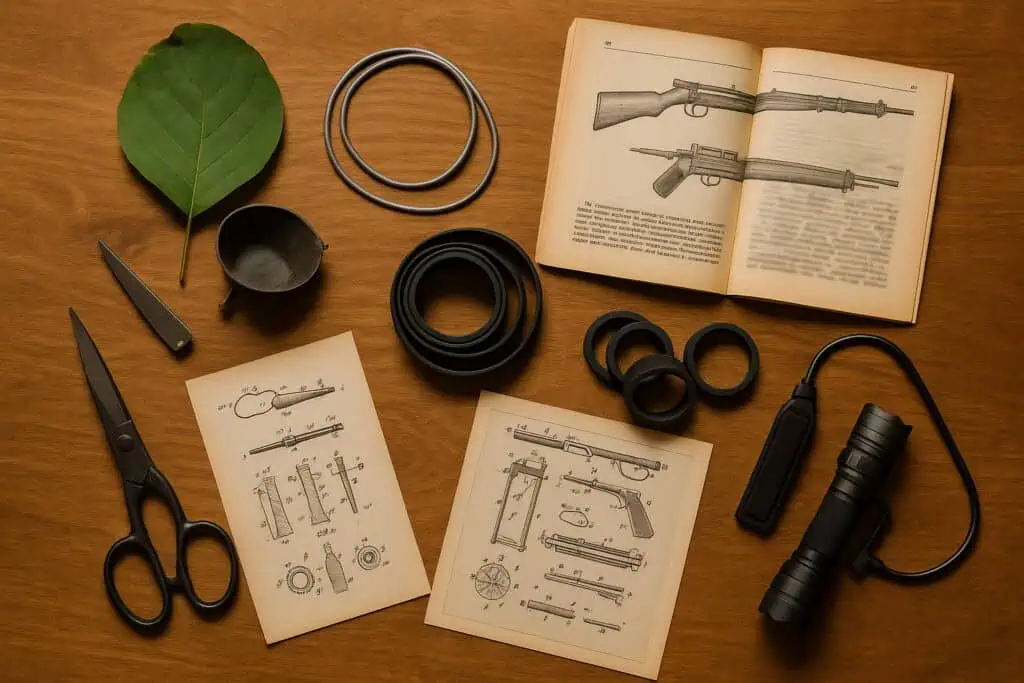
Rubber bands have been around long enough to become a catch-all fix for small problems. Nineteenth-century advances in rubber and vulcanization made bands cheap, tough, and everywhere, which is why soldiers and civilians picked them up for field fixes long before fancy accessories existed. For background, museum curators describe how vulcanized rubber opened the door to everyday elastic tools, including the simple band that holds things in place. Library historians also trace the “everywhere” spread of bands as a basic office and workshop tool, a handy detail that explains why they end up on gear in the first place.
As small-arms gear grew more complex, rifles began to feature lights, lasers, and pressure switches. Manuals teach setup and maintenance, but the day-to-day reality is tidying loose wires and straps so nothing snags. U.S. Army doctrine on rifle handling gives you the big picture of how a carbine is organized and carried, which helps explain why people try to keep parts tight and quiet. In civilian ranges, safety groups keep repeating that fingers and triggers should never meet until it is time to shoot, a habit that shapes how people store and transport guns.
Practical Motives, Real Mechanics
The short answer sounds simple, but it misses the mechanics. It is better to look at how a band changes movement, friction, and contact points, then consider the benefits that come from those changes. Only after understanding the physics of tension and friction does the habit make sense as a tool rather than a style choice.
Wire Management and “Ranger Bands”
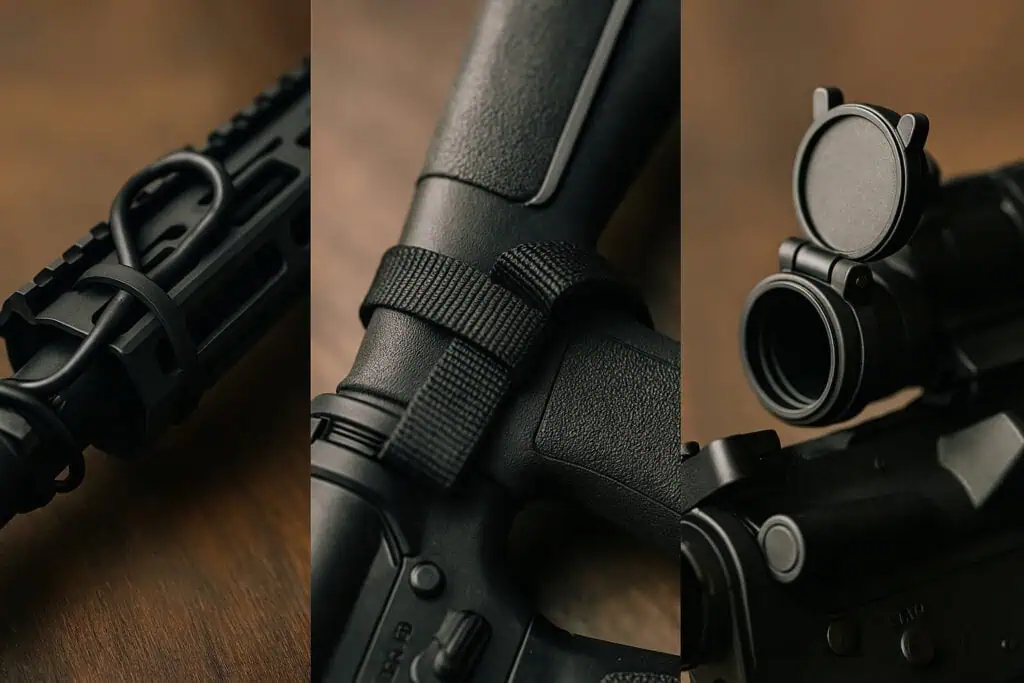
Add-on lights and lasers use thin wires and small switch pads. Those pads need to be within reach of the hand, but the wires also need to stay out of the way. Pressing the wire against the handguard creates a strong band that acts like a low-profile clip. The elastic keeps tension without screws, and it allows a little flex during recoil, so the wire is less likely to tear. Field practice and training communities often call these “ranger bands,” cut from inner tubes for extra grip, because they resist heat and hold shape better than office bands. If you have seen accessory setups discussed, you know this is a common, no-tools fix; modern doctrine about mounting and maintaining accessories is part of the broader rifle handling shown in Army training circulars like TC 3-22.9.
The “Breakaway” Loop
A sling helps carry and stabilize a rifle, but the loose tail can catch on brush, car seats, or door handles. A single band creates a breakaway loop that keeps slack controlled during transport, then releases with a pull when it is time to use the sling. The mechanics are simple: the band adds light friction and temporary retention without locking anything. Because it gives just enough hold, the sling tail stops flapping, and re-stowing it takes seconds.
Vibration Damping
Some grips and plastic panels fit well until sweat, dust, or vibration show up. When vibration loosens a small panel or a tape-on grip, a tight band can restore friction and reduce micro-movement. The band compresses the surface, increases the contact area, and stops rattles. Only afterward does the benefit show up: a steadier hold and fewer surprises when the hand shifts.
Acoustic Discipline
In some setups, an empty magazine can rattle in a pouch, and small parts like lens caps can click against metal. A thin band adds a little pressure to prevent parts from tapping. The band is not there to change how the gun works; it is there to lower noise and vibration during movement. Because the band compresses and rebounds, it keeps light, even pressure without permanent changes.
The “Field Seal”
Water, mud, and snow get into places you do not want. While no band can waterproof a firearm, a well-placed one can hold a small cover or a tape flap in place until use. That said, what truly matters is keeping ammunition dry and serviceable. Industry groups note that moisture can damage ammo, and caution is wise after submersion, especially with rimfire rounds.
Frequently Asked Questions
Do rubber bands make a gun full-auto?
People sometimes repeat a claim that a band over a trigger makes a semi-automatic fire like a machine gun. The relevant point is legal and mechanical, not rumor. U.S. law defines a machine gun by how the trigger functions. Any attempt to use a band to mess with the trigger can be dangerous, may violate the law, and should not be attempted.
Do bands replace real mounts?
Elastic can hold a cable, but it is not a structural mount. The useful part is the gentle force that keeps wires or caps where they belong, not the strength to hold optics in place. Manuals and safety guides stress proper installation and checks for anything that affects function.
Is a band considered a safety device?
Elastic does not replace safe habits. What keeps people safe is muzzle control, trigger discipline, and knowing the status of the gun. A band may hold a cover or keep a strap quiet, but it cannot stand in for proper handling.
Do only ‘tactical’ users do this?
Elastic fixes appear wherever there is a cable, cap, or strap to manage. Hunters, patrol officers, range hobbyists, and people who shoot matches all solve the same small problems. The shared logic is simple: reduce snag points, reduce rattles, and keep controls reachable.
Bonus: Extra Fun Facts
Beyond the range, the humble rubber band has a few specific legal and historical footnotes.
Field-expedient origins
The practice has roots in improvisation. Bicycle-tube “ranger bands” became popular because they resist heat and UV better than office rubber. That history tracks with how rubber bands became a go-to fix for many tools, tracing back to the spread of vulcanized rubber products in the 1800s.
Law and rapid-fire devices
Debates over rapid-fire accessories show how precise legal language meets mechanical details. Court fights and rule changes have focused on definitions and trigger functions, a reminder that “workarounds” often end in courtrooms. For a broader context on how legal definitions shape policy, see reporting on national rulings, such as Politico’s coverage of the Supreme Court’s decision on bump-stock regulation. None of this supports using a band on a trigger; it shows why playing with triggers is a bad idea.
Ammo and storage reality
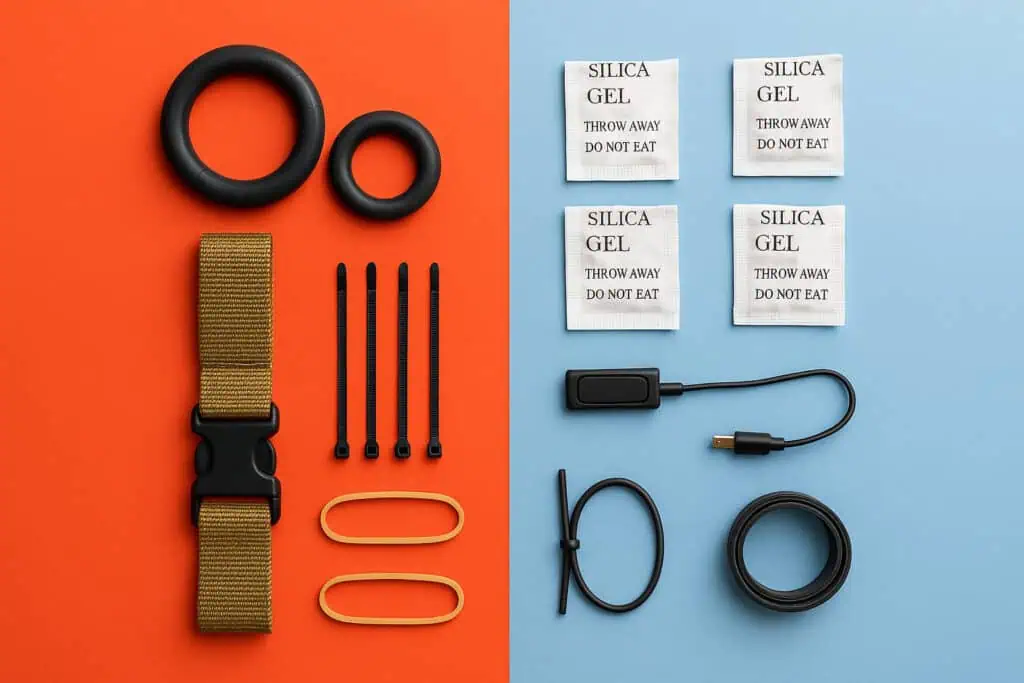
Bands sometimes hold small covers on ammo boxes or keep desiccant pouches in place. The real protection still comes from dry storage and careful inspection. Industry guidance recommends caution after water exposure because variables are hard to judge. A band can help keep a seal or note card in place, but it does not control moisture on its own.
Final Word
After seeing the mechanics, the question shifts from fashion to function. The useful part is not the band itself, but what the band changes: loose wires sit still, sling tails behave, small panels stop buzzing, and light covers stay put. If you keep that lens, the next time you notice a loop of black elastic on a handguard, you will not ask why people put rubber bands on guns; you will ask which small problem it is solving. And if a tiny loop can tidy a complex tool, what else in your life could get easier with a simple fix instead of a costly overhaul?
Interested in exploring similar posts? Visit The Science of Everyday Life hub for more!