
Most people assume putting cucumbers on your eyes is just a spa cliché or a social-media prop, but there’s a straightforward, practical reason rooted in basic skin biology: it’s about cooling, moisture, and reducing puffiness through simple physical effects, not magic. The scientific clues lie in words like vasoconstriction, occlusion, and periorbital edema—terms that explain real effects with no need for miracle claims.
A familiar picture
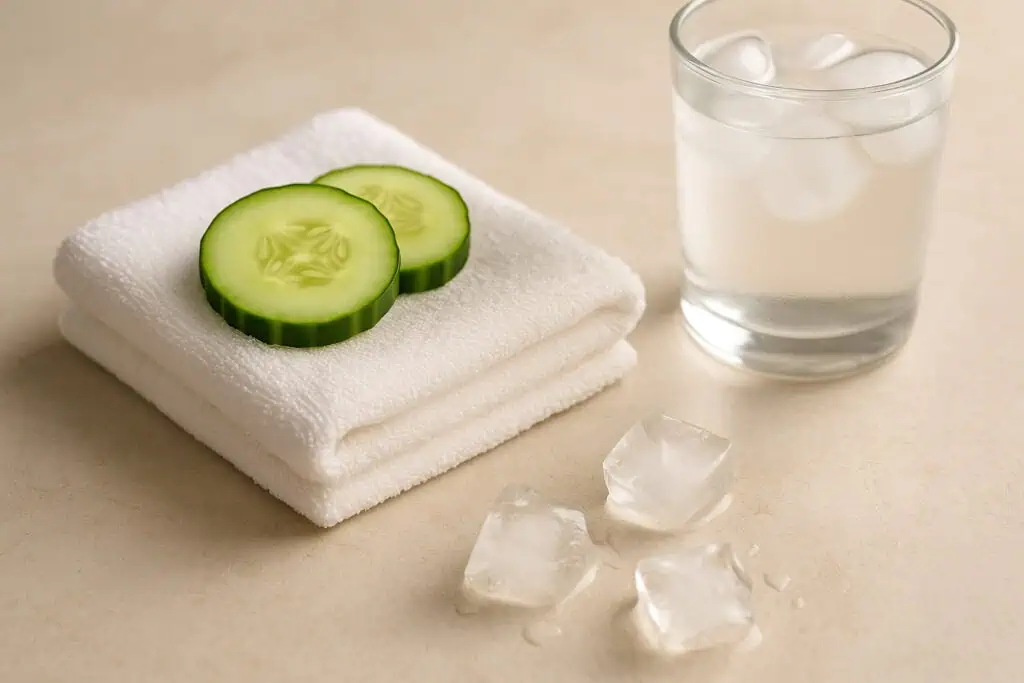
From movie montages to day spa menus, the green circles became visual shorthand for pampering. Beauty columns and spa ads leaned on the image for decades, and the look stuck. Interestingly, style writers even note how under-eye gel patches have replaced the classic slices as the “new” symbol of self-care, which shows the idea has a long pop-culture life, even as tools change.
Even though that image is everywhere, the picture alone doesn’t tell us the “how.” We need to understand what’s happening in the skin, blood flow, and surface moisture before we get to the real answer for why people put cucumbers on their eyes.
Cooling, moisture, and barriers
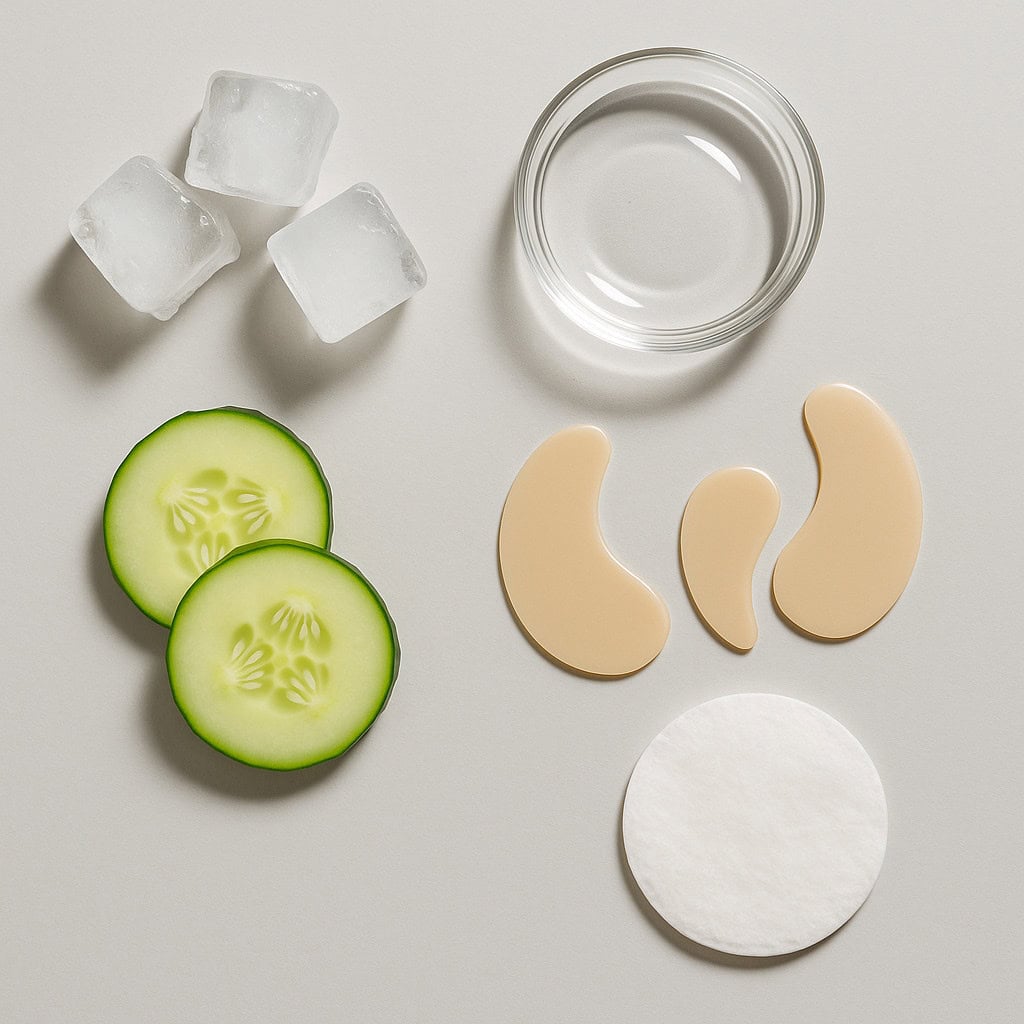
The Vasoconstriction Effect
Cold slows things down. When you place a chilled object against skin, tiny vessels narrow (that’s vasoconstriction), and local blood flow eases for a short time. Because the under-eye area is thin and prone to swelling, this quick temperature dip can calm puffiness. Mainstream medical advice often suggests cool compresses—and yes, chilled slices can act like a soft, shaped compress you already have at home. That simple thermal exchange provides immediate relief without needing a prescription.
Draining the “Fluid Trap”
Puffy lids are mostly about fluid sitting where it’s easy to collect. Lowering surface temperature gently tightens vessels and nudges that fluid back into circulation. Moreover, keeping your head slightly raised and minding sleep and salt also help with the background issue, which is why doctors list those habits alongside cold packs in their basic care tips. Because the effect is short, the result is brief too—yet it’s often just enough to make eyes look less tired right now. That hydraulic adjustment provides the short-term visual reset people look for before an event.
The “Water-Seal” Mechanism
Cucumbers are mostly water. In fact, they’re about 95–96% water by weight, so a fresh slice acts like a tiny, flexible water pack that sits where cream or ice won’t fit as well. As you rest, the slice cools and lightly hydrates the surface. Meanwhile, the slice itself covers skin, slowing water loss (that’s occlusion) for a few minutes, which plumps the look of fine lines. You don’t need to memorize the chemistry; it’s the combination of water, cover, and chill that matters. Because this trio works in concert, the ritual persists as a low-tech solution that actually delivers.
Botanical Bio-Hacks
Cucumber contains small amounts of vitamin C and plant acids (like caffeic acid) along with other antioxidants. On their own, these molecules aren’t likely to travel deeply during a five-minute lounge. However, the coolness, along with any mild surface soothing, can still make the area feel better. In parallel, eye products sometimes include caffeine because it can help reduce the appearance of puffiness and shadows; modern reviews discuss how such ingredients perform in creams and gels. Therefore, while the cucumber slice is mostly a cold, watery compress, its gentle botanicals support the “ahh” feeling many people notice.
The Forced “Micro-Rest”
There’s also a simple trick: a slice blocks light and nudges you to be still. Because you’re lying down and not squinting, muscles soften, and fluid can settle less in the lids. In practice, two cool circles force a tiny break—no scrolling, no frowning—and that mini-rest works with temperature and moisture to improve how the area looks. Add it up, and the habit reveals itself as a practical bio-hack rather than just a photo-op.
Frequently Asked Questions

Are cucumbers better than a washcloth from the fridge?
Cold is the star; the tool is the co-star. A clean, cool compress works similarly, which is why eye-health groups list it first among home options. Slices simply fit the eye shape and feel nice.
Do cucumbers cure dark circles?
Shadows have many causes—thin skin, pigment, allergies, and genetics. Cooling may briefly shrink vessels, making circles look softer, but it doesn’t fix thin skin or pigment. For stubborn cases, clinicians suggest sleep, allergy care, and targeted products.
Will skincare ingredients beat slices every time?
Sometimes—especially when formulas include caffeine or other actives designed to tighten or brighten appearance. Even so, a cold compress remains a reliable, low-cost first step; many people pair it with a cold compress for better short-term results.
Is infection a risk with raw produce near the eyes?
It can be. The eye area is sensitive, and the produce can carry microbes. Therefore, wash your hands, clean the cucumber, slice it fresh, and avoid direct contact with your eyes. If you have eye irritation or a known allergy to cucumbers, skip the slices and use a clean, chilled compress instead.
Why do results fade so fast?
Because the mechanisms are short-acting: temperature normalizes, vessels reopen, and fluid can return. That’s why medical pages frame cooling as a temporary helper while sleep, salt, allergies, and aging remain the bigger levers.
Bonus: short, quick facts
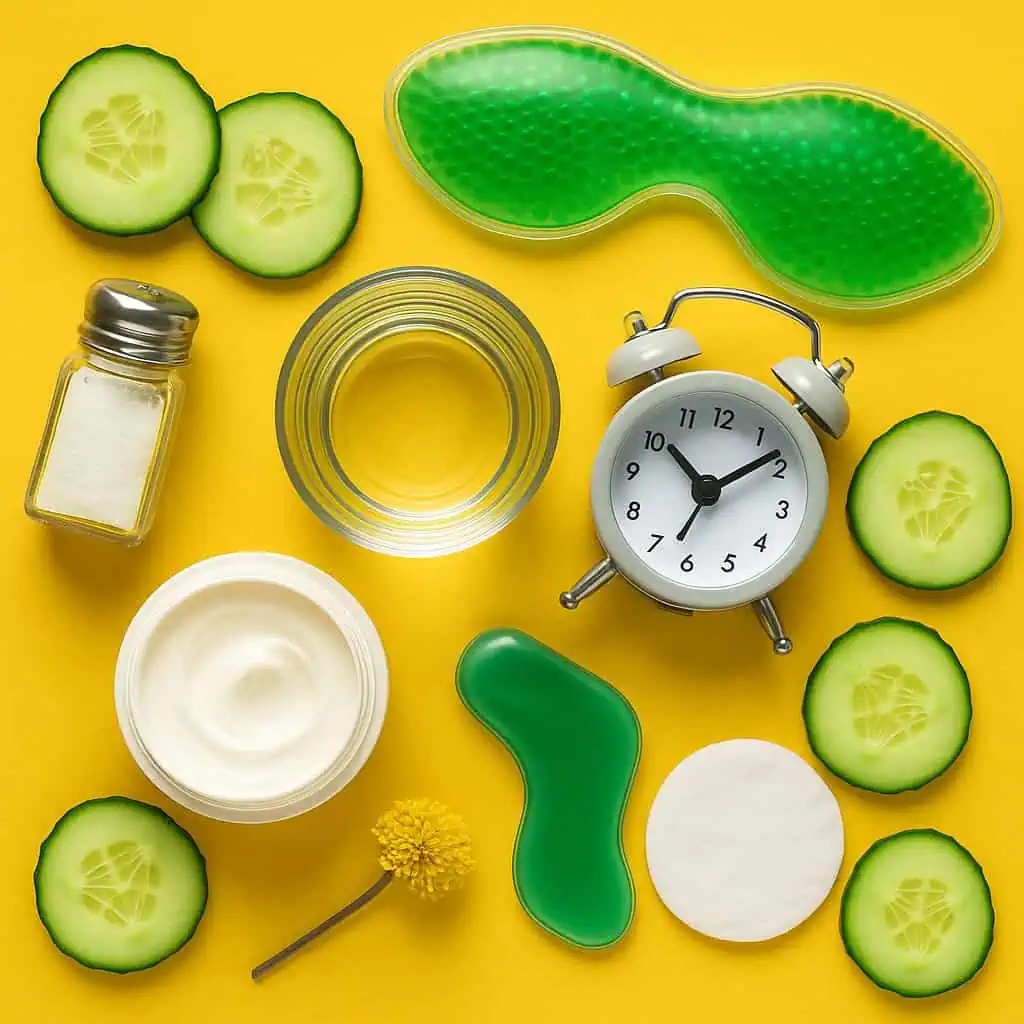
Beyond the spa aesthetic, the produce aisle offers a few specific chemical and physical advantages.
- Cucumber’s high water content makes it a friendly “mini-compress,” but any clean, cold item shaped for the eye can help in a pinch.
- Under-eye skin is thin by design, so it shows swelling and shadows easily. As a result, even small changes in fluid and blood flow can alter the appearance.
- Diet and sleep matter more than any slice; less salt late at night and steady sleep reduce morning puff.
- Cucumbers won’t fix structure (fat pads, skin laxity). That’s why medical pages set expectations clearly with “cold helps for now” framing.
Final Word
Once you see the moving parts—temperature, fluid, moisture, rest—the old spa picture makes sense without any magic. The slice is just a handy way to apply cold water and a cover to a delicate spot. That lens shifts the choice from “cucumber or nothing” to “which cool, clean, and convenient tool fits my morning.” And it raises a bigger question you can use anywhere in personal care: if a habit works, what simple mechanism makes it work—and what other low-effort swaps could do the same job tomorrow?
Interested in exploring similar posts? Visit The Science of Everyday Life hub for more!