
Most people assume people leave coins on grave markers for “good luck” or as a leftover from old myths. However, the real reason hides in quiet social codes, long memory, and the way small objects turn into public messages. As you read, watch for three clues: Charon’s obol, signal value, and cemetery policy—we’ll name them now but save the unpacking for later.
Footprints across centuries
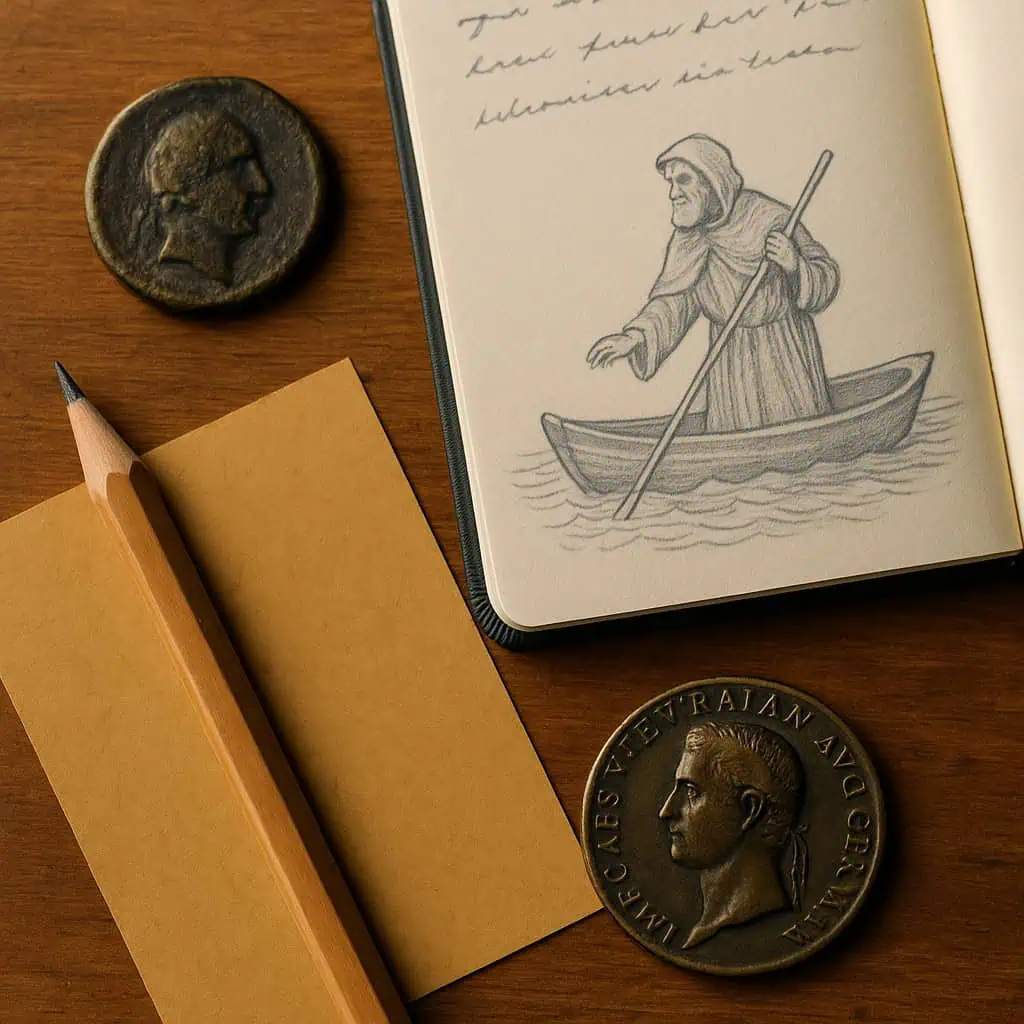
Long before anyone in America asked why people put coins on headstones, mourners in the ancient Mediterranean placed low-value coins with the dead. In Greek and Roman sources, the coin sometimes sat in or near the mouth; archaeologists still find these pieces in burials, a practice scholars often shorthand as “Charon’s obol.” The point wasn’t a tip jar—it was part belief, part ritual, and part material habit built into funerals of the time. Dictionaries still echo the idea by defining the obol as a small Greek coin “traditionally placed in the mouth of the dead” for passage, which shows how sticky the story became in language itself.
Centuries later, American cemeteries added their own, very different layer. Veterans and visitors began leaving modern coins on military graves, with denominations acting like a quiet code that signals the visitor’s tie to the deceased. You’ll see this code explained by veteran organizations and memorial groups across the U.S., and it has spread widely through practice and word-of-mouth.
None of this history answers the practical question yet. It does, however, set the stage for how a tiny object can carry meaning from the past while serving new purposes in the present. That’s the bridge to understanding why people put coins on headstones today.
Signals, memory, and care
Quiet social code
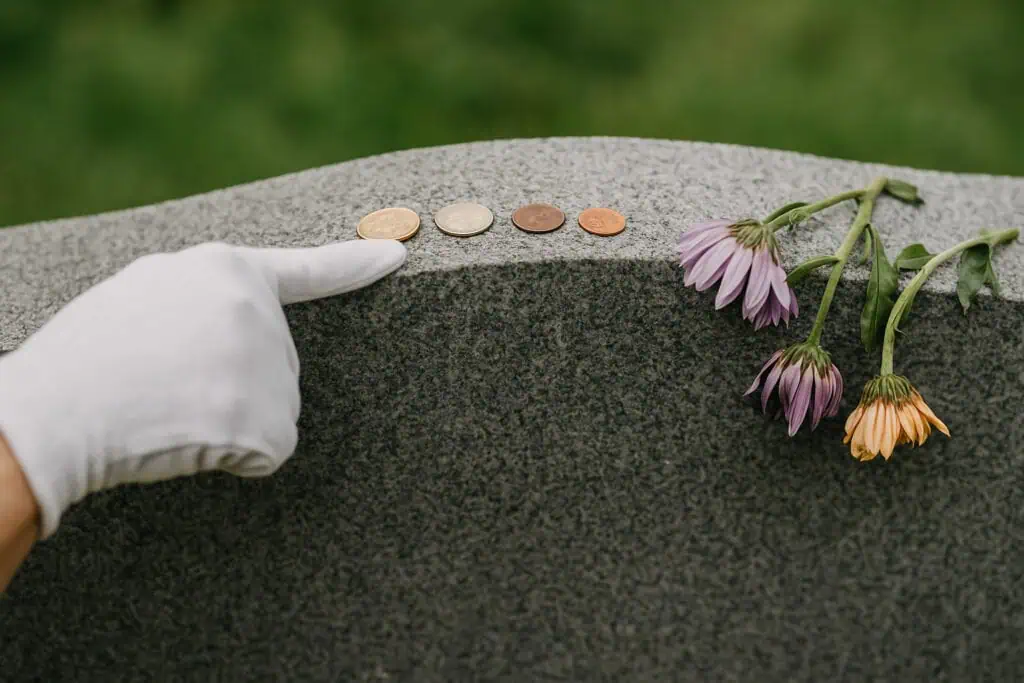
Before we say what it is, look at what it does. A coin on a headstone performs a small, public act of communication. It tells the family and other visitors, “someone was here,” and—when denominations are used—how that someone knew the person. By turning loose change into a shared language, the coin lowers the barrier to participation and raises the clarity of the message. Once that mechanism clicks, the object stops looking like loose change and starts acting like a respectful signal, where specific denominations (penny, nickel, dime) map out exact relationships.
Durable trace, not just décor
Flowers wilt and notes blow away. A coin, however, stays visible, heavy enough not to vanish in a breeze and simple enough to be understood without extra context. Because it endures, it keeps the visit “alive” a little longer. That durability explains why the answer often boils down to practicality: a coin leaves a trace—cheap, humble, and legible—that can comfort families even when they missed the actual visit.
Borrowed myth, new meaning
Mechanically, an ancient coin in a burial once functioned as ritual equipment—part of outfitting the dead for a journey. Today’s coin, by contrast, sits on the marker, not with the body, and speaks to the living. Nevertheless, the old idea of Charon’s obol hovers in the background, giving modern acts a sense of continuity with older rites without dictating them. The modern habit likely inherits this recognizable symbol, repurposing it as a sign of respect rather than an actual fee for passage.
Community rules shape behavior
There’s also a practical system around the gesture. Many cemeteries have maintenance rules that limit or manage what’s left on markers. Some military and overseas cemeteries warn that items like coins can stain soft stone or interfere with upkeep, so policies may restrict or remove them to protect the grounds. Arlington has also explained how mementos are handled in certain sections to balance family wishes with safety and preservation, which affects how long coins remain on site.
A myth filter helps families
Because signals spread informally, myths grow around them. A solid filter prevents confusion. Fact-checking outlets have documented the tradition and the widely shared denomination meanings while noting that they’re customary, not a federal rule. That nuance matters when families ask why people put coins on headstones and worry whether they’re “doing it right”.
Frequently Asked Questions
Is there an official code for the coins?
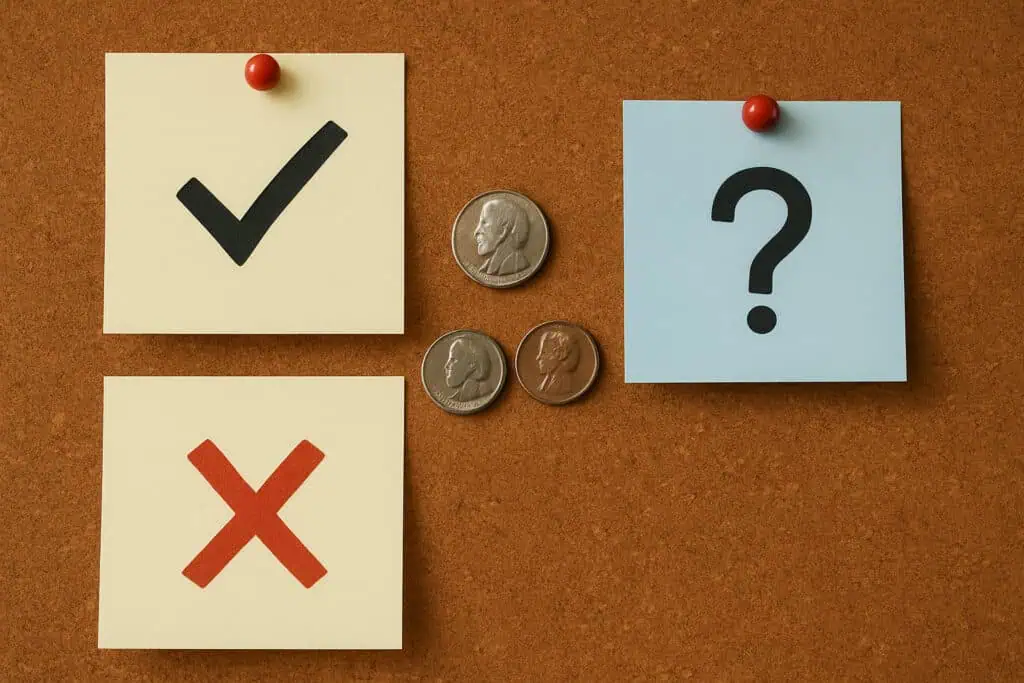
The denominations act like a community shorthand, not a statute. The mechanism is social signaling, not regulation; therefore, there isn’t a federal “coin law,” even though veteran groups often teach the same code and many visitors follow it.
What happens to the coins?
Operations and preservation come first. Staff at some cemeteries periodically remove items to mow, clean, and protect stones. Policies explain that objects may be collected or discarded to keep the grounds safe and orderly. The point is maintenance, not disrespect; the visit was still seen, and the message was still received.
Is the ancient “ferryman fee” the same thing?
Historically, Charon’s obol referred to a coin for the dead, often in or near the mouth, as part of outfitting a soul for the afterlife. Modern coins on markers function as a living visitor’s message. The symbol echoes the past, but the mechanism—and audience—is different.
Is it okay to take a coin as a keepsake?
Treat it like any other memorial object: leave it be. Besides the ethics (you’d be undoing someone’s act of remembrance), cemeteries often bar removing items and may treat mementos as property of the site once placed. Preservation rules exist to protect the grounds and avoid damage to markers.
Do only veterans’ graves receive coins?
The code is strongest in military culture, but the broader gesture of leaving small tokens shows up on civilian stones too. When families ask why people put coins on headstones outside veteran contexts, the answer is often the same: to mark presence and memory. The exact “coin code,” however, may not apply outside military circles.
Bonus: Extra fun facts
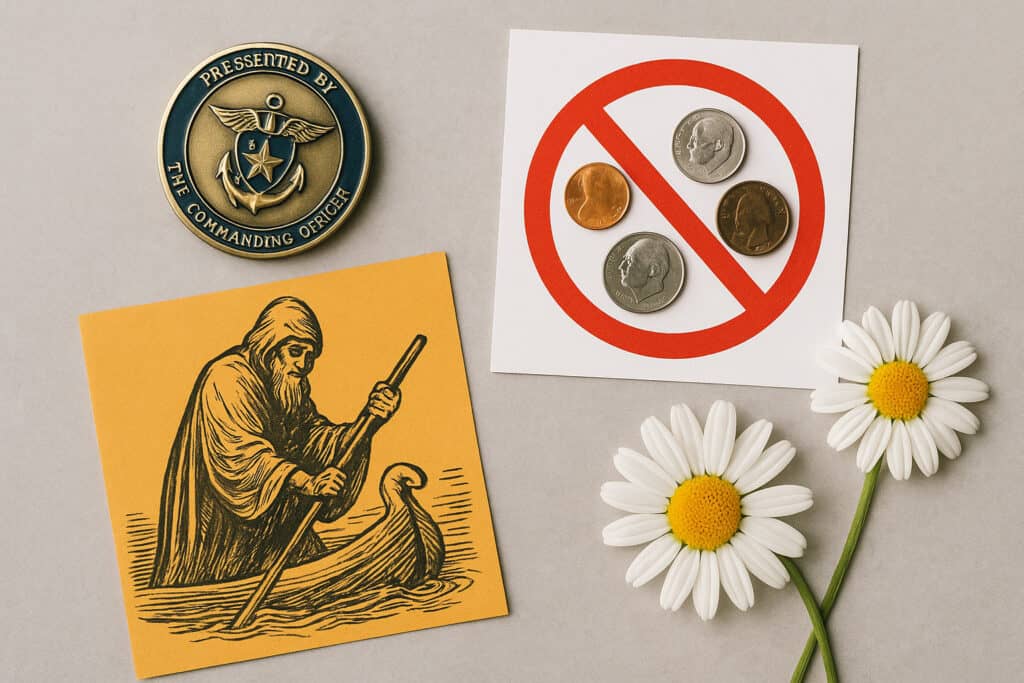
- Challenge coins appear sometimes. When you spot a unit coin on a marker, it isn’t random; it’s a high-signal tribute that ties the visitor to the deceased’s specific service. That’s the purest example of “object as message,” which is the underlying mechanism behind why people put coins on headstones in the first place.
- Preservation beats permanence. Soft marble and limestone stain easily. That’s why some caretakers discourage resting items directly on stone; unintended marks are expensive to fix. Policies aim to protect the markers so they can keep carrying names forward for families and the public.
- The echo of an old idea. Even if today’s coin isn’t a ticket for a river crossing, the story of the obol persists because it gives mourners a narrative frame for grief and passage. The myth offers language; the modern gesture offers comfort.
Final word
Once you see how a coin actually works—as a durable, public message that families can read—you won’t walk past one the same way. It’s not spare change; it’s a tiny billboard of remembrance. The next time you notice a coin on a marker, ask yourself: What quick, humble signal could I leave in life or in memory that says “I was here, and I cared,” even when I’m gone?
Interested in exploring similar posts? Visit the Cultural Rituals & Society hub for more!