
People usually think those bedside Bibles are there because hotels are religious or because “someone donated a pile of books.” However, the real reason is tied to how a traveling culture formed, how a volunteer logistics system works, and how brands weigh low-cost amenities. If you’ve ever heard the old word colportage—a network for moving books by hand—you’ve already touched the edge of the story.
Road-warrior roots
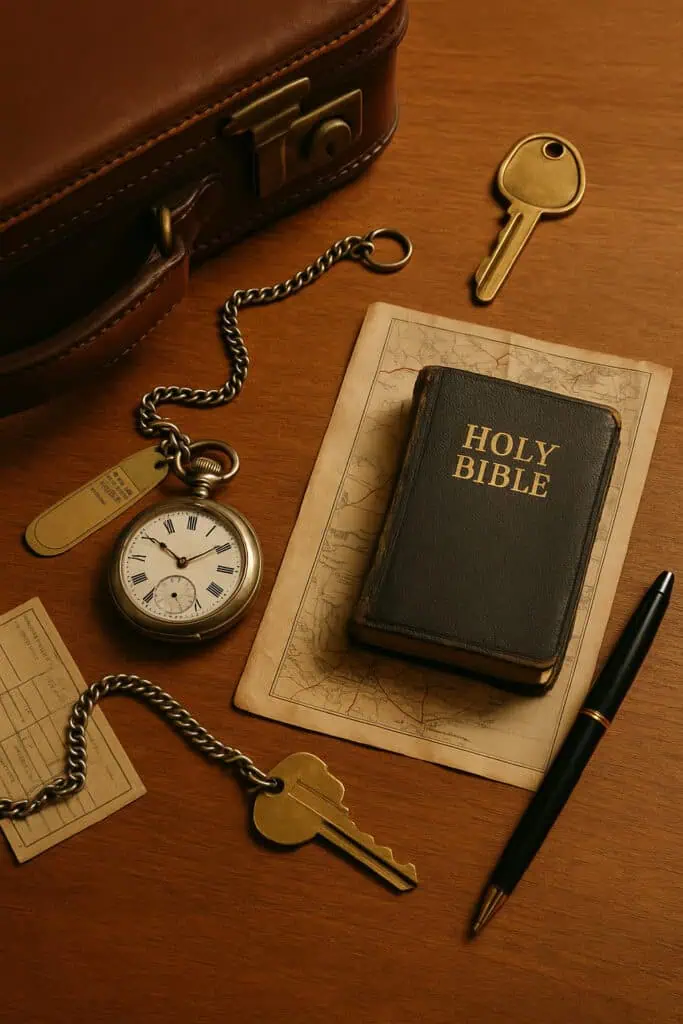
Before chain hotels took over, the American road belonged to traveling salesmen who lived from grip to grip. In the 1890s, two of them—John Nicholson and Samuel Hill—shared a crowded room in Boscobel, Wisconsin, and talked about helping other travelers keep good habits on the road. That chat snowballed into a layman’s group that later became The Gideons International. Decades on, people still ask why hotels have a bible, but the habit began as a road habit, not a hotel rule.
The “drawer idea” didn’t happen overnight. Early on, Gideons left copies at front desks; only in 1908 did members persuade a hotel owner to place Bibles inside rooms. From there, placement became their signature outreach. A century later, they’re still at it. You can read their account of the first in-room placement (complete with names, hotel, and date) on the Gideons’ official history blog. The historical frame matters because it explains the next part: the practice persists wherever the distribution pipeline and hotel policy both say “yes.”
Room-drawer mechanics
Distribution network effects
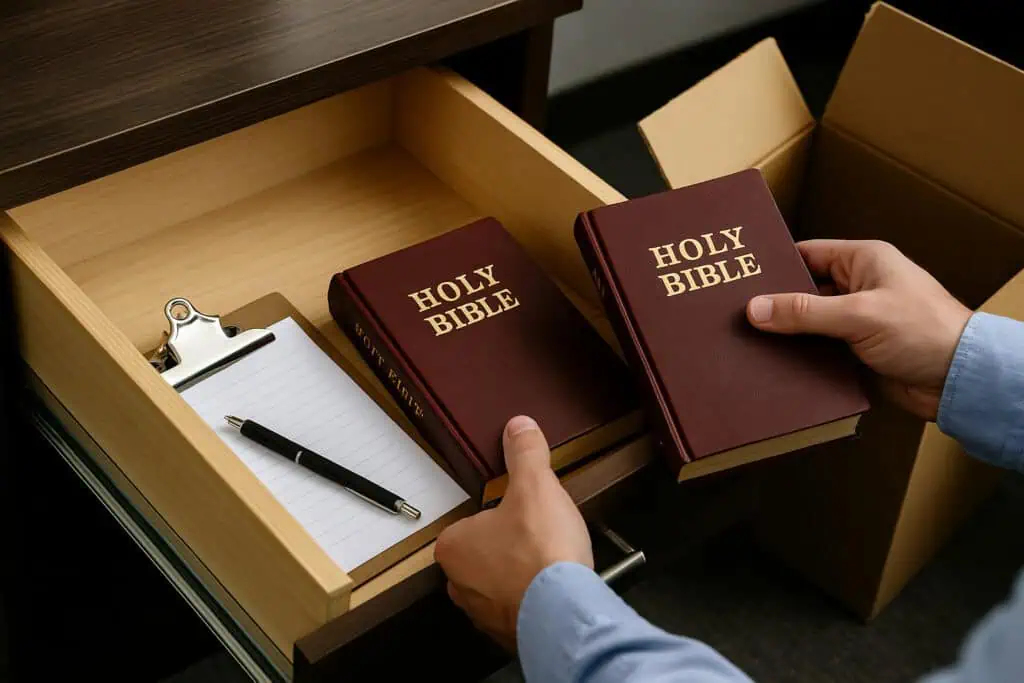
The presence of a Bible in the nightstand starts with a simple machine: local volunteers visit properties, deliver copies, check on condition, and replace worn or missing books. Because the supply arrives at no cost to the property and restocking is handled by outsiders, managers don’t have to budget staff time or money. Only after this repeatable pipeline exists does a single room get a single book; in short, the mechanism is a free, volunteer-run supply chain, and that’s a big reason people still encounter one when they wonder why hotels have a bible.
Guest-in-crisis moments
Late at night, away from home, small worries often feel bigger. Hoteliers know that tiny, calming touches—an extra pillow, a kettle, a notepad—can help. A book within reach offers a low-friction way to cope with insomnia, stress, or temptation. Only after you understand that “midnight moment” does it make sense that the chosen book, historically, was a Bible: for many travelers, it’s familiar, morally grounding, and readable in fragments. That combination turns a drawer into a quiet “coping station,” which answers part of why hotels have a bible without any corporate sermon.
Brand and policy levers
Amenity decisions don’t come from theology classes; they come from brand standards and owner choice. Over time, some brands stopped requiring in-room scripture while others kept it, and industry data shows the practice has not been static. A widely cited STR survey—reported by the Associated Press—found that the share of U.S. hotels keeping religious materials in rooms moved from 95% (2006) to 79% (2016). That doesn’t mean the idea is dead; it means it’s policy-dependent and brand-specific. AP’s coverage lays out those figures and where they differ by hotel type. Meanwhile, some groups (famously Marriott’s legacy brands) historically stocked both the Bible and the Book of Mormon, while newer lifestyle sub-brands made exceptions. The short takeaway for travelers is this: policy, not piety, usually decides what’s in the drawer.
Cultural legacy inertia
Habits that are cheap, easy, and familiar tend to stick. Once a hotelier has an external group that supplies, audits, and replaces a free item—and guests occasionally thank them for it—the default becomes “leave it.” That’s how traditions outlive their origin story. Historically, this is close to colportage, the old practice of distributing books through personal networks and door-to-door carriers; the same basic pattern—humans moving books where readers are—helps explain why hotels have a bible even now.
Frequently Asked Questions

Do hotels pay for the drawer Bibles?
Room amenities usually cost money to buy, ship, track, and replace. In this case, the cost burden is offloaded to a volunteer organization that provides copies and handles the upkeep cycle. Because hotels don’t have to spend on it, finance stops being the barrier, and the practice remains feasible. That’s why the money question isn’t the blocker people assume.
Are hotels required to put Bibles in rooms?
Brand standards and local ownership call the shots. Some flags build it into policy; others leave it to each property. Industry reporting shows wide variation by segment (economy vs. luxury) and brand, rather than a one-size-fits-all rule. The AP write-up of STR’s survey highlights the spread and notes specific brand decisions. In practice, there’s no law that forces a nightstand Bible.
Can guests take the Bible home?
Replacement is built into the model: volunteers circle back, check drawers, and restock. Because of that, many placements are meant for people who truly want a copy to keep. Policies can vary by hotel, but the distribution ministry itself openly frames placement as a way to put scripture into hands and will provide more when one goes missing. Their contact page explains how they supply copies and respond to requests.
Are Bibles disappearing from hotel rooms?
Trends move with branding, guest mix, and digital habits. Some chains dropped automatic in-room placement while keeping copies at the front desk; others never changed. The 2006–2016 numbers reported via STR and AP show a decline from near-universal to still-common, not a disappearance.
Why that book and not others?
The inertia of the first mover explains much of it. A century-old volunteer network offered a free, consistent supply long before hotels thought about “spiritual menus.” Where other faith groups build similar pipelines and a hotel invites them, you may see different texts; where no viable pipeline exists, you usually won’t. The drawer mirrors the distribution system more than the demographics of every guest on a given night.
Bonus: extra fun facts
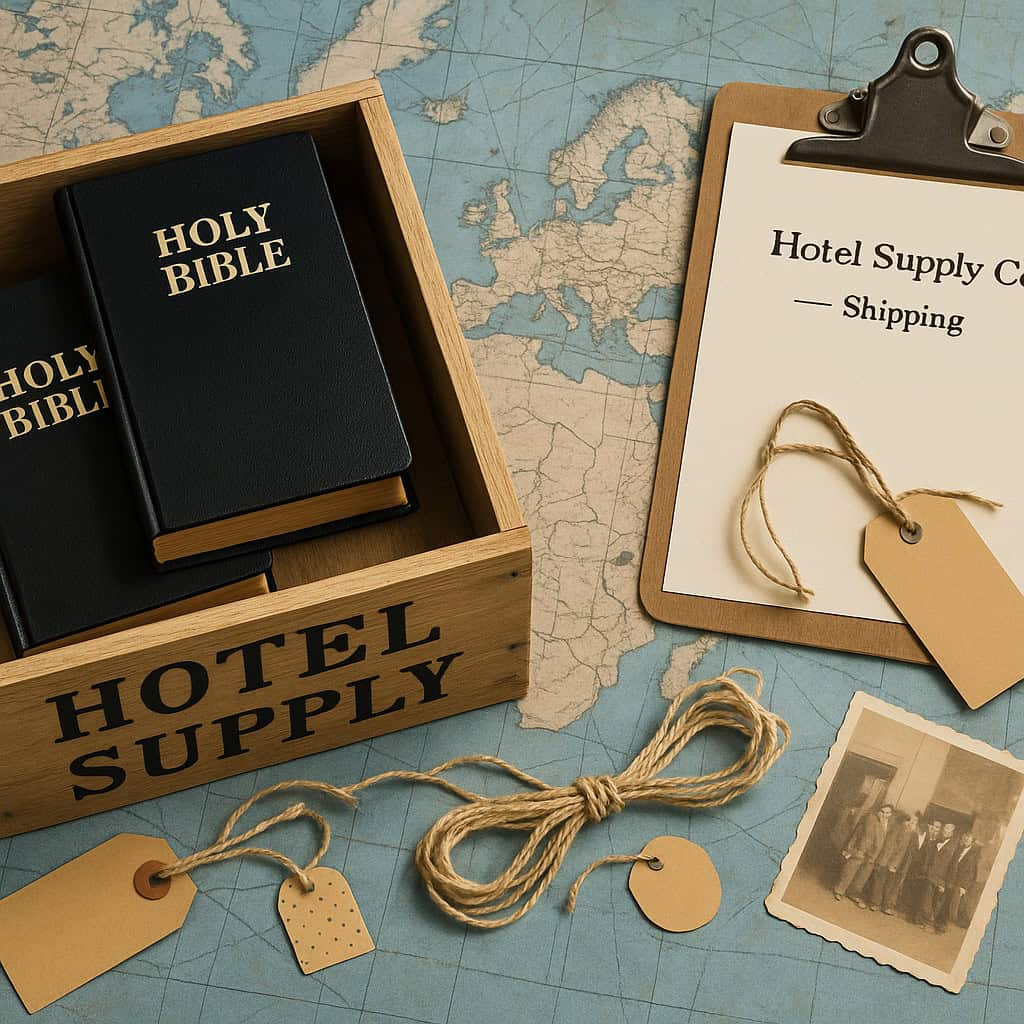
Beyond the drawer itself, the logistics of moving millions of books left a few paper trails that historians still track.
- In 1913, a Washington, D.C., photo agency captured a shipment labeled “5,000 Gideon Bibles for D.C. hotels,” a glimpse of how quickly the practice scaled beyond one property. The Library of Congress preserves that captioned glass negative in its Harris & Ewing collection.
- Historians point out that the very first in-room placements (1908) were just 25 copies—humble beginnings that later became a global routine. The Gideons’ detailed retelling includes the hotelier’s name, the date, and the order itself.
- If you’re chasing the vocabulary behind old-school book networks, colportage ties many similar movements together across centuries. That one word closes the gap between “how do books get there?” and “who put them there?”
Final word
Once you see the drawer as a tiny logistics story (volunteers, policies, habits), the nightstand looks different. A hotel room turns out to be a little crossroads where cost, custom, and care for strangers meet. That shift raises a better question than “what’s in the drawer?”: What other small, low-cost choices quietly change how a place feels when you’re far from home?
Interested in exploring similar posts? Visit the Hidden Histories & Origins hub for more!