
Most people say sharing a loaf just shows you’re being friendly. However, the real reason lies deeper than politeness. Hidden under the crust is a social engine—think commensality, covenant meal, and even synchronized behavior—that powers what this gesture really does in a group.
From hearth to covenant
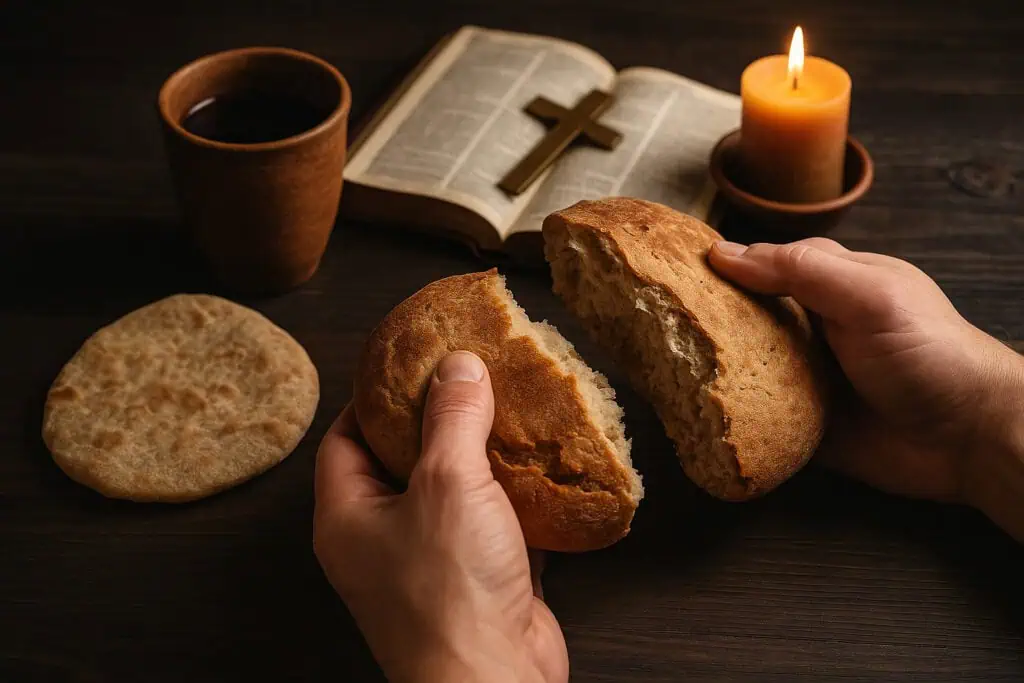
Across eras, people sat near the heat, passed food, and formed bonds. Archaeology even finds very early flatbreads, hinting that once we learned to control grain and fire, we also learned to gather. Research into ancient breads, from Near Eastern flatbreads to Roman loaves, shows bread as an everyday staple that still carried ceremony and status, not merely calories.
As societies formalized, bread stepped onto the altar. In Christian practice, the central rite remembers a table, a night, and a shared loaf—ritualized in the Eucharist, where eating together marks membership and memory.
Judaism, meanwhile, frames the meal around bread itself. The blessing over bread (hamotzi) starts the meal and turns eating into an act of gratitude and community, which is why Shabbat tables begin with sharing the loaf.
Layers beneath the ritual
Signaling trust and safety
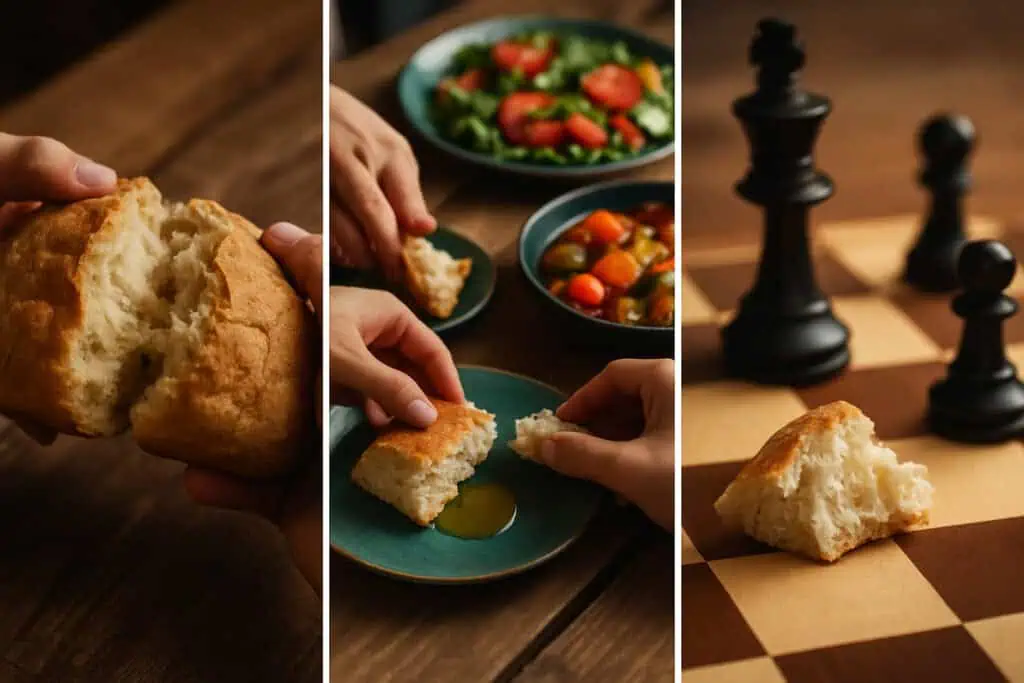
Before names or contracts, bodies watch for risk. Sitting close, exposing your hands, and eating the same food are all signals that lower perceived threat. The posture, pace, and shared loaf create a small, temporary truce where everyone agrees not to harm one another while chewing. Only after those cues settle in does the deeper point emerge: the significance of breaking bread is that it works like a trust signal—an embodied “we’re safe together” proof that words alone can’t supply.
Body–brain social feedback
Chewing in rhythm, passing plates, and mirroring each other’s movements feed back into the brain’s social circuits. This coordination nudges people toward cooperation; lab and field studies even show that eating from shared plates can increase cooperative choices during negotiations, compared to eating from separate plates. After the body syncs up, the “why” becomes clearer: the ritual turns biology into bonding, making cooperation feel natural before it’s decided.
Boundary, status, belonging
Tables draw lines. Who sits where, who serves, who gets the first portion—these details map status and membership. Sharing a single loaf redistributes status cues: slices become equal units, hands reach across titles, and the circle closes around insiders. Once those small moves redraw the map, the significance of breaking bread comes into view: it marks the boundary of “us,” welcoming some, testing others, and teaching newcomers how to belong.
Memory, vow, continuity
Ritualized meals compress time. When a community repeats the same steps—lift the loaf, bless, divide—it stitches today to yesterday. In some traditions, the action is a memorial; in others, it’s a vow renewed by the group. Because the meaning is carried by doing rather than saying, it persists even when words change. That is why the significance of breaking bread often feels larger than a snack: it’s a living reminder that we are part of a longer, binding story.
Coordination and fairness
Groups need ways to prevent squabbles. A visible loaf split in public creates accountability: everyone sees portions, order, and fairness. The act solves a coordination problem—how to turn “me and mine” into “we and ours”—without a ruler or a referee. After fairness is performed in front of witnesses, the act resolves to this: it is a simple system for dividing resources that also binds people to the outcome.
Frequently Asked Questions
Is breaking bread only a religious act?
People often think that breaking bread “belongs to religion.” The pattern is older and wider than any single faith. Religious tables formalize it, but families, teams, and neighbors use the same choreography to signal peace and shared identity. That’s why the significance of breaking bread shows up at company off-sites, block parties, and first dates—anywhere trust needs a quick start.
Is it just about being polite?
Politeness opens the door; the mechanism keeps people inside. Hospitality says, “Welcome.” The shared loaf says, “Join.” Once bodies synchronize and portions equalize, the group begins to feel like a group. In plain terms, the plate does work that small talk cannot, which is why the significance of breaking bread keeps appearing wherever strangers must quickly become partners.
Why do people “seal the deal” with food?
Statements can be cheap; bread is not. Buying, preparing, and sharing food costs time and resources, so the signal carries weight. Because the cost is visible, the promise feels credible. That visible cost turns the lunch into a form of proof that a simple memo can never match.
Does it work over Zoom?
Screens connect minds but not mouths. Virtual “coffee chats” help, yet the missing piece is the shared, paced movement of eating together. Hybrid teams that still schedule in-person meals often report smoother collaboration afterward. The classic gesture still works, even in a high-tech workplace, because the significance of breaking bread is grounded in bodies coordinating around a table.
Bonus: quick fun facts
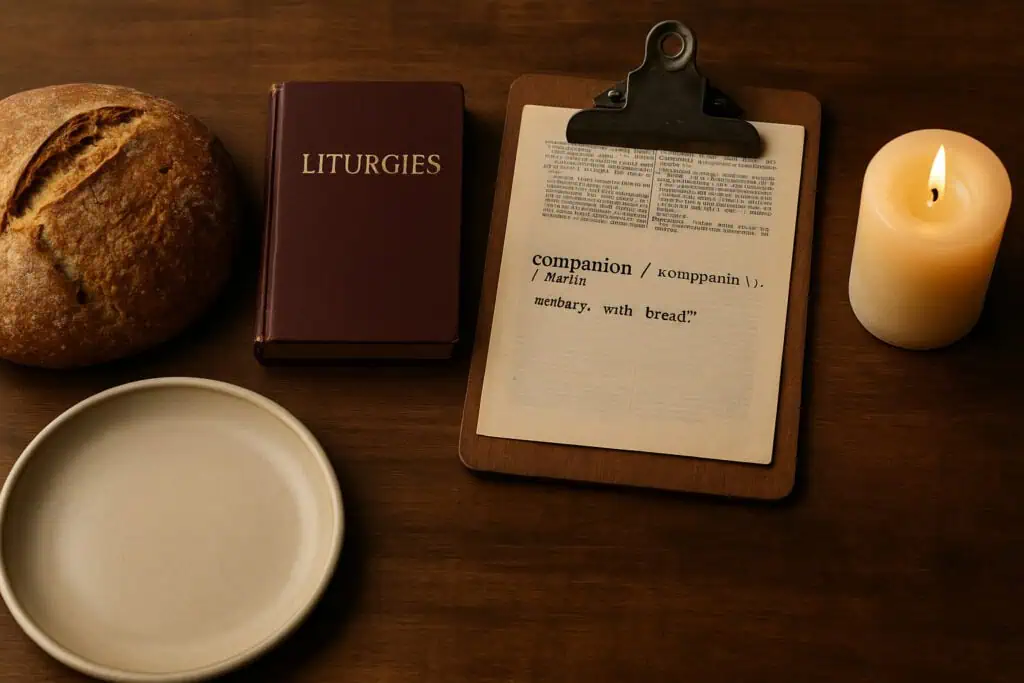
- The English word “companion” comes from Latin roots meaning “with bread” (com + panis), a hint that friendship once implied a table.
- In many homes, a small ritual (a pause, a blessing, a first slice offered away) turns calories into community. Judaism codifies this clearly in hamotzi, where the meal begins only after the bread is blessed and shared.
- Christian liturgies put the loaf at center stage to compress memory and identity into a shared act.
- Anthropologists use “commensality” to study how eating together shapes power and belonging.
Final Word
Once you see what the loaf is doing, you start noticing small tables running big systems—teams that gel after lunch, neighbors who stop feuding after a potluck, and strangers who become “us” with a shared slice. If a simple gesture can build trust, mark belonging, and keep fairness visible, what other everyday moves might be quietly holding our communities together—waiting to be used with just a little more intention?
Interested in exploring similar posts? Visit the Cultural Rituals & Society hub for more!