
Most people assume tattoos are just about style, rebellion, or peer pressure. But tattoos are more than fashion statements—they are powerful, enduring marks with deep biological, psychological, and social purposes. You’ll see it once you hear terms like costly signaling, liminality, and dermal macrophage capture—each pointing to a mechanism that sits under the ink.
Lines Through Time
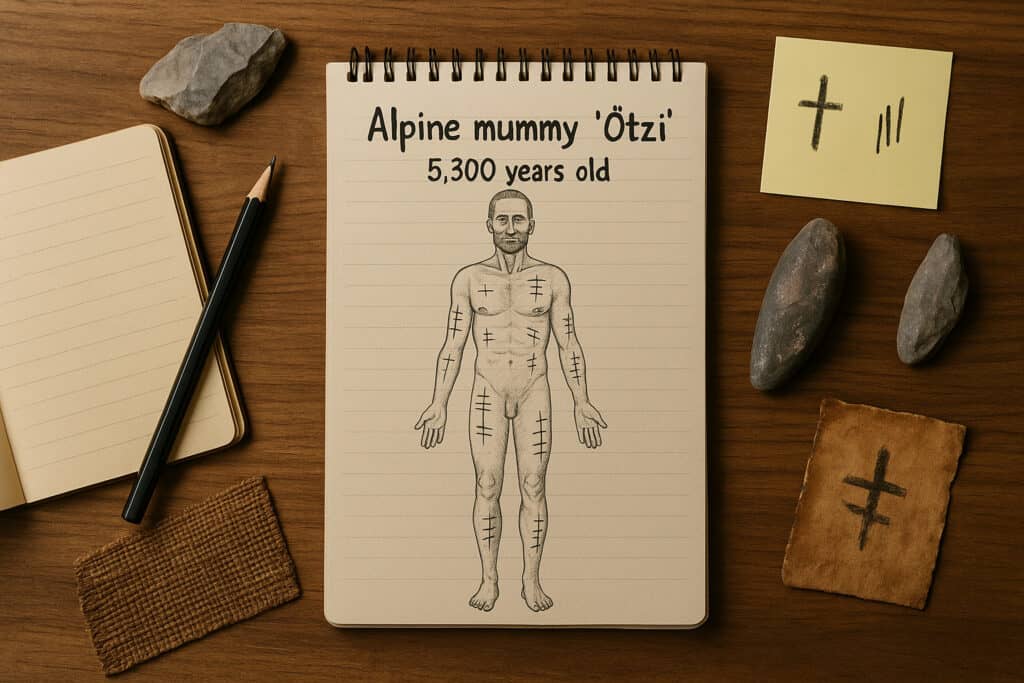
Archaeology keeps reminding us that skin art is old, widespread, and stubbornly human. Researchers mapping the markings on the 5,300-year-old Alpine mummy nicknamed Ötzi uncovered dozens of simple black lines and crosses, likely made with primitive tools and soot. These marks sit along joints and tendons, suggesting intent rather than mere decoration, and showing that tattooing existed long before modern machines or studios.
Although the tools have changed over millennia, the practice has only expanded. In the United States today, tattoos are seen across all ages and occupations. Survey data show a steady rise in prevalence, and many Americans report that society is more accepting than before. Approximately a third of U.S. adults say they have at least one tattoo.
Motives Under Skin
Identity In Plain Sight
The human brain runs on stories. First, we piece together past events; then we retell them so they fit the person we believe we are. Because skin is always visible, it becomes a quick “channel” for that story. A design on the forearm can compress a long memory into a single image, and the repeated sight of it helps the self-story stick. Clinicians reviewing the psychology of body art point out that tattoos often serve self-definition more than pathology, since they help people say “this is me” without saying a word. Ultimately, the permanent image acts as a structural support for the self they want to keep.
Belonging and Boundaries
Groups use signals to sort “us” from “not us.” Before anyone states a belief, a mark can declare membership, loyalty, or shared history. In ritual language, people often pass through a threshold—what anthropologists call liminality—and rejoin the group with a new status. This transformation shows up in skin: a small emblem after a pilgrimage, a crest after earning a stripe, or a date after recovery. Scholarship on Christian pilgrimage tattoos describes this process in detail, connecting the mark to separation, transition, and reintegration. Because marks cost something—time, pain, permanence—they function as a broadcast signal, setting social boundaries that words alone can’t hold.
Commemoration and Closure
Grief and joy both need containers. The body supplies one that stays close. Mechanically, repetition is key: each time someone sees a name or date, the memory loops again, strengthening recall and pairing emotion with meaning. Over months and years, the tattoo becomes a private ritual, because the sight of it cues reflection even on busy days. U.S. survey data shows that honoring or remembering someone ranks among the most common motivations. In these moments, a physical memorial on the body steadies the heart.
Aesthetic Systems At Work
Ink does not stay because it sits there; it stays because your immune system traps it. When the needle delivers pigment, immune cells called macrophages rush in and swallow the particles. As some of those cells die, new macrophages take their place and eat the freed pigment again. Because this capture-and-recapture cycle keeps repeating, most of the color remains visible through the skin for years. Since biology works quietly in the background, the body becomes a reliable living archive for the art.
The Neurochemistry of the Needle
Pain gets your attention, yet it also releases chemicals that many people read as a sign of focus or even relief. During a session, adrenaline spikes and breathing changes; afterward, dopamine’s reward signal can tag the whole event as meaningful. Because the brain links meaning to effort, a piece earned through hours under the needle often feels more valuable than the same design printed on a shirt. For many, the challenge, the ritual, and the payoff wire the memory in—with the body acting as the receipt.
Frequently Asked Questions
Are tattoos just a sign of rebellion?
Stereotypes linger, but acceptance has grown across workplaces and ages, and the motivations are broad—identity, remembrance, art, and belonging. Because a mark can mean many things in different communities, it rarely maps cleanly to “anti-authority.” The truth is that the same anchor or flower can read as defiant in one room and as devotion in another.
Do tattoos last because the ink never moves?
Pigment particles move, and so do immune cells. The image persists because macrophages keep eating and re-eating the pigment, which keeps the color near the injection depth. Over time, sun, skin turnover, and particle size all matter, which is why black tends to age better than some colors.
Can tattoos cause cancer?
Dermatology groups say the bigger concern is that dark ink can hide a developing spot rather than start one. Research on links to cancer is ongoing, and results are mixed, so regular skin checks are still smart. Moreover, licensed studios, sterile tools, and aftercare help reduce common risks such as infection and allergic reactions.
Will a tattoo hurt my job prospects?
Context matters. Customer-facing roles, local culture, and the design’s content all play a part. Because norms keep shifting, many employers now judge the person, not the ink. When in doubt, a placement you can cover gives flexibility.
Is getting a tattoo addictive?
People often return for more because each piece solves a new problem—marking a milestone, balancing a composition, or finishing a theme—not because the body craves ink in a chemical sense. That said, the anticipation-reward cycle can make the process feel compelling.
Bonus: extra fun facts
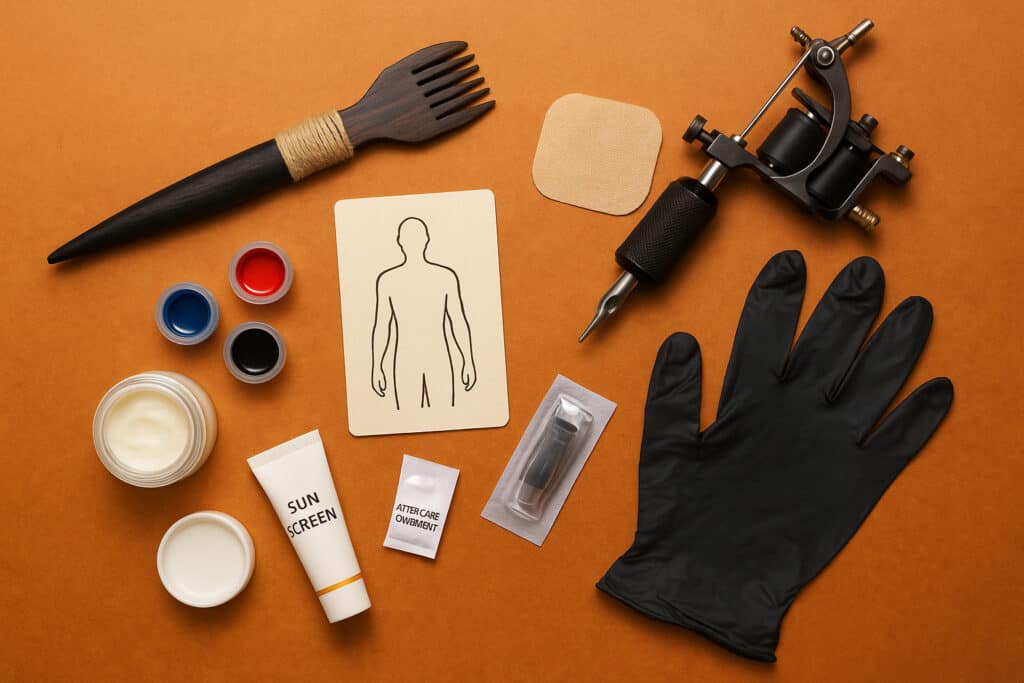
Beyond the visible design, the biology and culture of the process leave distinct footprints.
- Ink and immunity: Particles can travel to nearby lymph nodes, which is normal, since lymph filters what gets into tissues. This is one reason some colors look muted during healing—the immune system is doing its job.
- Color quirks: Red pigments produce more allergic reactions than many others, so artists and dermatologists watch red areas closely for rashes or bumps.
- Tool to temple: From tap-tapping combs in Polynesia to rotary machines in studios, the tool changes the rhythm, but not the basic idea: repeated puncture places pigment where the immune system will hold it.
- Map, then meaning: Placement still carries informal “codes” in some scenes—wrists for reminders, ribs for privacy, fingers for everyday visibility—although, of course, personal meaning beats any rule.
- Care equals longevity: Moisturizer, shade, and sunscreen slow fading. Meanwhile, touch-ups can repair small losses without redoing everything.
Final Word
The next time you spot ink on a barista, a nurse, a teacher, or a veteran, try reading it like a small, durable story. Because the mark costs time, pain, and planning, it likely carries more weight than an ornament. And since biology helps the art endure, the skin keeps broadcasting that story long after the appointment ends. So the bigger shift isn’t about whether tattoos are “good” or “bad”—it’s about noticing how, in plain sight, bodies become journals, and how yours might already be keeping a record you haven’t learned to read yet.
Interested in exploring similar posts? Visit the Cultural Rituals & Society hub for more!