
TL;DR: Ring finger symbolism points first to love and lifelong commitment. In the U.S. and much of the West, people use the fourth finger of the left hand to show engagement or marriage; in some countries, the right-hand version carries the same message. In short, the ring finger is the public signal that a private bond exists.
Ring finger symbolism: a short history
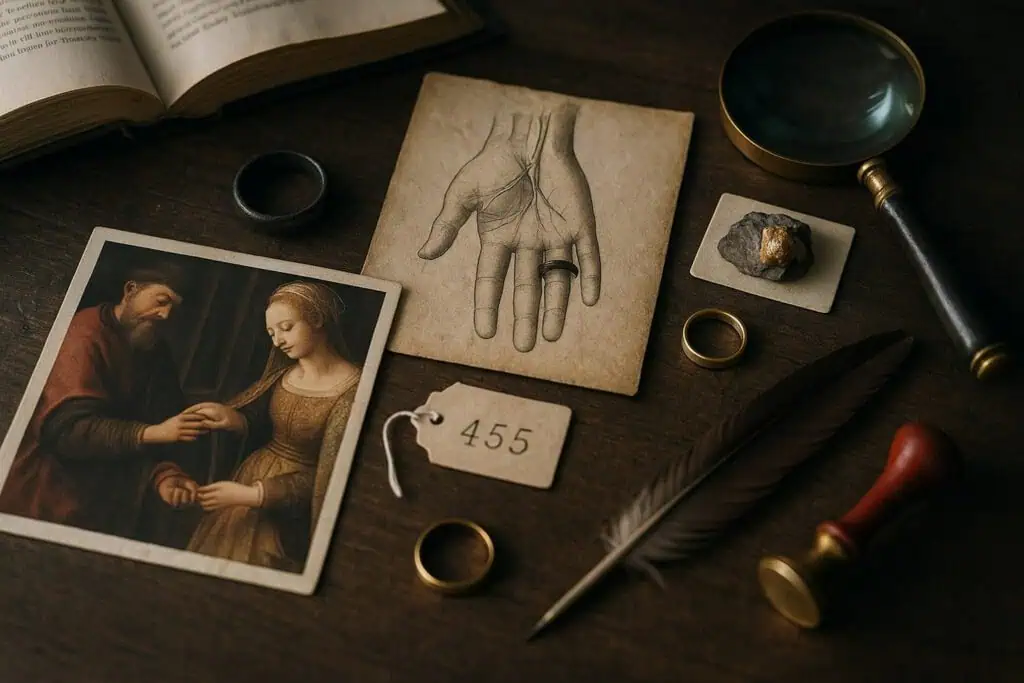
Across time, people have used rings to mark deals, status, and marriage. In Roman times, rings often showed a legal promise more than romance, and many were made of iron rather than gold. That early “contract” idea helped turn rings into a steady wedding custom over the centuries.
Later, European art and customs placed special weight on the wedding ring itself. In Renaissance Italy, for example, the ceremony moment when a ring touched the bride’s finger appears again and again in paintings and wedding scenes, underlining how a small band could carry big meaning.
Meanwhile, a romantic story spread about a “vein of love” running from the fourth finger to the heart. The image was powerful, and it stuck. Science later showed there is no unique vein there, yet the custom of choosing that finger lived on because the symbol itself felt right (GIA notes the legend and the science in their guide to wearing engagement and wedding rings).
What ring finger symbolism means today
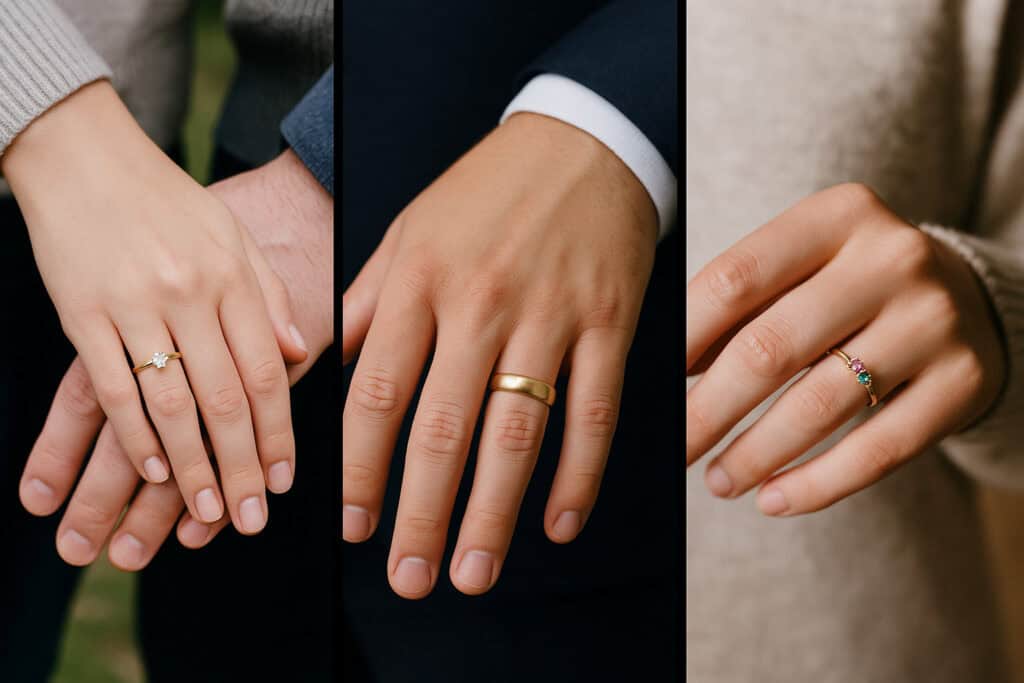
The main idea today is simple: ring finger symbolism signals commitment. Here’s how that plays out in real life.
Marriage and engagement
In the United States, most people wear an engagement ring and then a wedding band on the left ring finger. The stacked look—band closest to the hand, engagement ring above—is common because it keeps the wedding band “closest to the heart.” The details are tradition, but the meaning is commitment.
Right hand in many places
Some cultures put the wedding ring on the right ring finger instead (for religious reasons, local custom, or both). The symbol is the same; the hand is different.
Not only marriage
People also use the ring finger for promise rings, anniversary bands, or “family rings” set with children’s birthstones. The shared thread is public meaning: wearing a ring on this finger tells others, “This bond matters.”
Personal choice still rules
Although tradition is strong, it’s not law. Some people swap hands for work, comfort, or style. Others pick a different finger entirely. The signal most folks read, though, stays consistent: the ring finger—left or right—usually points to love and partnership.
Ring finger symbolism FAQs
Is the “vein of love” real?
No. The old story about a special vein from the ring finger to the heart is a myth. All veins connect back to the heart; there isn’t one unique to that finger. The legend survived because it’s romantic, not because it’s anatomical.
Which countries use the right-hand ring finger?
Practices vary. For example, parts of Eastern and Northern Europe commonly wear wedding bands on the right hand, while much of Western Europe and the U.S. favors the left. If you want a broad reference on country-by-country habits, the overview in the Wikipedia article on the wedding ring shows how widespread the differences are.
Why the fourth finger at all?
History, religion, and art pushed the fourth finger into the spotlight. Over time, that one finger became the social “default” for rings that mark a union. Renaissance sources and museum collections help trace how the gesture took hold.
Can men wear engagement rings?
Yes. Engagement rings for men are not new globally, and modern norms are flexible. The symbol—“I’m engaged”—is what matters. Britannica summarizes how engagement rings grew from legal promises into broader cultural markers in its entries on engagement rings and wedding traditions.
Is palmistry or Apollo linked to the ring finger?
Some older traditions and pop guides connect the ring finger with the sun or the god Apollo, tying it to creativity and love. Many people enjoy the poetry of that idea, but it isn’t a scientific claim. The dominant, everyday meaning remains social: the ring finger signals partnership.
Because customs differ, context matters. Age, culture, and personal style can change the message, so a polite question beats a quick guess.
Bonus: cool ring finger symbolism facts

- Rings as “proof.” In Roman times, rings often showed a legal agreement to marry, not a love story—early on, iron bands signaled a binding promise.
- Art tells the story. Museums hold wedding and betrothal rings from many eras. One famous Met collection includes a rare 14th-century Jewish wedding ring inscribed mazel tov, a vivid link between ritual and jewelry.
- Designs with meaning. “Fede” motifs—two clasped hands—show up on historic love rings and paintings, echoing unity. That visual language helped cement the finger’s role.
- Traditions adapt. Modern guides now blend history with practical tips—how to stack bands, when to switch hands for comfort, and why the symbol matters more than the rule.
Bonus 2: How to read ring finger symbolism at a glance
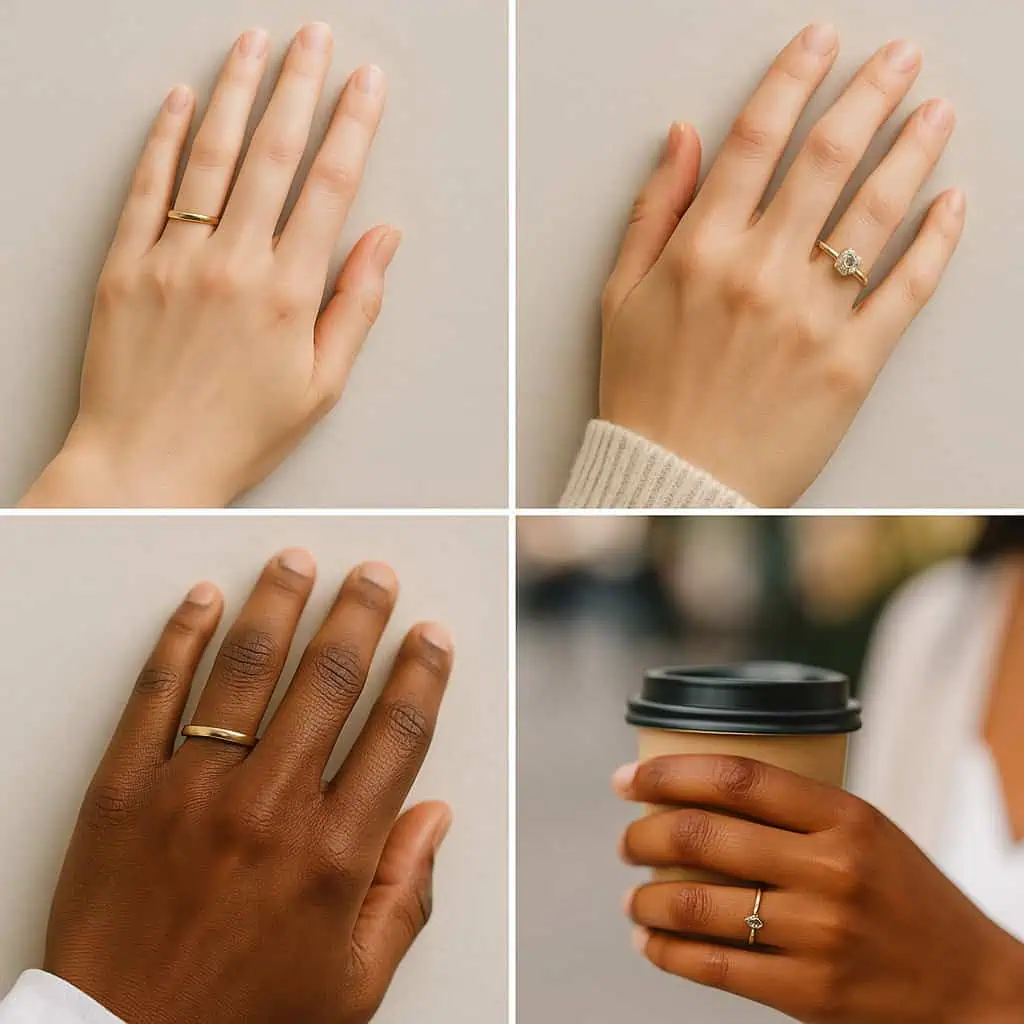
- Left ring finger, single band: married (in many Western places).
- Left ring finger, band + solitaire: engaged and married, or simply stacked for style.
- Right ring finger band: married in cultures that use the right hand.
- Any ring on that finger during dating: often a promise, commitment, or just fashion—ask before assuming.
Final word
Ring finger symbolism boils down to this: a small circle on a specific finger tells the world you’ve made a promise. The hand and stack may change by culture or taste, but the meaning—love, loyalty, and a life joined to someone else—stays the same.
Interested in exploring similar posts? Visit the Cultural Rituals & Society hub for more!