
TL;DR: Alcohol pulls water out of your body at first, then your body holds on to fluid later; that fluid often collects in the lowest place—your feet and ankles. Sitting or standing a long time while drinking, salty snacks, hot rooms, tight shoes, and some health problems (like vein issues, heart, kidney, or liver disease) can all make swelling worse.
Background: feet swelling and alcohol
People have talked about “puffy feet after a night out” for decades. In clinics and on forums, people say they wake up with tight shoes, sock marks, and ankles that look thicker than usual. Doctors have studied pieces of this for a long time—how alcohol changes hormones that control urine, how it affects blood vessels, and how it links to liver and heart problems. For example, the U.S. alcohol agency explains that alcohol can turn down vasopressin (a fluid-balance hormone), which is why people pee more at first and feel dry later. And if you want a plain-English refresher on vasopressin’s job in holding water, medical textbooks lay it out clearly.
In everyday life, people also point out the simple stuff: bar stools and long conversations keep them sitting or standing for hours; bars are warm; snacks are salty; shoes are tight by the end of the night. All of that sets the stage. However, we still haven’t answered the main question yet—let’s do that next.
The 4 reasons your feet swell when you drink alcohol
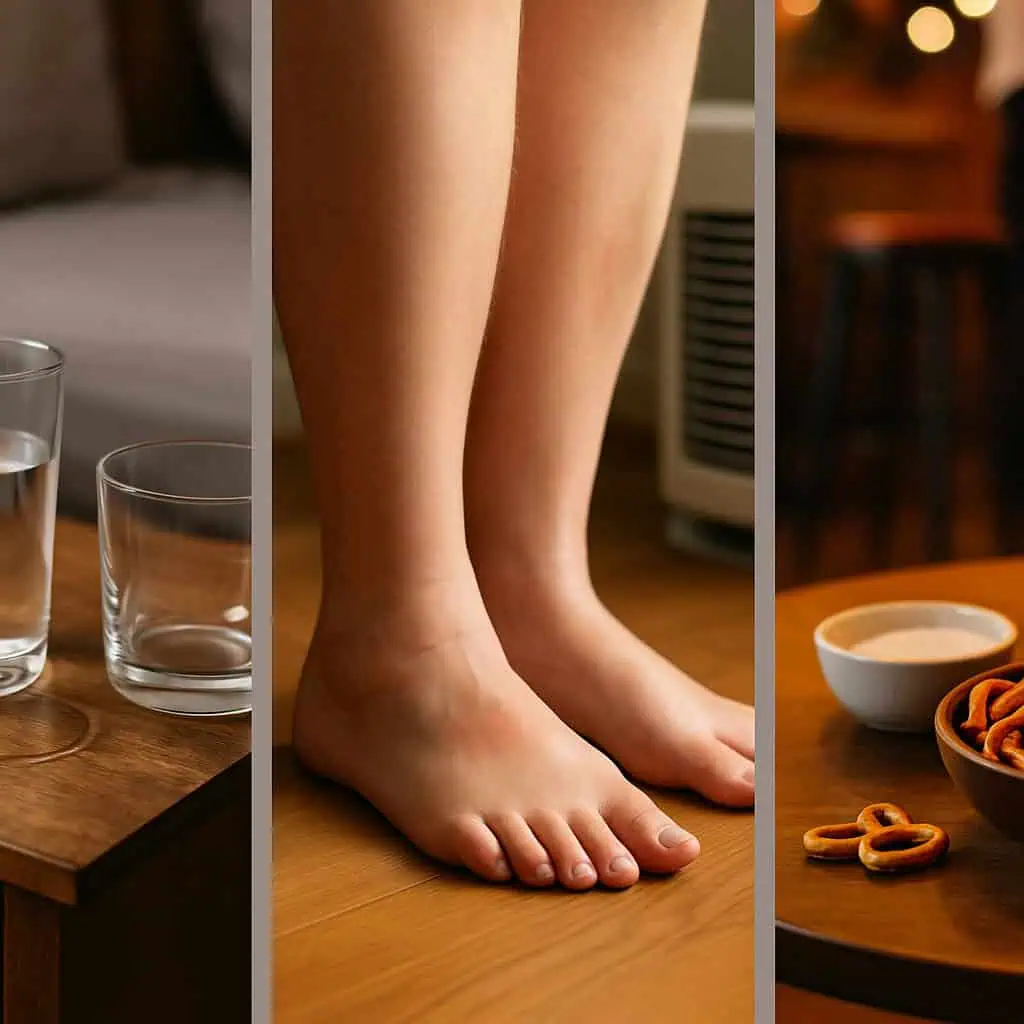
Swelling in the feet (doctors call it peripheral edema) after drinking usually comes from several things working together. Here’s the simple breakdown.
First you lose water, then your body “rebounds”
Alcohol makes you urinate more by lowering vasopressin, the hormone that tells your kidneys to save water. Early on, you get dehydrated. Later, your body tries to catch up and holds on to fluid, which can drift down by gravity and pool in the feet and ankles. This rebound is normal, and it’s a big part of why your shoes feel tight the next morning. The dehydration-and-inflammation combo behind hangovers is well described by major medical sources.
Alcohol relaxes blood vessels
Alcohol can widen (dilate) your blood vessels. When veins in the legs are a bit more relaxed, blood can move slower and leak more fluid into nearby tissues. Because your feet are the lowest point, the extra fluid shows up there first.
Salt, heat, and stillness stack the deck
Salty bar food pulls water into your tissues. Warm rooms and crowded spaces open up blood vessels even more. And when you sit or stand for hours—chatting at a high-top table or waiting in lines—fluid naturally sinks. Research on prolonged standing shows it’s tough on legs and can raise swelling risk on its own; alcohol night just adds to it.
Sometimes, it’s a warning sign from your liver, heart, kidneys, or veins
Most one-off swelling after a few drinks is not serious. Even so, repeated swelling can be a clue. Long-term heavy drinking can damage the liver, which lowers a blood protein called albumin; with less albumin, fluid more easily leaks into tissues, including the legs and feet. Health services also list leg and ankle swelling as a common symptom in advanced alcohol-related liver disease.
Besides the liver, weakened leg veins (called chronic venous insufficiency) can cause daily ankle swelling that drinking then makes more obvious. If you often have evening swelling, skin color changes near the ankles, or bulging veins, learn about vein causes and treatments from trusted sources like the Cleveland Clinic. And finally, heart or kidney problems can also lead to persistent swelling; doctors check for these when swelling sticks around.
Warning! When to worry and call a clinician
Call a professional soon if:
- One leg is much bigger, red, or painful (possible clot).
- You get sudden swelling with chest pain or shortness of breath.
- The swelling lasts more than a few days, keeps coming back, or comes with yellow eyes/skin, belly swelling, or dark urine.
- You have known heart, kidney, or liver disease.
FAQs: alcohol-induced feet swelling
How long does the swelling last?
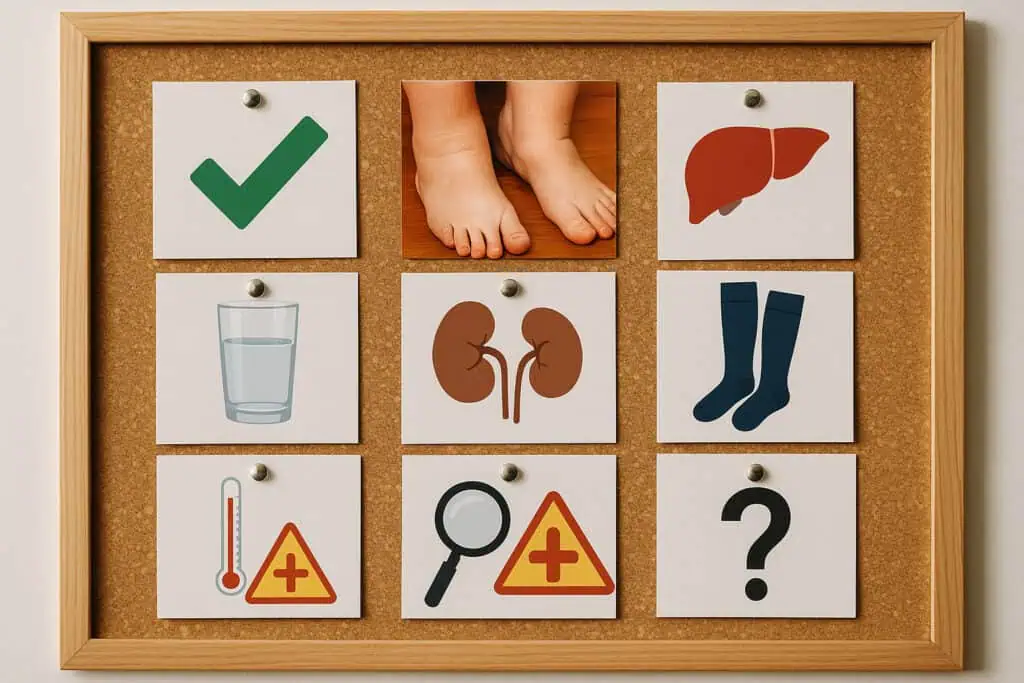
For most people, it eases within 24–72 hours as your body rebalances water and salt. However, if it lasts longer—or it keeps happening—get it checked.
Is it always from the alcohol?
No. Alcohol can trigger or expose swelling, but underlying vein issues, shoes, salt, hot rooms, travel, and hormones matter, too. And, importantly, liver, kidney, or heart problems can be behind ongoing swelling.
Why does only one foot swell after I drink?
It may be a fit or shoe issue, an old ankle injury, or a vein problem that’s worse on one side. But if one leg is larger, red, or painful, call urgent care to rule out a blood clot.
Will drinking water stop it?
Water helps, but it isn’t magic. Because alcohol first makes you pee more and later may trigger fluid holding, steady hydration before, during, and after drinking is best. Pair that with moving around, less salt, and leg elevation.
Could this mean liver damage?
It could, especially with other warning signs (belly swelling, yellow skin/eyes, easy bruising, or tiredness).
Bonus: quick facts about feet swelling and alcohol
- Alcohol’s early diuretic effect comes from reduced vasopressin, the hormone that normally helps you keep water. That’s why you pee more at first, then may retain fluid later as your body tries to recover.
- Low albumin (a blood protein) makes swelling more likely because it can’t hold fluid inside blood vessels as well. That’s one reason liver disease and some kidney problems cause ankle swelling.
- Prolonged standing raises leg pressure all by itself, so a long night on your feet plus drinks is a double hit.
- Doctors group ankle and foot swelling under peripheral edema and look for patterns (both legs vs. one, painful vs. painless, sudden vs. slow) because the pattern points to the cause.
Bonus 2: quick tips for alcohol-related foot swelling
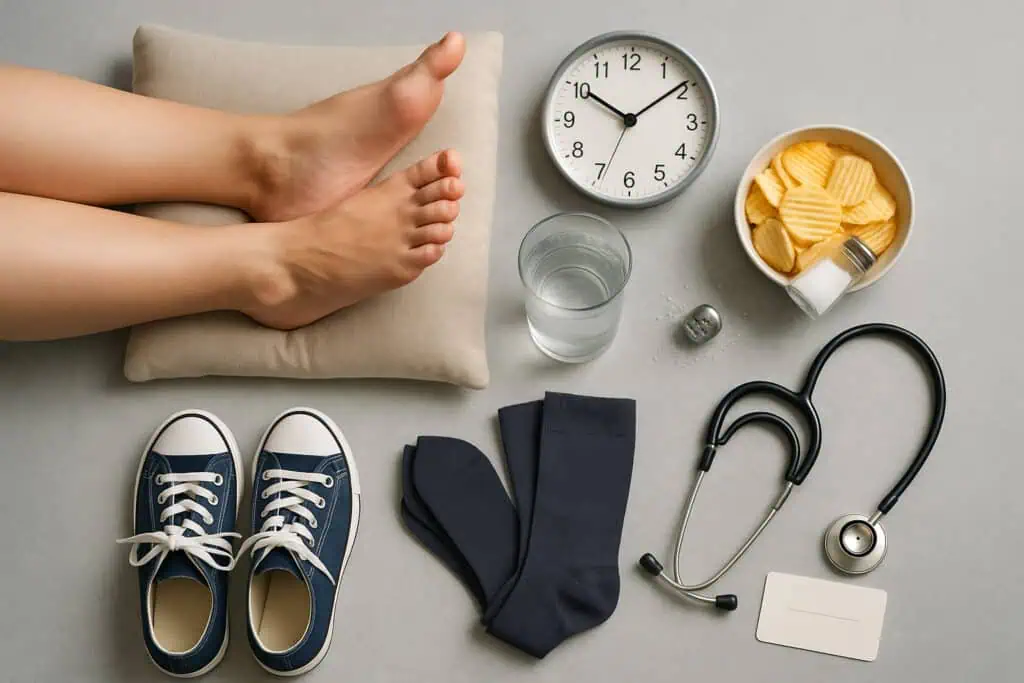
While this isn’t medical advice, these everyday steps often help:
- Elevate your feet above your heart for 20–30 minutes.
- Walk around each hour; avoid long sits or stands.
- Drink water between alcoholic drinks and before bed.
- Ease up on salt (swap chips and fries for lower-salt snacks).
- Loosen tight shoes or switch to roomier, supportive ones.
- Try gentle compression socks the next day if your doctor says they’re OK.
If swelling is frequent, talk with your clinician. They might check your veins, liver, kidneys, and heart, and they can rule out other causes of peripheral edema.
Final word (recap)
Why your feet swell when you drink alcohol comes down to fluid shifts, relaxed blood vessels, and real-world habits like sitting or standing too long, salty food, warm rooms, and tight shoes. Most swelling fades in a day or two. Still, if it’s one-sided, painful, keeps returning, or shows up with warning signs (like yellow skin or belly swelling), talk to a clinician to check your veins, liver, kidneys, and heart.
Interested in exploring similar posts? Visit The Science of Everyday Life hub for more!