
TL;DR: Toothaches hurt more at night because lying down lets more blood and pressure reach an already inflamed tooth, your brain has fewer distractions, and night-time changes in saliva, muscles, and body chemistry make pain signals feel stronger. This is why throbbing seems worse in bed, even if the tooth has been sore all day.
A short history of toothache
Tooth pain has been part of life for centuries. People wrote about it in letters and diaries, doctors logged it in case notes, and nearly everyone remembers a night when a small toothache suddenly felt huge. Over time, dentistry learned what’s happening inside the tooth: decay can reach the soft center (the pulp), which holds nerves and blood vessels. When that area gets irritated or infected, pain grows and can spread.
Because modern medicine can see and measure tooth problems much better than the past, dentists now link different “toothaches” to different problems—like a cavity, a cracked tooth, gum disease, or a deep infection called an abscess. Early care usually helps more and hurts less, but many people still wait until night pain forces action.
The 5 reasons toothaches hurt more at night
Lying flat increases pressure on sore tissue
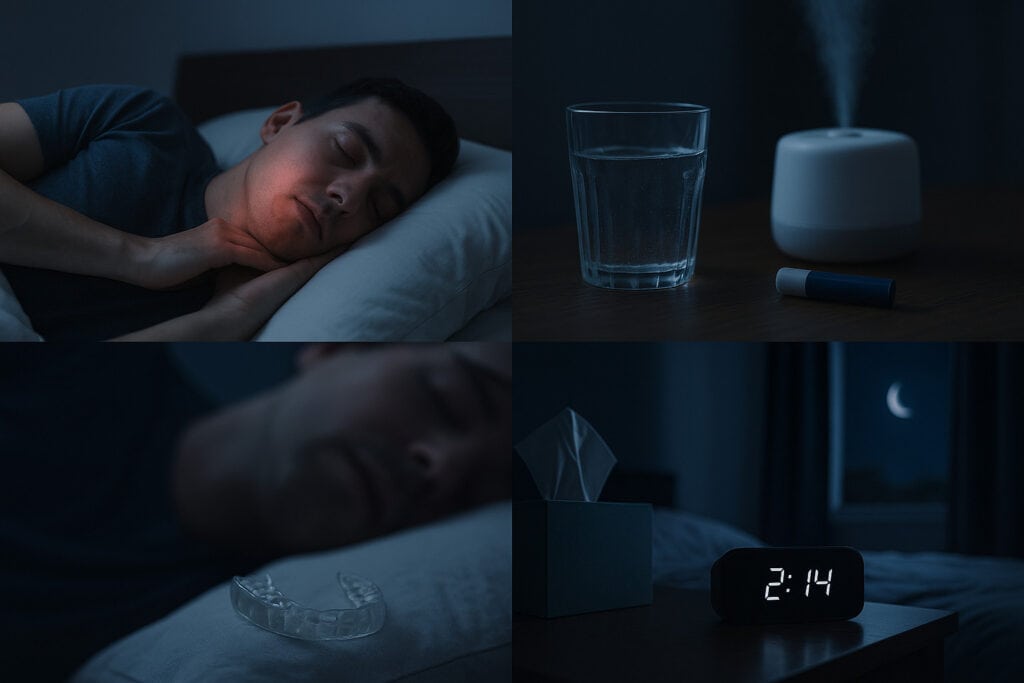
When you lie down, more fluid can shift toward your head. In an irritated tooth, that extra pressure has nowhere to go inside hard enamel, so nerves get squeezed and “throb.” Health services also note that toothache often feels worse when you’re lying down at night, which fits this pressure idea.
Your brain has fewer distractions
During the day, work, noise, and movement pull your attention away. At night, it’s quiet and still, so your brain tracks pain signals more closely. On top of that, studies show pain sensitivity follows daily (circadian) patterns; at some hours, your body can feel pain more strongly than at others.
Dry mouth at night makes teeth touchy
Saliva protects your mouth. It buffers acids, washes food bits away, and soothes tissue. However, saliva flow is lowest during sleep, and mouth-breathing can dry you out even more. Drier teeth and gums feel rougher and more sensitive, which can boost pain signals.
Night grinding or clenching (bruxism) stirs things up
Many people grind in their sleep without knowing it. That pressure can bruise ligaments around a tooth, make a sore tooth sorer, and wake you with jaw pain or a headache.
Sinus pressure often peaks in the evening
If your upper back teeth ache in a “band,” especially when you bend over, the problem may be sinus-related, not dental. Swollen sinus linings can press on nerves near upper molars and feel like tooth pain. Treating the sinus issue usually eases the “toothache”.
FAQs: toothaches at night
How can I sleep with a toothache tonight?
Elevate your head, take appropriate OTC pain medicine (if safe for you), use a cold compress, and rinse with warm salt water. Then book a dentist. A general, easy primer on toothaches and when to seek care is on MedlinePlus.
Does lying down actually make a toothache worse?
Often, yes. Lying flat can increase pressure in inflamed tissue, and many people report worse pain in bed, especially when lying down.
Could grinding be the reason my tooth hurts at night?
It could. Night grinding or clenching loads your teeth and jaw while you sleep. If you wake with jaw soreness or headaches, ask your dentist about it.
Can a sinus infection cause tooth pain at night?
Yes—especially in the upper molars. Treating the sinus problem usually helps the “toothache,” too.
Is it true that putting aspirin on a tooth helps?
No. That can burn your gums and cheek. Use medicine only as directed on the label and never “park” pills on the tooth. If pain is strong, call a dentist.
When should I go for urgent care instead of waiting?
If you have facial swelling, fever, trouble swallowing or breathing, a foul taste with swelling (possible abscess), or you feel seriously unwell, seek urgent care right away. Do not wait for morning.
Bonus: surprising night-time toothaches facts
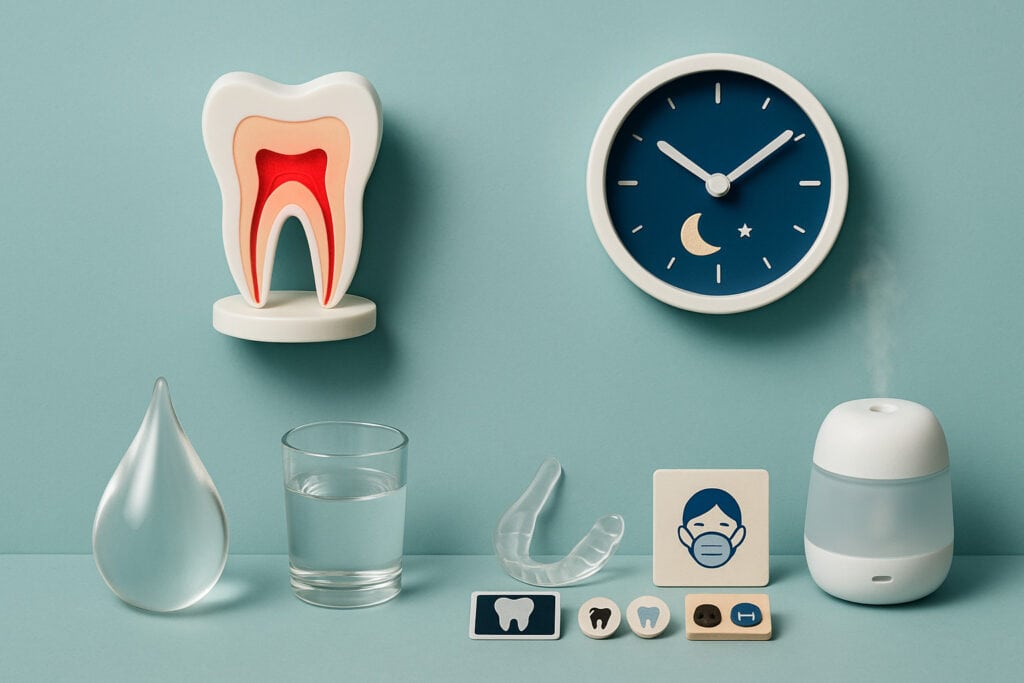
- Tooth pain has “no room to swell.” Inside a tooth, the inflamed pulp is trapped by hard walls, so pressure builds and nerves fire. That’s why the pain can feel sharp and “electric” when decay gets deep.
- Circadian biology matters. Your immune system and pain pathways run on clocks. Because of that, some people feel pain more at certain hours.
- Saliva is a natural shield. Less saliva at night means acids and bacteria sit longer on enamel and gums, which can make a sore spot feel extra raw.
- One “toothache” can be many problems. A cavity, cracked tooth, high filling, gum infection, night grinding, or a sinus issue can all cause pain—and some overlap. That’s why a proper dental exam matters.
Bonus 2: quick relief for night toothaches
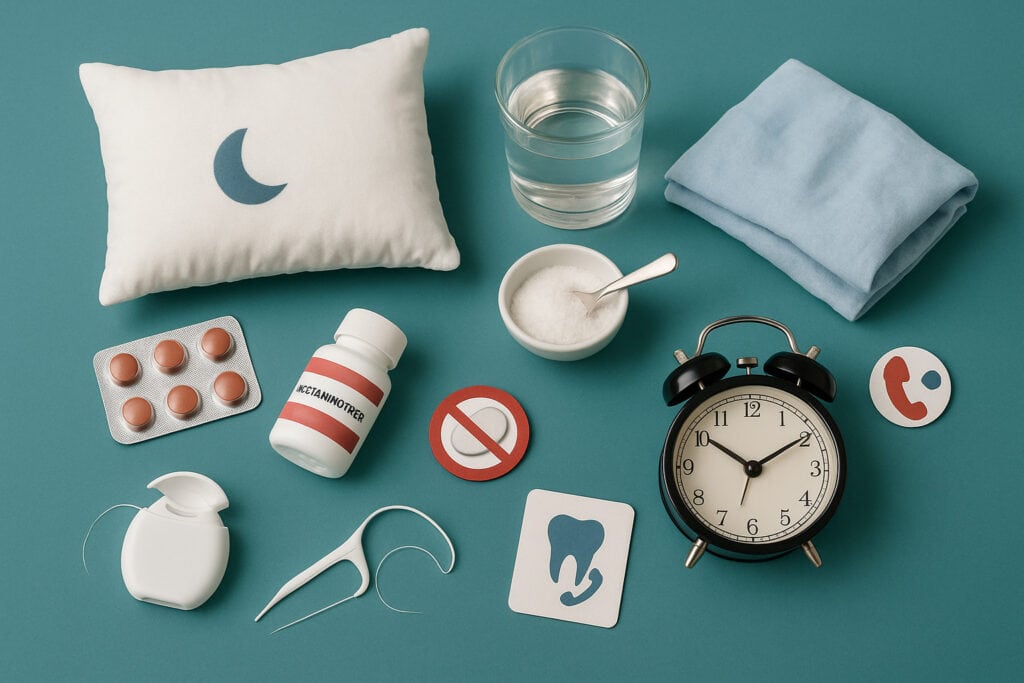
These steps do not replace a dentist, but they can help you get through the night.
- Sleep a bit propped up. Use an extra pillow so your head stays higher. This can lower pressure in sore areas.
- Use OTC pain meds safely. If you can take them, ibuprofen or naproxen often help because they cut inflammation; acetaminophen helps pain, not swelling. Follow the label exactly and avoid doubling up.
- Cold on the cheek (10 minutes on, 10 off). A cold compress outside the face can calm swelling (don’t forget to wrap the pack in a cloth to protect skin).
- Warm salt-water rinse. Swish gently and spit; it may soothe irritated gums.
- Keep the area clean. Carefully floss around the sore tooth; trapped food can make pain worse.
- Skip “home cures” that burn. Do not put aspirin on the tooth or gum; it can burn soft tissue. Swallow pain relievers only as directed.
- Call a dentist in the morning. Pain is a signal. You still need the cause treated.
Final word: why toothaches hurt more at night
Position, dryness, brain focus, muscle habits, and body cycles all line up after dark and push tooth pain higher. Use the simple night fixes to cope, but see a dentist soon so the cause gets treated and your nights get quiet again.
Interested in exploring similar posts? Visit The Science of Everyday Life hub for more!