
TL;DR: Why do cats hiss at you? Because they feel unsafe or overwhelmed and want space. A hiss is a warning, not “meanness.” It often means fear, surprise, pain, or “too much” handling. Give the cat room, lower the stress, and check for pain if it keeps happening.
A short history of the cat hiss

People have noticed the cat hiss for centuries. Early writers and artists showed the classic arched back, puffed tail, flat ears, and open mouth—signs designed to make a small animal look bigger. Even Charles Darwin wrote about how animals show emotion through posture and sound, which helped shape how we study cat signals today. Although he didn’t give modern training tips, his work set the stage for seeing the hiss as communication, not spite.
As cat science grew, welfare groups and behavior charities taught owners to look at the whole picture: ears, whiskers, tail, body shape, and voice. Hissing sits with other “back off” signals like growling and piloerection (fluffed fur). Modern guides explain that these signs usually come from fear or stress rather than a wish to fight.
Why do cats hiss at you? The 5 reasons
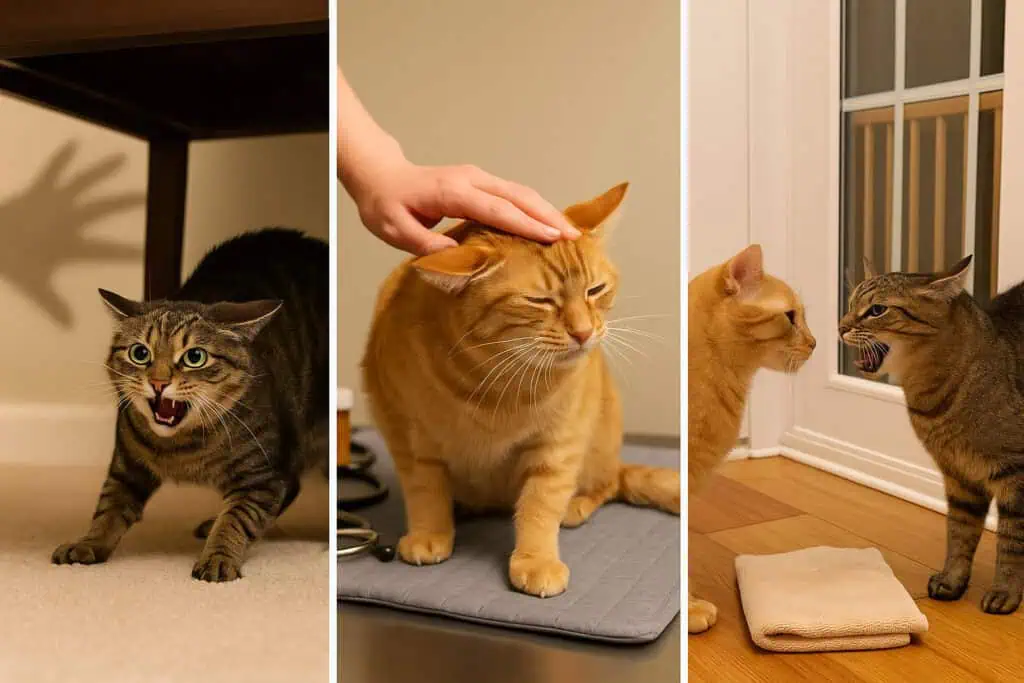
A hiss is a fast way to say “stop.” Below are the most common causes. Use them to interpret, not blame.
Fear, startle, or feeling trapped
When a cat is surprised by a quick movement, a loud noise, or a stranger, the nervous system fires fast. The body gets ready to protect itself. Hissing keeps distance without a fight. Classic fear body language—ears back, crouch, tail tucked—often appears at the same time. Cornell’s Feline Health Center lists hissing among fear-aggression signs when a cat faces unfamiliar people, animals, or noises.
Pain or discomfort
Cats hide pain well. Because of that, changes in touch—picking them up, brushing, or patting a sore spot—can trigger a hiss. If your friendly cat suddenly hisses when you approach or handle them, consider pain. VCA explains that painful cats may hiss, lash out, and resent being brushed or picked up.
Overstimulation or “I’ve had enough”
Some cats enjoy petting—until they don’t. Petting can tip from “nice” to “too much” quickly, especially along the back or belly. The hiss is your early warning. Welfare organizations note that stress and too much handling can turn into swipes or pounces if you ignore smaller signs first.
Territory, introductions, and scent mix-ups
Cats live by scent. New pets, a change in home smells, or a vet-visit odor on a returning cat can all spark hissing. It’s a way to set boundaries without jumping straight to a fight. Humane Society guidance even says consistent hissing during introductions is your cue to slow things down.
Protecting kittens or resources
Mother cats may hiss to guard kittens. Any cat may hiss to protect key spots—beds, food, litter boxes—especially in crowded homes. PetMD points out hissing can assert boundaries and protect territory during new-cat introductions.
FAQs about why cats hiss at you
Is hissing a threat or a warning?
It’s a warning. The cat is saying “please back off.” It can stop a fight before it starts. The ASPCA lists hissing as part of the aggression spectrum, but it often shows up in defensive situations.
Should I punish a cat for hissing?
No. Punishment adds fear and can make things worse. Instead, give space, manage triggers, and teach calm routines. If stress is ongoing, get vet and behavior help. UK charity PDSA recommends checking for medical causes and using certified behaviorists when needed.
Why does my cat hiss at me after the vet?
Your cat—and your other pets—may react to the new clinic smell. To them, the returning cat can seem like a stranger. Keep them apart at first, share scents with towels, and reintroduce slowly.
Can medical issues make a cat hiss?
Yes. Arthritis, dental pain, skin irritation, and other problems can make handling painful. Because cats mask pain, behavior change may be your first clue. A vet exam is the right next step.
Why does my cat hiss when I pet a certain spot?
That often means “that spot hurts” or “that’s too much.” Stop, note where it happens, and talk to your vet if it repeats. Overstimulation is another common cause; learn your cat’s “I’ve had enough” cues.
Bonus: short facts about the cat hiss
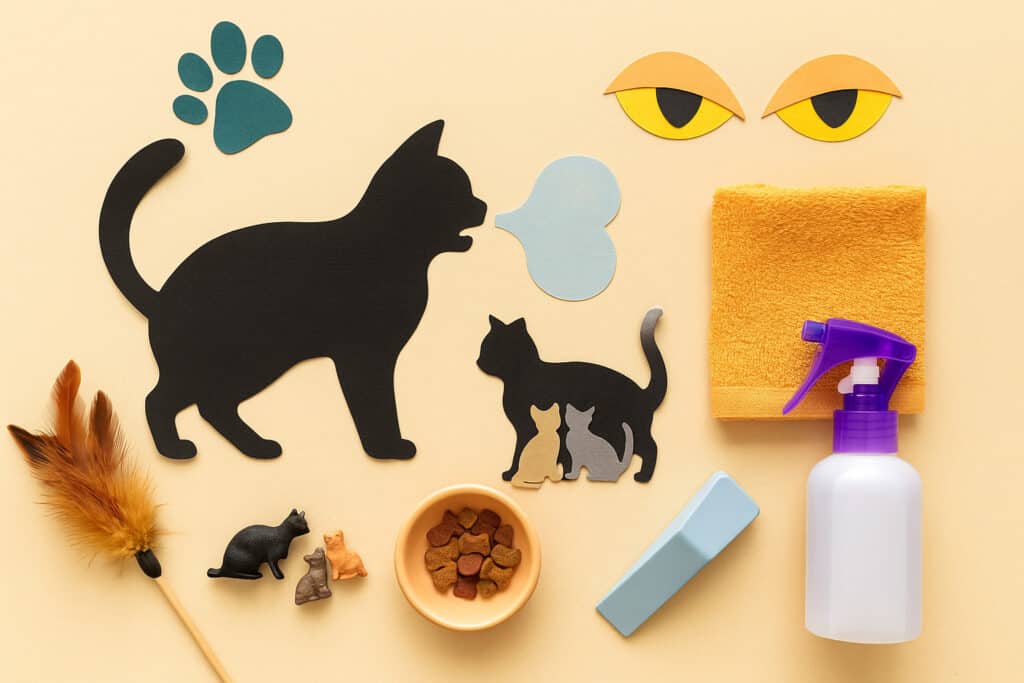
- Hissing is just forced air. It’s a sharp exhale through a tense mouth, often with teeth bared and tongue curled—no “words,” just a clear signal. Modern behavior guides group it with other distance-increasing signals that help avoid injury.
- It’s meant to prevent fights. Most cats would rather not brawl. A hiss often works—the other animal or human backs off.
- Mother cats weaponize it wisely. Queens guarding kittens hiss first to create space without risk.
- Your response matters. When owners slow introductions the moment hissing starts, long-term relationships go better. Humane Society materials recommend pacing and scent work over “toughing it out.”
Bonus 2: How to respond to the cat hiss (so it won’t turn into a bite)
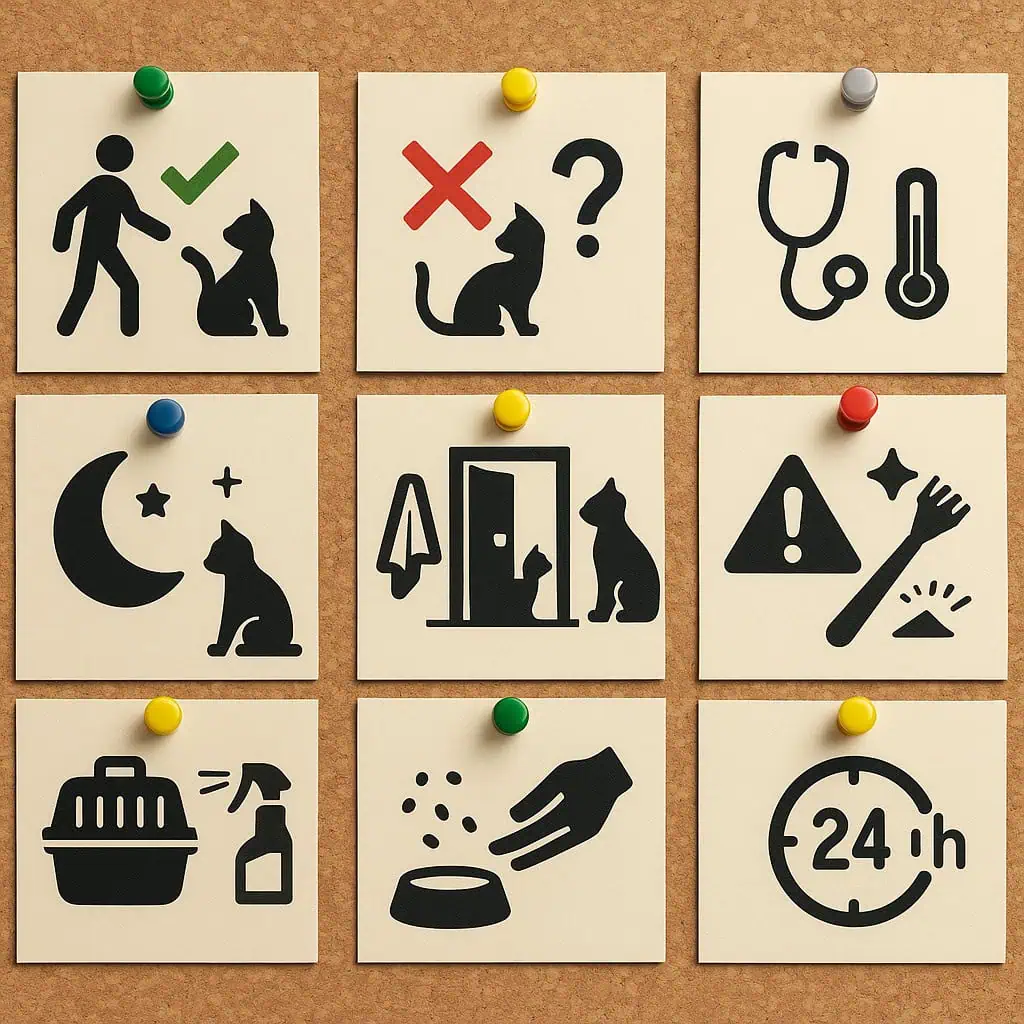
- Pause at once. Stop touching or moving closer. Give the cat space and a clear escape route.
- Lower the arousal. Turn down TV, move other pets away, and avoid staring. Slow blink and look aside.
- Use distance, then rebuild trust. Let the cat come to you. Offer a toss treat rather than a hand-fed one.
- Check for pain if it’s new or frequent. Sudden hissing in a once-calm cat deserves a vet check. Pain and illness often show as behavior first.
- Reintroduce cats slowly. Separate, swap scents, and use short, calm sessions. If hissing continues, slow down more.
Final word: why do cats hiss at you
Cats hiss at you because they need space or relief. Respect the warning, reduce stress, and check for pain if it’s new or frequent. When you listen to the hiss, trust grows—and scratches don’t.
Interested in exploring similar posts? Visit The Science of Everyday Life hub for more!
Yes, it’s obviously a sign of distress. Anxiety and fear lead to aggression even in humans!