
TL;DR: frogs croak at night mostly because the night is the best time for males to send out mating calls. After dark, the air is usually calmer and cooler, sound carries better, and the risk of drying out is lower. Many predators that hunt by sight also slow down, so it’s safer to call. Rain and humidity boost calling too. In short, nighttime offers frogs the right mix of safety, moisture, and acoustics to be heard.
A short history of frog choruses
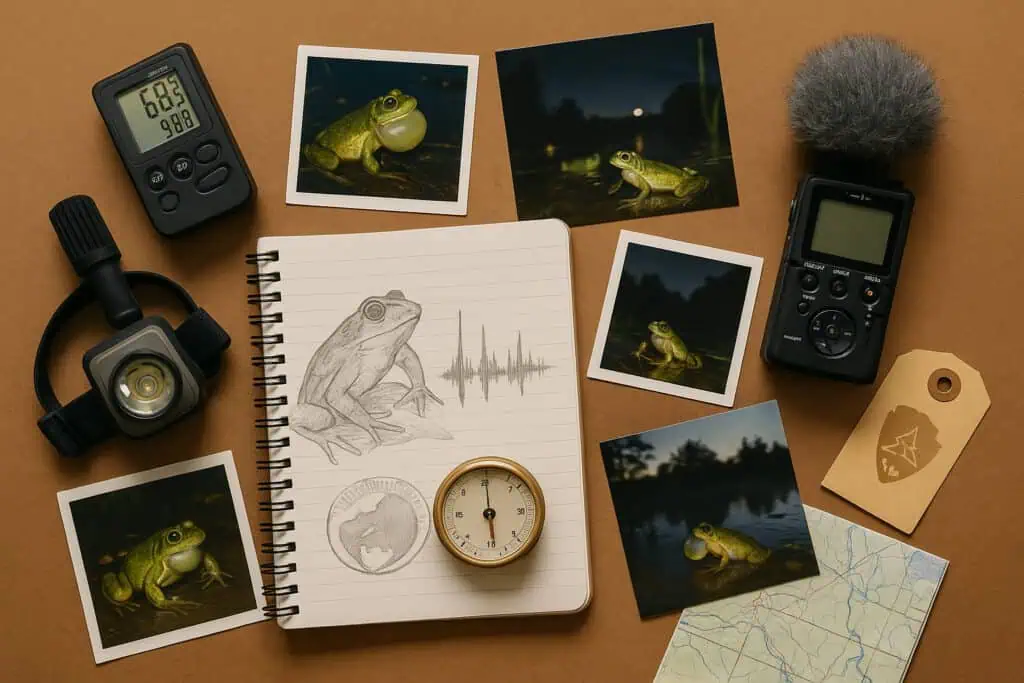
People have noticed evening frog choirs for as long as we’ve told stories about summer nights. Before apps and recorders, locals simply learned the seasons by ear—spring peepers meant spring, for example, and bullfrogs meant warm months. As technology improved, scientists and park rangers began to record those sounds on purpose. You can browse real frog calls on AmphibiaWeb’s sound library, and you can hear full nighttime ambiences captured by the U.S. National Park Service on their “Sounds of Summer” page.
Over time, biologists built a body of research called bioacoustics. They don’t just identify species by sound; they also study when and why the calls happen and how weather changes them. That research helps with conservation because it shows where frogs still breed and how healthy a wetland is. This background sets up the simple question we came to answer.
Why do frogs croak at night? The 4 big reasons
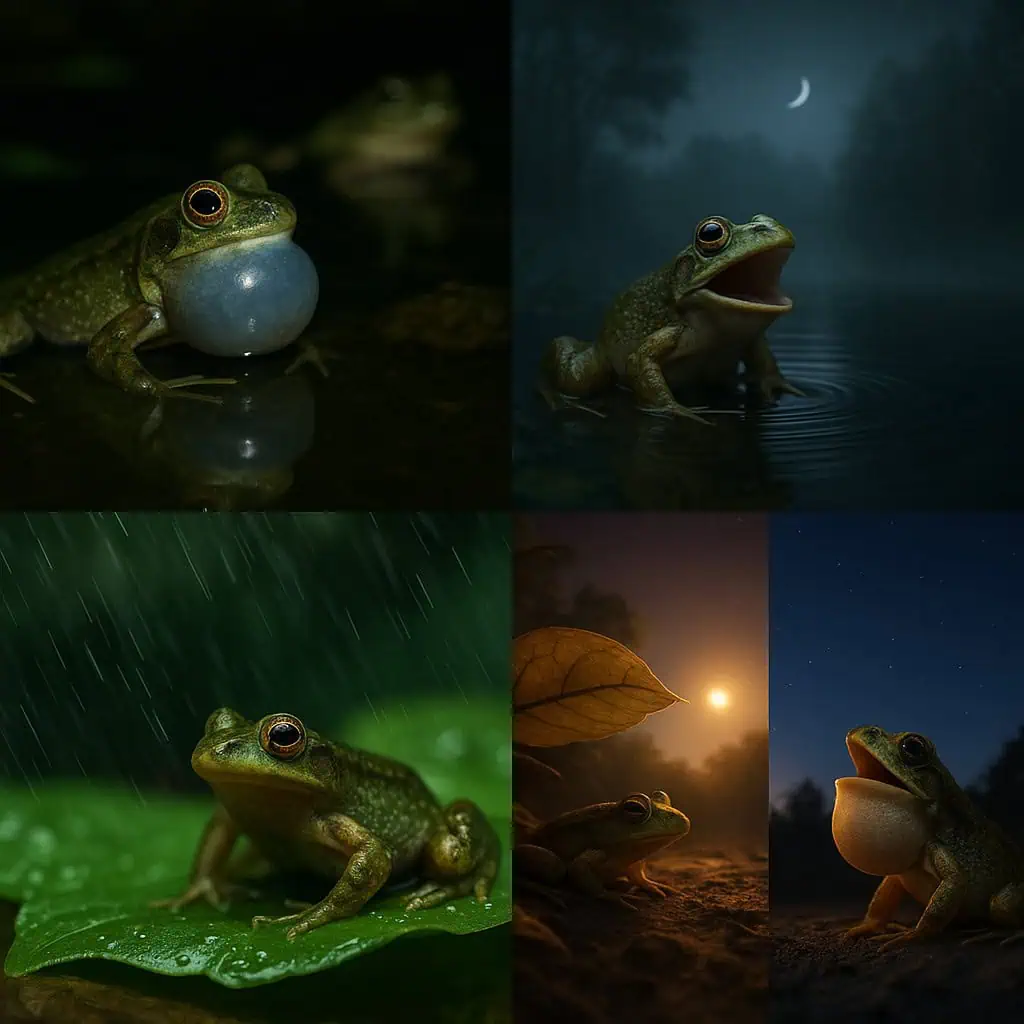
Nighttime calling isn’t random. It fits what frogs need to survive and breed.
Courtship and territory (the main job)
Most of the croaking you hear are male advertisement calls—basically “I’m here, I’m healthy, come over.” Calling can also warn other males to back off a perch. Because a strong, steady call matters most to breeding, many species save their effort for evening, when conditions are friendlier. The U.S. Fish & Wildlife Service has a straightforward explainer on how frogs make sound with lungs and vocal sacs and why mating season ramps up the noise
Better sound at night (physics helps them)
At night, wind often drops, and a temperature inversion can form—cool air near the ground with warmer air above. That layering bends sound back toward the ground, so calls carry farther and sound clearer. Less turbulent air also means fewer sound distortions. If you want the technical side, acousticians have shown how nighttime boundary layers refract sound downward, boosting long-distance travel. And, more generally, sound is a great signal in the dark when vision doesn’t help much.
Moisture and body safety (don’t dry out)
Frogs breathe through skin as well as lungs, so they lose water easily. Night air is usually more humid and cooler, which lowers the risk of drying out while calling. After rain, puddles and ponds expand and new shallow edges appear, so more males call and more females move. Large studies of chorusing patterns show humidity and rainfall are key triggers in many species.
Fewer eyes on you (predators and heat)
Finally, many daytime predators that hunt by sight rest at night. That doesn’t make nights risk-free, but it tilts the odds. And because frogs are cold-blooded, the heat of daytime can be costly; waiting until evening can make the same calling effort less stressful on the body.
FAQs about why do frogs croak at night
Do frogs croak all night long?
They can, but not always. Calling tends to peak right after dusk, then taper toward midnight or later, depending on the species, season, and weather. Sudden changes—like a cool wind or heavy rain—can pause a chorus until conditions improve.
Why are frogs louder after rain?
Because rain brings moist air and new shallow water, which are perfect for breeding. More males call, and females are more active, so the whole chorus swells. Many field studies link humidity and rainfall with higher calling activity.
Do female frogs croak too?
Mostly it’s the males that produce advertisement calls. However, scientists are finding more exceptions than we used to think: a 2025 review pulled together evidence of female vocalizations in several species and why they matter for mating and communication. Older work also documented rare female mating calls in a few species.
Is croaking a “weather prediction” for rain?
Not exactly, but the pattern overlaps. Frogs do not forecast weather; instead, they respond to humidity and rain because those conditions protect their skin and create better egg-laying sites. That’s why calling often feels like a rain signal.
Why do frogs go quiet when I walk up to the pond?
Your footsteps, flashlight, or even your shadow can make frogs think a predator is near. They stop calling to avoid giving away their spots. If you stand still and turn off bright lights, the chorus often resumes within a few minutes.
Bonus: fun facts related to frogs’ croaking
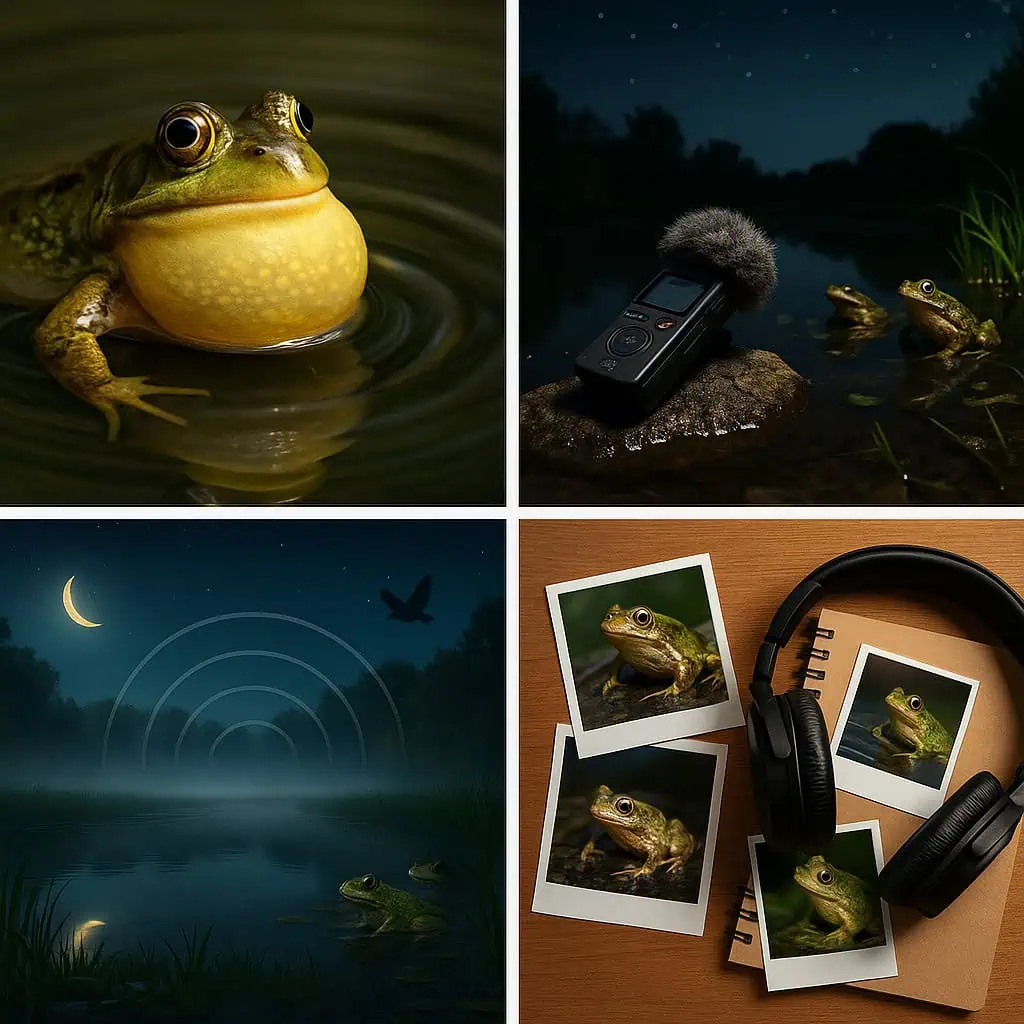
- How calls get so loud: A frog’s vocal sac works like a resonating speaker, bouncing air between the lungs and sac to boost volume—handy when calling across a dark pond.
- Hear the difference by species: You can sample real calls—peeps, trills, snores—using AmphibiaWeb’s sound gallery. It’s fun to compare how each species solves the same “be heard at night” problem.
- Field recordings under the stars: Park scientists collect clean night soundscapes to monitor wildlife and human noise.
- Dark beats light for sound: Because of nighttime temperature inversions, your ear can pick up frogs from farther away than in the day—one reason their choirs feel so huge after sunset.
- Sound works when sight fails: In darkness and dense plants, sound is the reliable signal. That’s why so many animals lean on acoustics after dusk.
Final word on why frogs croak at night
Why do frogs croak at night? Because night offers the perfect mix for calling—safer conditions, moist air, and physics that help their voices carry—so more frogs hear the message and more mates meet at the water’s edge.
Interested in exploring similar posts? Visit The Science of Everyday Life hub for more!