
TL;DR: Why do horses wear a mask? Because different “masks” do different jobs. Mesh fly masks protect eyes and skin from insects and sun. Racing masks like blinkers help some horses focus. Grazing muzzles limit grass intake for weight and health. Medical masks shield damaged or light-sensitive eyes. They’re normal tools, not a sign of cruelty.
Why do horses wear a mask? A short history
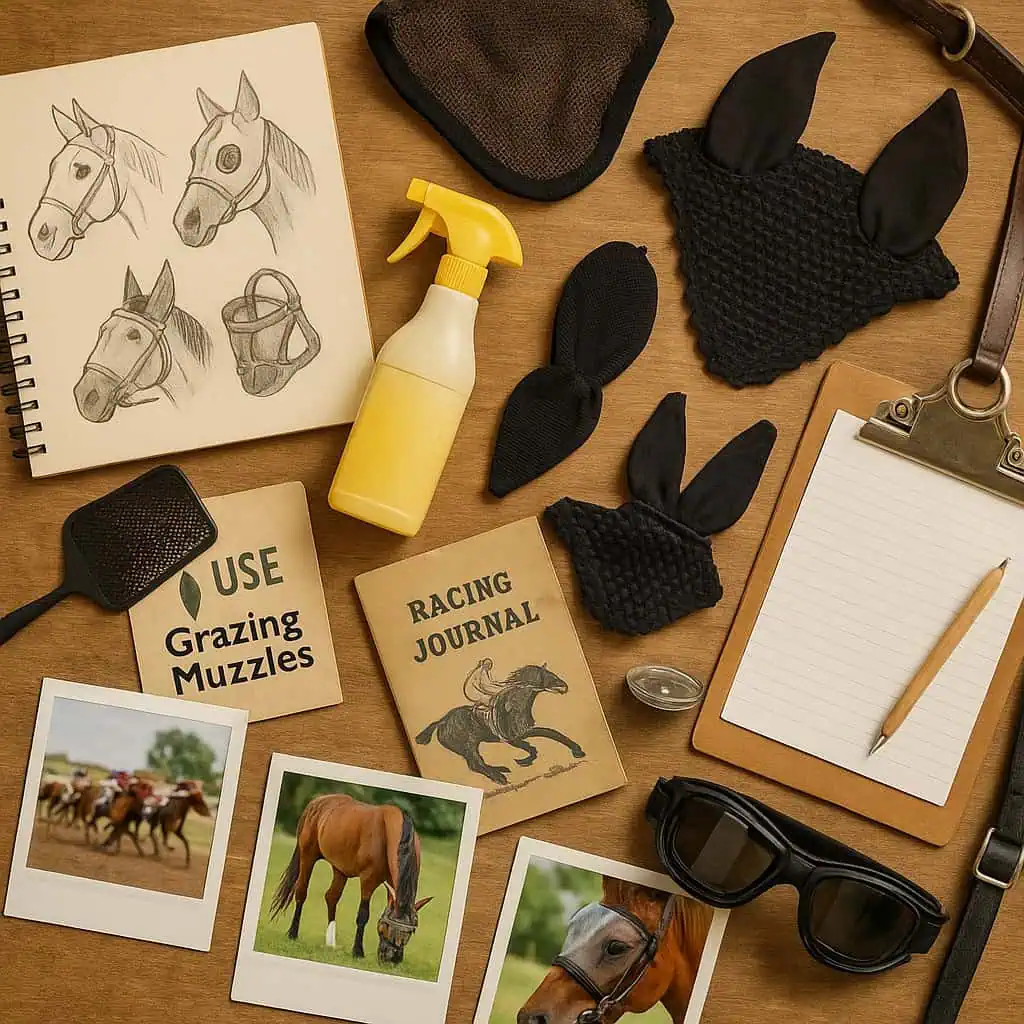
Walk past a summer field or watch a race, and you’ll see horses wearing face gear that looks like a mask. Over time, owners have used several types: mesh coverings, racing hoods with cups, soft nose rolls, and muzzles that look like a basket. These bits of tack became common because riders and vets kept meeting the same problems in the real world—flies, bright sun, nervous young horses, and rich pasture.
Racing fans have watched hoods for generations, and welfare groups have long discussed muzzles in weight control. For context, racing guides explain how blinkers are standard equipment in some runners, while UK welfare groups publish grazing muzzle guidance for everyday owners.
Why do horses wear a mask? The 4 reasons
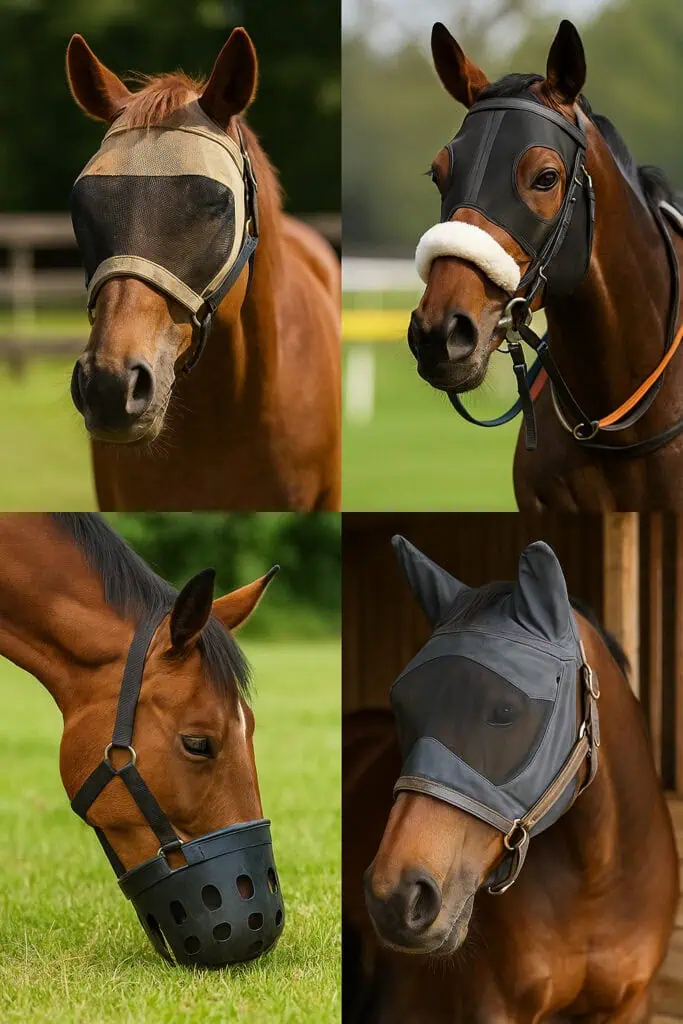
Different masks solve different problems. Here’s how to make sense of what you’re seeing.
Fly masks (summer)
These are the see-through, mesh “bee-keeper” hoods you spot in warm months. They sit away from the eyes and usually cover the ears. The aim is comfort: flies carry germs and irritate skin, especially around eyes and pink noses. Good masks also block part of the sun’s UV, which matters for pale skin and light-sensitive eyes. Veterinary pages on headshaking and eye disease repeatedly mention fly masks as part of management plans and daily comfort.
What to know: The mesh should never rub the eye. The horse should see through it, blink freely, and have the mask removed and checked daily.
Blinkers and shadow rolls (racing “masks”)
On the track, you’ll notice a fabric hood with cups by the eyes (blinkers) or a fluffy roll on the nose (shadow roll). These aren’t about flies or sun. Instead, some excitable horses run better when they ignore distractions at the sides or on the ground. Trainers choose these case-by-case, and many horses never need them.
What to know: Blinkers and similar gear are adjusted carefully. Too little or too much coverage can backfire, so fit and horse temperament matter.
Grazing muzzles (the basket-looking masks)
These look like a short, sturdy cup around the mouth with holes at the bottom. They let the horse drink and nibble, but not gulp big mouthfuls of rich grass. Owners use them to manage weight and reduce the risk of laminitis in easy-keepers.
What to know: A muzzle is not a punishment. It’s a diet tool. It must fit well, be introduced slowly, and used for limited hours. The horse still needs fibre and water.
Treatment and medical masks
When eyes are injured or light-sensitive (for example, with uveitis), vets often recommend extra UV protection and a barrier against wind and dust. Special therapeutic fly masks or goggles can help the eye heal and keep the horse comfortable.
What to know: Medical masks should follow a vet’s plan. They don’t replace treatment; they support it.
FAQs about why horses wear a mask
Are fly masks safe and can horses see through them?
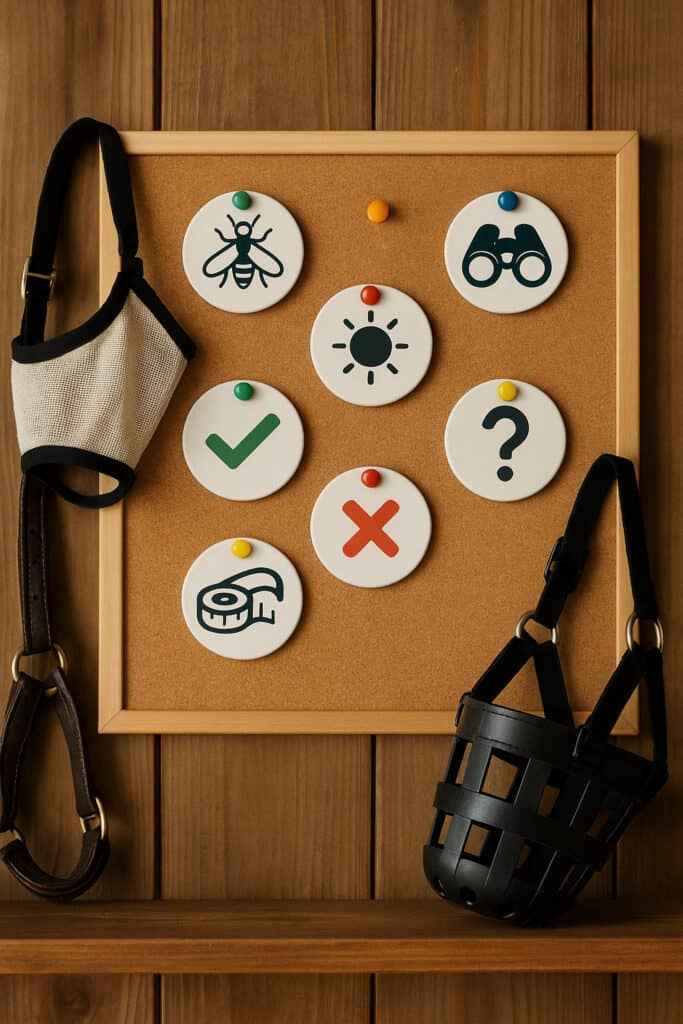
Yes, when they fit properly. Horses see through the mesh like you see through a screen door. However, owners should remove and check masks daily to avoid trapped dirt or rubbing. Vet and extension pages on headshaking and eye care list fly masks among common comfort aids.
Do UV-blocking fly masks fully block the sun?
Not fully, but many reduce UV a lot, which helps pale skin and sensitive eyes. Because the fabric is mesh, some UV still passes. For light-sensitive horses or eye disease, vets often suggest higher-protection designs during bright weather.
Isn’t a grazing muzzle cruel?
No. Used correctly, it’s a health tool—like a smaller bowl for a dog on a diet. It limits grass intake but still allows slow, natural eating. UK welfare groups say fit and time limits are key. They recommend gradual introduction and regular checks to prevent rubbing.
Why do some racehorses wear a mask while others don’t?
Because not every horse needs help tuning out distractions. Trainers test gear like blinkers in training; they keep it only if the horse runs calmer or straighter with it. Many horses compete just fine without any eye cups.
Can a mask stop headshaking?
Sometimes it helps comfort, but it’s not a cure. Headshaking can be linked to facial nerve pain or light sensitivity. A vet may try several steps—management changes, nose nets, medication—and may add a fly mask to reduce wind or glare in some horses.
Bonus: fun facts about horse masks
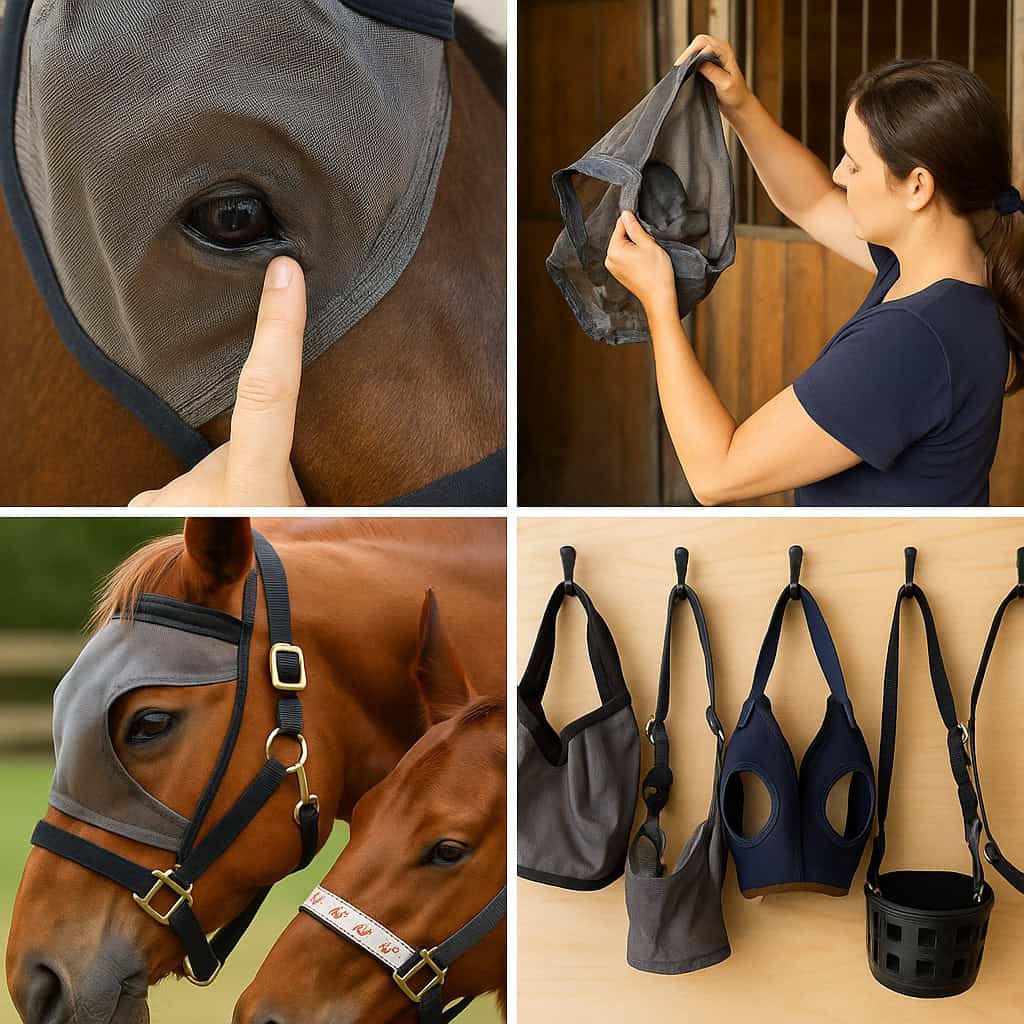
- Fit beats fashion. A mask that touches the eyelashes is too close. Good fit prevents rubs and keeps the mesh off the eye surface. Welfare groups publish clear fit tips for both fly masks and muzzles.
- Daily checks matter. Because masks can trap seeds, midges, or dust, owners should remove, clean, and re-fit them each day. This simple habit prevents most problems.
- Horses communicate with ears and eyes. Masks shouldn’t block natural ear movement or eye expression for long periods. Therefore, many owners use them in daylight and remove them overnight unless a vet advises otherwise.
- Weight control saves lives. Laminitis risk rises with obesity and spring grass. Consequently, muzzles, slow-feed hay, and turnout plans work together to protect easy-keepers.
- Not every “mask” is the same. Fly masks, racing blinkers, shadow rolls, visors, and grazing muzzles solve different problems. Because of that, copying another horse’s gear without a reason rarely helps.
Final word: why horses wear a mask
In plain terms, horses wear a mask to stay comfortable, stay healthy, or stay focused. When chosen and fitted well, these masks are practical tools that help horses live and work safely.
Interested in exploring similar posts? Visit The Science of Everyday Life hub for more!