
Most people assume circular flocks mean a coming storm or a confused bird that’s lost the plot.
However, the real story sits at the intersection of physics, flocking, and routine. Learn the language of thermals, watch hawks form kettles, and notice roost rings blooming on radar, and the sky starts speaking in patterns you can read.
From Field Notes to Radar
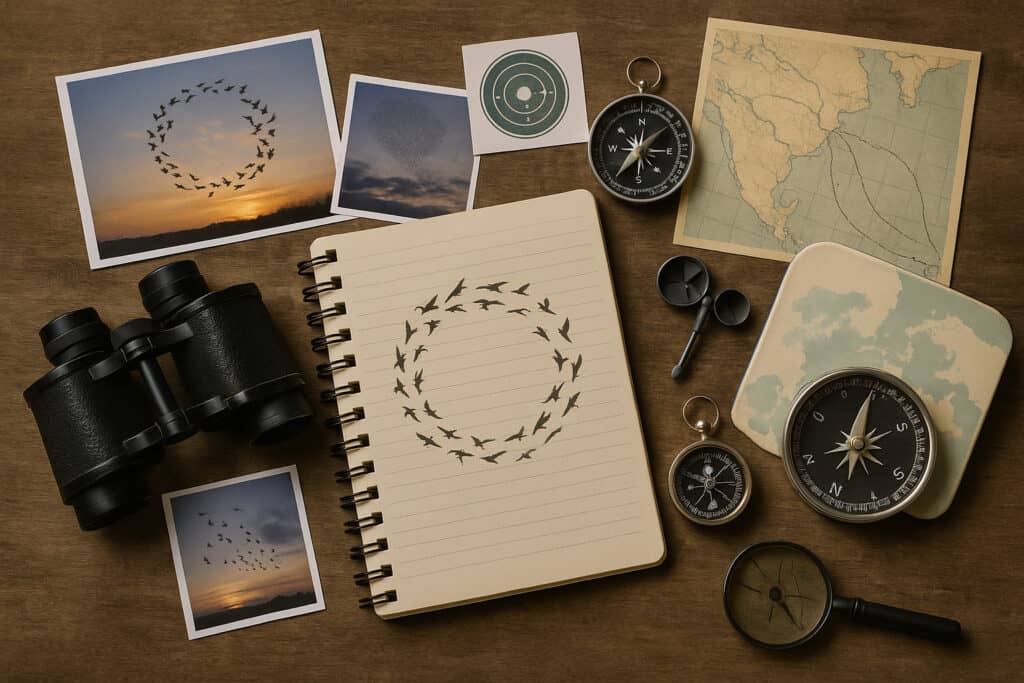
People have watched birds make circles for a very long time. Birders even have names for the patterns. Large raptors spiral together in big, high groups called “kettles” during migration, a scene you’ll find in many field notes and guides. At dawn and dusk, radar operators and weather geeks notice neat doughnut shapes on screens—these “roost rings” are birds leaving or returning to a shared sleeping site, and the U.S. weather service has logged them for years.
Writers and photographers also love the living shapes made by starlings at sunset. You’ve likely seen those huge, shifting clouds of birds that pulse and twist. We’ll get to the “why” in a moment, but what matters here is this: circling has been carefully observed, named, and recorded in both birding circles and weather records for decades.
Four Practical Flight Patterns
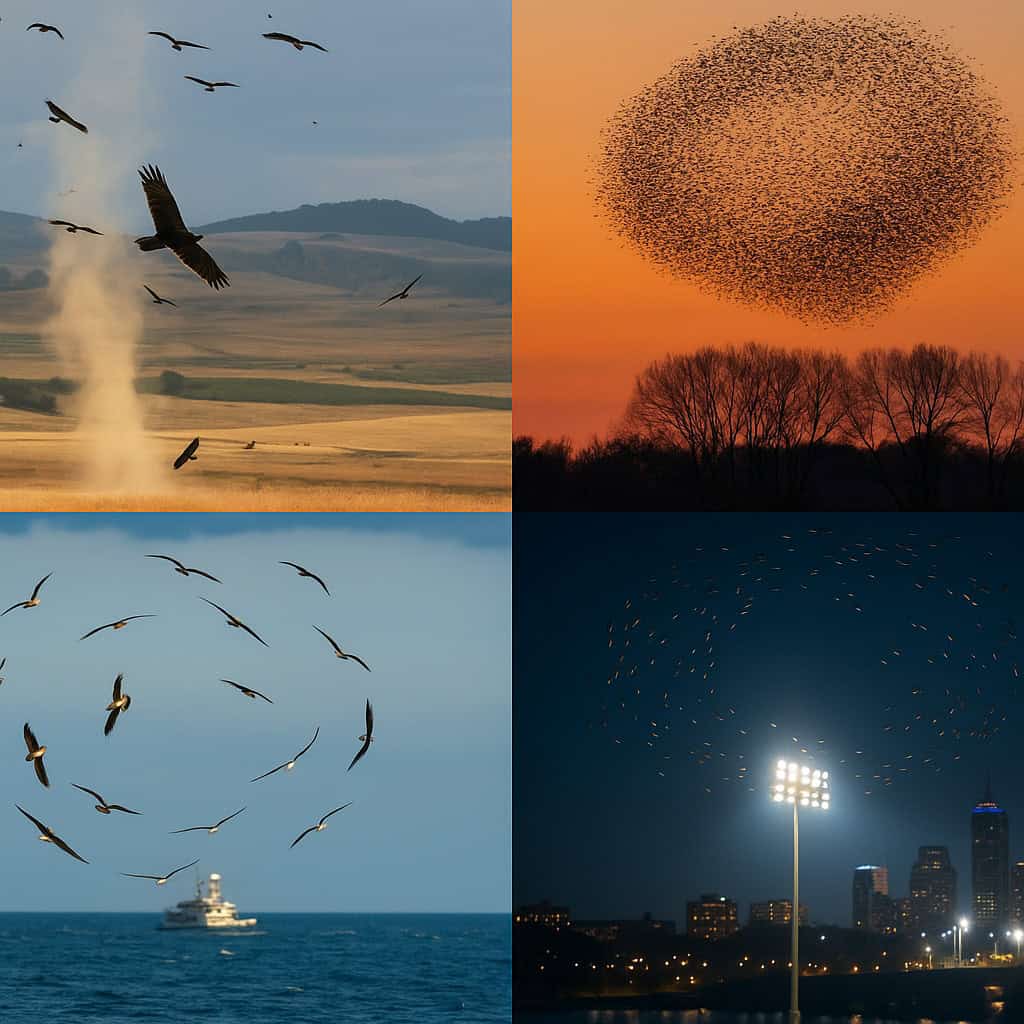
Circling isn’t one single behaviour with one single cause. Different birds circle for different, practical reasons. Here are the main ones, with simple examples you can spot outdoors.
Riding Invisible Elevators
When the sun heats the ground, pockets of warm air rise like invisible elevators. Big-winged birds—vultures, hawks, gulls—slide into these columns and circle to stay inside the lift. That saves tons of energy; they gain height without flapping, then glide off to the next thermal.
Dusk Roosting Swirls
Close to sunset, some species gather, swirl, and then drop into a safe sleeping spot. Starlings are the classic case. Those famous “murmurations” look like smoke in slow motion. They’re part of a social routine that ends with thousands landing together to roost.
Holding Over the Hotspot
Circles also keep birds over the hotspot. Swallows and swifts circle where insects are thick. Gulls circle above schools of fish or fishing boats. Raptors may circle high when scanning wide ground for movement. The shape holds them in range while they watch, wait, and strike.
Orientation Loops
Pigeons and some other birds often make a few circles before choosing a clear direction. Think of it like turning your body to line up a mental map and compass. Long-running research on homing pigeons has documented these short orientation loops.
Bright Lights, Lost Bearings
Most songbirds migrate at night. However, bright building lights can pull them off course. Birds may get trapped circling a lit area, which wastes energy and can lead to window strikes. The U.S. Fish & Wildlife Service explains how nighttime lighting draws migrants and why turning lights off helps.
Flock Shields in Motion
When a falcon turns up near a big flock, you’ll often see tighter, faster loops. Those shapes can make it hard for a predator to lock onto a single target. The roosting swirl may then collapse into the roost in a quick “waterfall.”
FAQs about why birds fly in circles
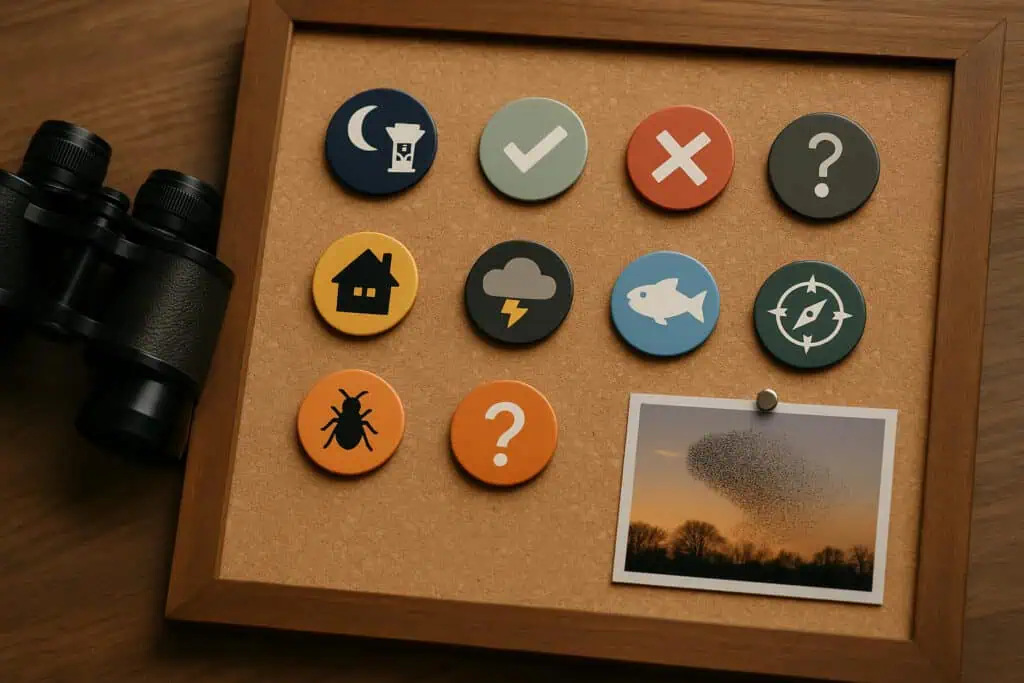
Why do birds fly in circles at night?
Migratory instincts rely on natural night cues, but intense artificial lighting can override that programming. When beams from buildings or stadiums capture a flock, the birds may become disoriented and trapped in the illuminated zone until they are exhausted.
Why do seagulls fly in circles?
Urban environments create specific invisible heat columns (often above roofs or pavement) that allow gulls to gain height without flapping. Staying inside that lifting air requires a tight circular path, which looks like they are loitering but is actually an energy-saving tactic.
Why do birds fly in circles before a storm?
Atmospheric pressure changes often alter how air rises, forcing birds to search wider and harder for lift. The circling isn’t necessarily a prediction of rain but a reaction to the air becoming “messy” or unstable as a front approaches.
Why do birds fly in circles over my house?
Residential structures often generate localized heat columns (from dark roofs) or attract insect swarms (from streetlights). The birds are likely surfing the air coming off your roof or hunting the bugs gathered there, rather than focusing on the house itself.
How long can birds fly in circles without stopping?
Duration depends entirely on the stability of the warm air column; some large species like vultures or storks can glide for hours without a single wing flap if the sun keeps heating the ground. They only stop when the “elevator” disappears.
What is “kettling”?
Birders use this term to describe the specific spiraling formation raptors use to gain altitude inside a thermal. From the ground, the swirling birds look somewhat like bubbles rising in a pot of boiling water, hence the name.
Are starling “murmurations” the same as birds circling?
The distinction lies in the purpose: murmurations are rapid, coordinated defense maneuvers used to confuse predators, looking like shifting clouds. Standard circling for lift is usually slower, steadier, and done to gain height rather than to dodge an attack.
Why do gulls and swifts circle high on hot afternoons?
Peak daytime temperatures create the strongest vertical lift of the day. Birds ride these “bubbles” of hot air to reach altitudes where they can cruise efficiently or catch high-flying insects that have been swept up by the same breeze.
Do birds circle when they find a dead animal?
Vultures use circling primarily to stay aloft while scanning the terrain below, not necessarily because they have already found food. While a tight, lowering spiral can indicate a find, a high, drifting circle usually means they are still searching.
Why do birds circle above schools, stadiums, or malls?
Large concrete footprints and stadium lighting act as magnets for both heat and insects. The massive amount of pavement absorbs sun all day and releases it as a powerful thermal column, making these locations ideal “fuel stations” for gliding birds.
Could a drone or tower make birds circle?
Tall structures and even hovering devices can create small patches of rising air or trigger a territorial inspection. Birds may circle the object to inspect it for threats or simply to ride the air current deflected by the building.
Bonus: surprising facts linked to why birds fly in circles
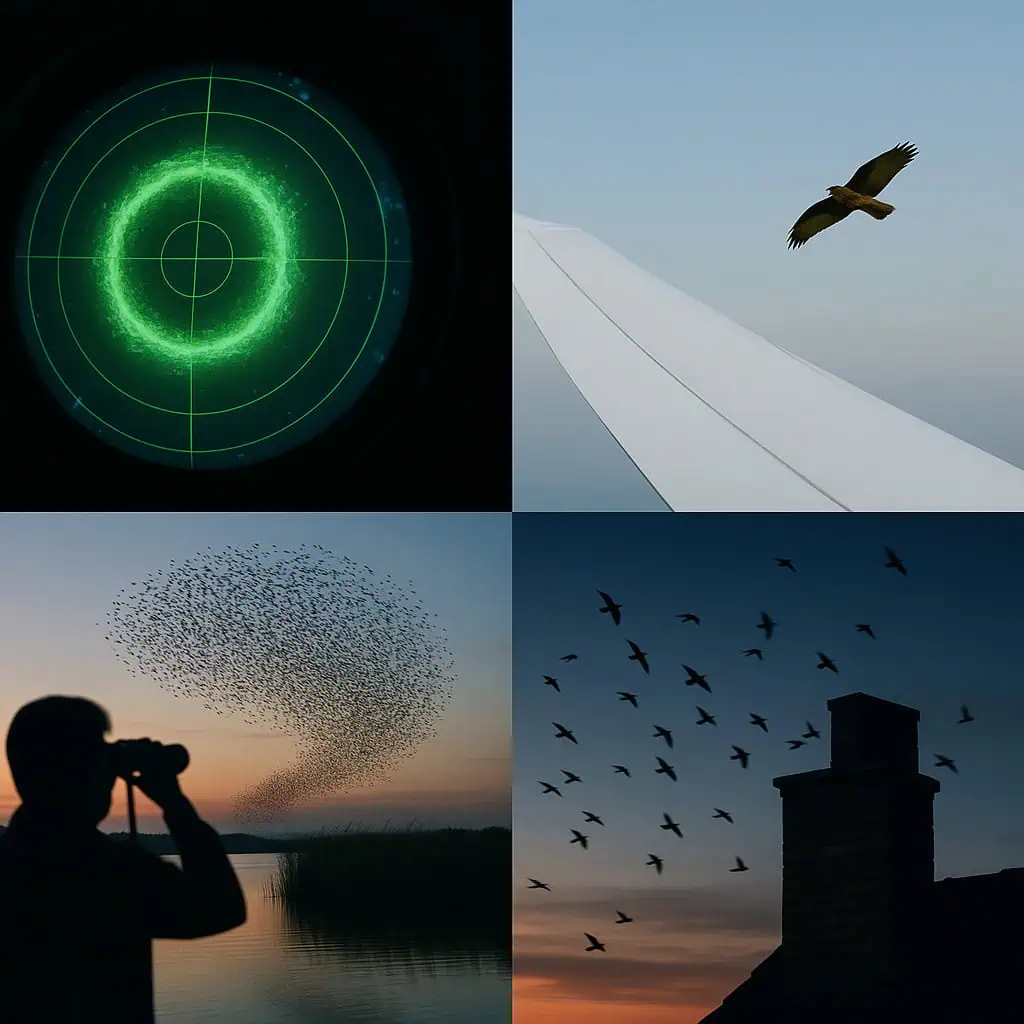
- Weather radar “sees” circles. At sunrise in summer, big rings bloom on radar as swallows and martins leave their roosts in all directions. That’s the “roost ring” you saw earlier.
- Scientists use radar to track migration in real time. The BirdCast project turns national radar into live bird-movement maps so people can plan “Lights Out” nights and enjoy peak migration with less harm.
- Those starling shapes follow simple rules. Each bird only tracks a handful of neighbours and shifts quickly. The giant pattern is a crowd effect, which is why the flock can twist as one.
- Pilots watch birds to find lift. Glider pilots and even hikers learn to look where hawks are circling; that’s often where the invisible elevator (a thermal) is strongest.
- Circles can be social “meet-ups.” Before bedtime, some species gather, circle, and then drop into reed beds, bridges, or even chimneys. The swirl is the pre-roost, not the roost itself.
Final word
Next time you spot a spiral, try a quick check: is the sun warming the ground, are birds gathering to roost, are insects thick around a light? You’ll start to see routine where you expected mystery, and if you live in a bright city, one small habit (turning lights off on peak migration nights) gives those circles back to the sky.
Interested in exploring similar posts? Visit The Science of Everyday Life hub for more!