
TL;DR: Deer freeze in headlights because bright car beams flood a deer’s night-adapted eyes, so it can’t see well for a moment, and its natural “freeze” reflex kicks in. That brief blindness plus instinct keeps the animal still until it can work out what’s happening.
A quick backstory on deer freeze in headlights
Before cars, deer survived by being most active at dawn and dusk. Over time, their eyes and habits fit low light: lots of light-sensing cells, a mirror-like layer behind the retina, and wide pupils. Hunters and wildlife biologists have studied this for years, noting how deer pick up movement and shapes better than fine detail. You’ll also hear about “eye-shine” at night—those glowing eyes you see in your high beams—which comes from that mirror layer.
Researchers keep adding pieces. Field notes describe how deer scan for danger by going still first, then bolting only when sure. Modern studies also look at how different light conditions change what deer notice or ignore. For example, scientists have shown deer vision skews toward blue-green tones and benefits from that reflective layer. If you’re curious, the Penn State Deer-Forest Blog explains deer eye basics in plain language, and a Canadian Journal of Zoology paper describes common deer eye features seen across species, including that reflective layer and horizontal pupils.
Why do deer freeze in headlights? 3 Reasons
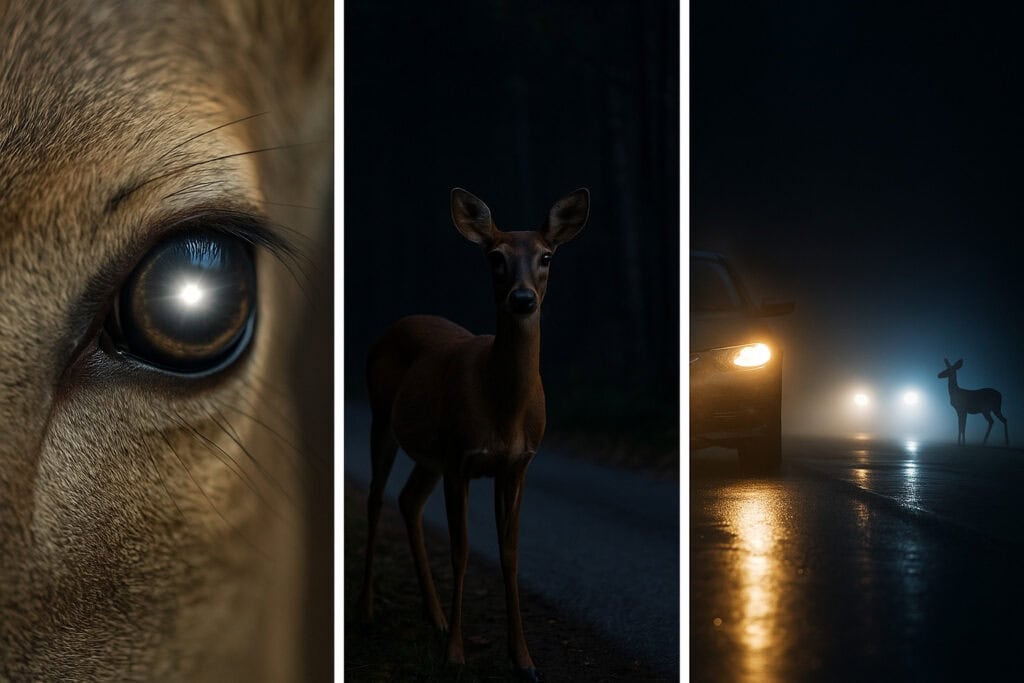
Here’s the short, straight answer broken into three parts:
Eye overload
At night a deer’s pupils are wide open, its retina is tuned for dim light, and a reflective layer bounces light back to the sensors. Slam a powerful, close-range headlight into that setup and you get glare—like a camera flash in a dark room. For a moment, the eye can’t form a clear picture. Because the animal can’t see what the “threat” really is, it hesitates. (Overview: Encyclopaedia Britannica’s explanation.)
The freeze reflex
Deer don’t only run; they also freeze when unsure. Freezing is a basic survival move: stay still, blend in, and listen. In a forest, that often works. On a road, it doesn’t. When the bright beam hits and the scene turns confusing, the “freeze first, decide next” reflex can hold the animal in place for a few seconds.
Not every headlight looks the same to a deer
Light colour and beam pattern matter. Some research suggests old-style halogen bulbs tend to pull a deer’s attention differently than very bright, blue-leaning LEDs. Still, whether a deer bolts or freezes varies by the individual—some are bolder, some are jumpier.
FAQs: why deer freeze in headlights
Do deer “like” headlights?
No. They’re not drawn to the light; they’re dazzled by it. The flood of light ruins their night vision, and the freeze reflex keeps them still while the brain tries to figure things out.
Are LEDs worse than halogens?
It depends. Some studies suggest halogens more reliably get a deer’s attention, but individual animals respond differently—some freeze, some flee. Colour (more blue in some LEDs), brightness, beam pattern, and angle all play a role.
Why does this happen mostly at night?
Because that’s when deer eyes are fully set for darkness. In dim light, pupils are wide, the reflective layer is in full effect, and rods dominate vision. A sudden bright beam then overwhelms their system.
What should I actually do if I see a deer in my lane?
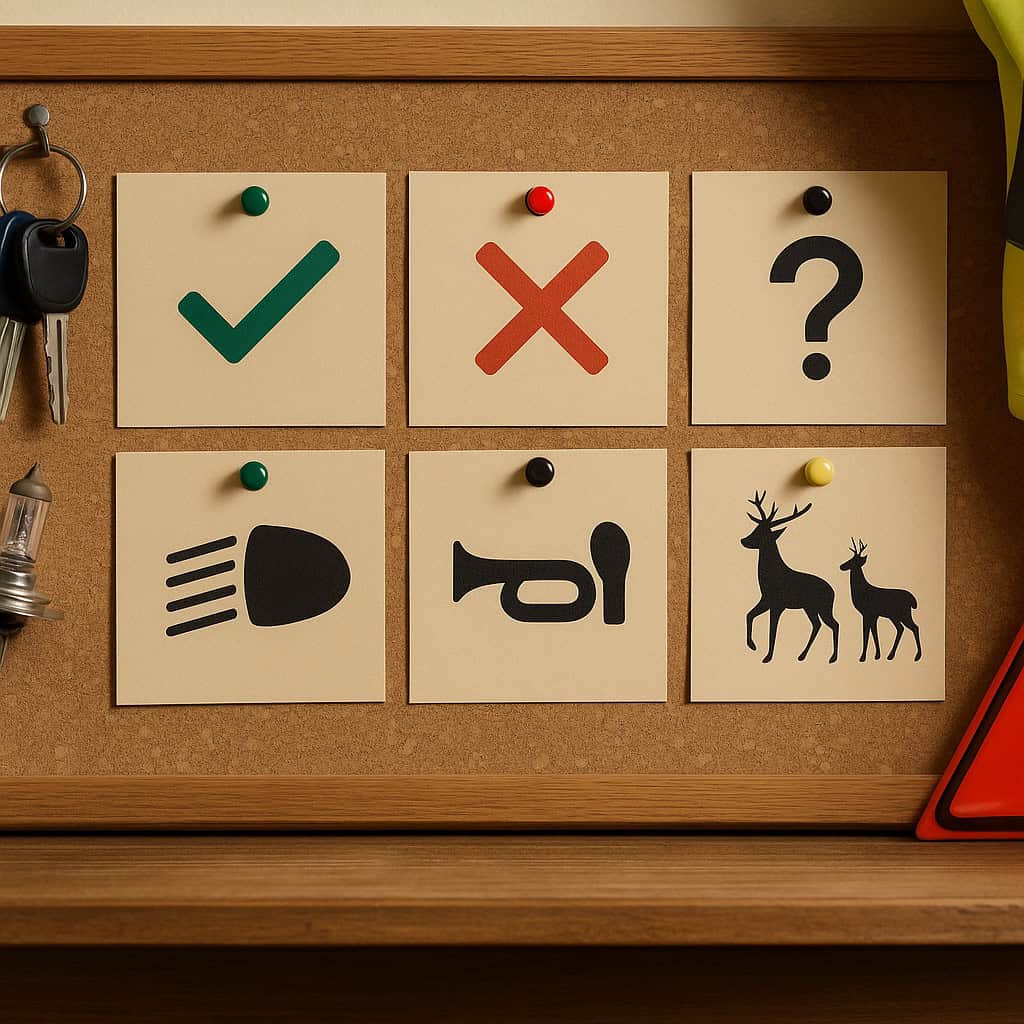
First, ease off the accelerator and cover the brake. Then brake firmly in a straight line. If the deer stays put, dip to low beam to reduce glare, tap the horn once, and be ready for a second deer. Official guidance says do not swerve into another lane or off the road.
Are deer colour-blind?
Not exactly. Deer see fewer colours than we do, but they’re good at blue-green shades and movement in dim light. That’s one reason some blue-rich lights may feel extra harsh to them.
Bonus: fast facts you can use
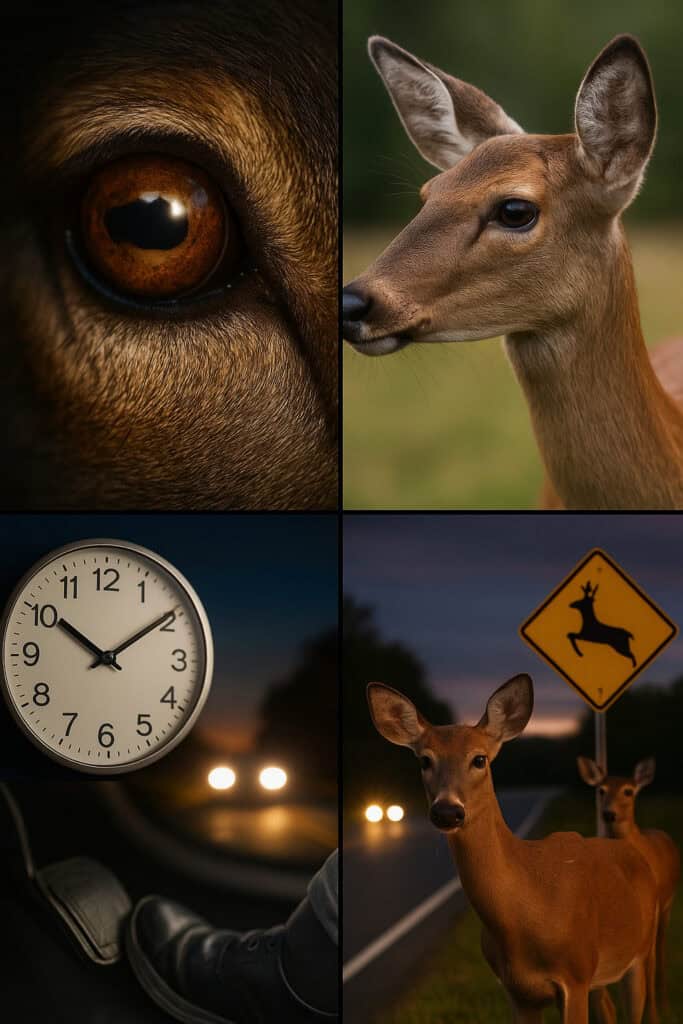
- Eye-shine has a name. The mirror layer behind the retina is called the tapetum lucidum; it boosts low-light vision and causes that glow you see at night.
- Horizontal pupils help on the ground. Deer have wide, side-set eyes and a horizontal pupil that stretches their field of view left–right, handy for spotting danger in open country.
- Clock changes affect crashes. When clocks “fall back,” more cars and deer share dark hours, and collisions jump. A 2022 study estimated that keeping daylight saving time all year could cut deer-vehicle crashes and save lives and money.
Final word
Why do deer freeze in headlights? Because bright beams overwhelm night-tuned eyes and trigger a built-in freeze response; brake straight, dip your lights, and expect more deer to follow.
Interested in exploring similar posts? Visit The Science of Everyday Life hub for more!