
TL;DR: The significance of a lotus flower tattoo lies in growth through hardship, inner purity, and a fresh start. The flower rises clean from muddy water, so it naturally speaks to resilience, renewal, and spiritual awakening. Use color, stage (bud vs. bloom), and placement to personalise the story you want your tattoo to tell.
The lotus flower in art and faith: a short background
India and Southeast Asia
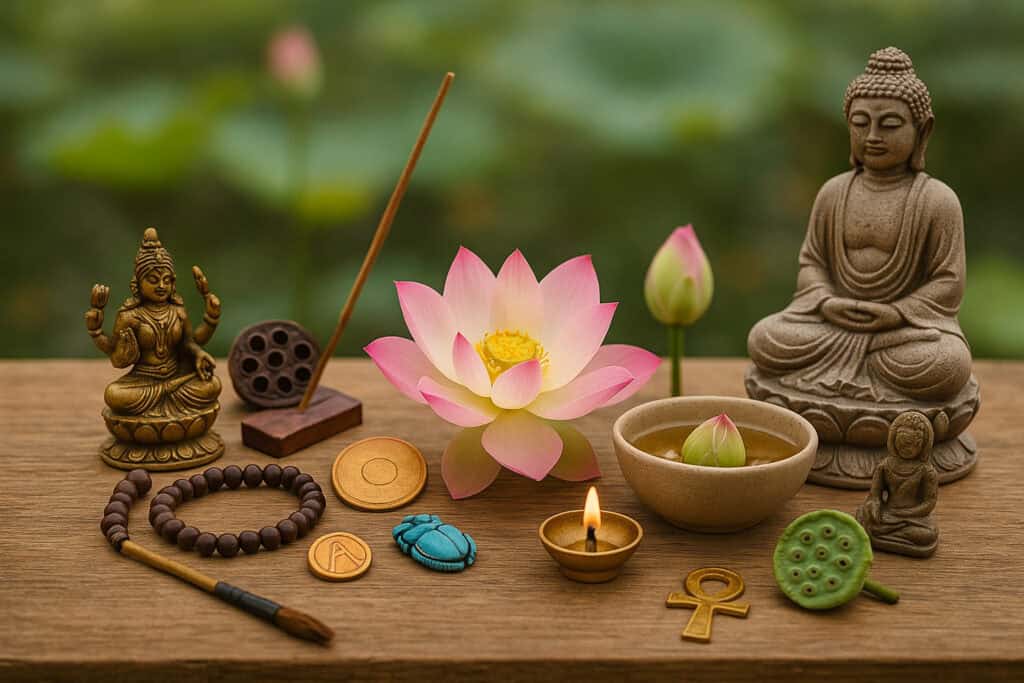
In Hindu art, deities like Lakshmi and Vishnu sit or stand on a lotus “throne”, and the flower signals beauty, purity, creation, and spiritual potential. You’ll see lotus imagery across scriptures and temple art.
Buddhism and East Asia
Buddhist images use the lotus to show purity and awakening; figures often sit on lotus pedestals. The idea comes from the lotus blooming above muddy water. In China, lotus also became a classic art motif linked with virtues like elegance and longevity.
Ancient Egypt
Egyptians linked the lotus (often the blue water-lily) with the sun, rebirth, and renewal; it opens by day and closes at night. Museum objects and guides explain how lotus signs appear on dishes, chalices, and stelae.
A living museum piece
Major museums—from The Met to the National Museum of Asian Art—hold Chinese and Buddhist works where the lotus stands for purity and transcendence; those collections show how the image travelled and evolved.
What is the significance of a lotus flower tattoo?
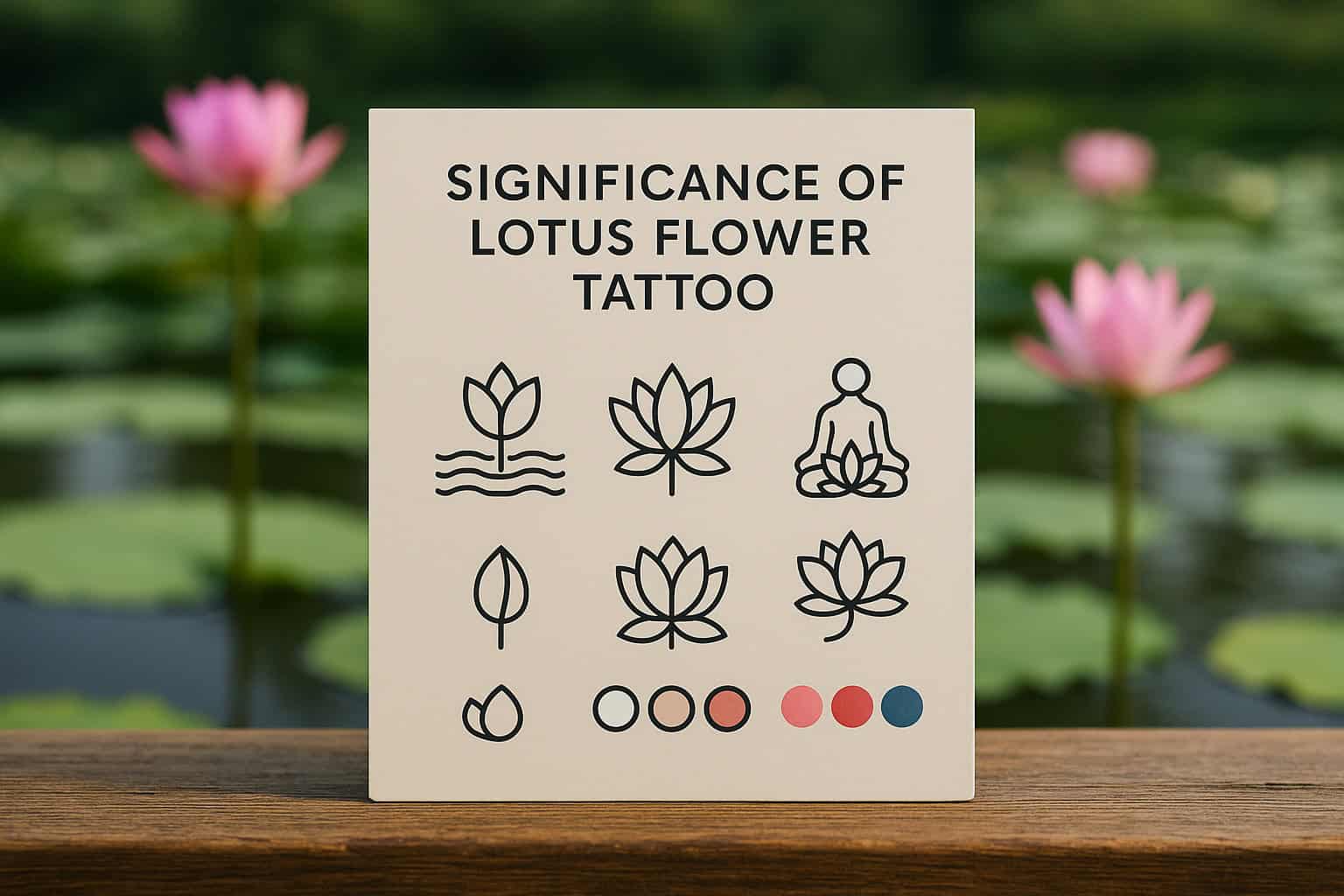
The significance of lotus flower tattoo is simple and personal: it says, “I’ve been through the mud, but I’m blooming.” Because the plant grows in murky ponds yet rises spotless, people use it to honour surviving difficulty without letting it define them. Many also read the lotus as a sign of spiritual growth or calm focus—opening petal by petal, like a patient journey.
Rising clean from the mud
If you want your ink to mark overcoming addiction, illness, grief, or burnout, the lotus is a clear symbol of coming out clean and steady. That is why it appears again and again as a sign of purity in Buddhist and Hindu contexts.
New life and second chances
Lotus cycles suggest rebirth. In Egypt, the flower’s daily opening made it a natural emblem of renewal; that idea now informs modern designs that celebrate fresh starts after a breakup, a big move, or a career reset.
Mindfulness and awakening
If your tattoo is about inner work—therapy, meditation, or simply slowing down—the lotus fits. It has long stood for awakening and the potential to become wiser and kinder.
Lotus flower tattoo variations
You can push the significance of lotus flower tattoo further with choices that match your story: a bud for potential, a half-open bloom for “in progress,” or full bloom for “I’ve arrived.” Color traditions vary by source, but many guides say white suggests purity, pink is closely tied to Buddha/ultimate awakening, red leans to compassion or love, and blue points to wisdom. Treat these as gentle cues, not hard rules.
FAQs about the significance of lotus flower tattoo
What do lotus tattoo colors commonly mean?
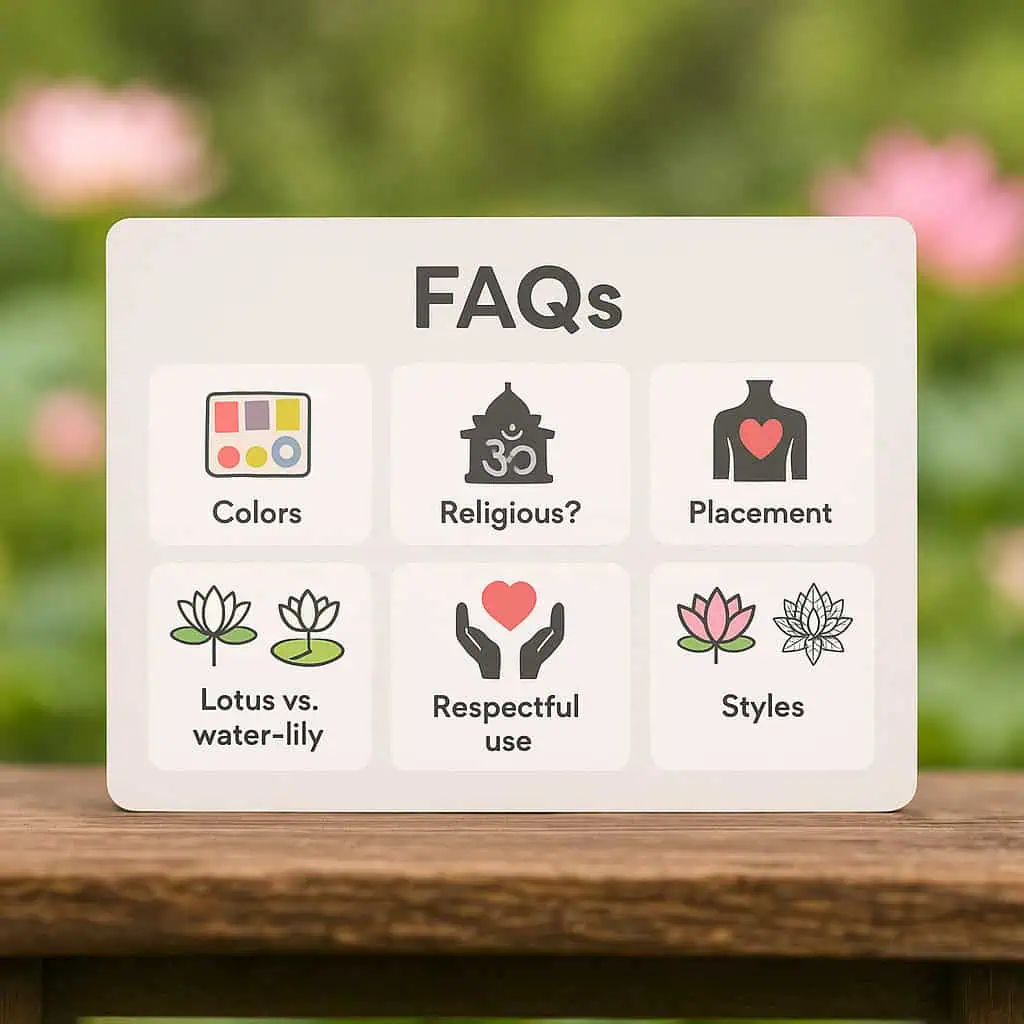
Meanings shift by culture, so use them as options, not laws. Common guides say:
• White: purity/clarity
• Pink: the Buddha/“supreme” awakening
• Red: love/compassion
• Blue: wisdom/knowledge
Because sources differ, pick the hue that best fits your story.
Is a lotus tattoo religious by default?
No. The image is sacred in several faiths, but many people wear it simply as a symbol of growth or calm. If you do want a religious tie-in, you can. Britannica notes the lotus as sacred in Hinduism and Buddhism, and museum objects show its ritual use.
Does placement change the meaning?
Mostly it’s personal. However, people often choose: wrist/forearm for a daily reminder; sternum/centre chest for “centre of self”; spine for “long journey”; ankle/foot for “moving forward.” Choose what you’ll see and love long-term.
Lotus vs. water-lily: does it matter for meaning?
It can. The famous Egyptian “blue lotus” is actually a blue water-lily (Nymphaea), not the Asian sacred lotus (Nelumbo). If you want Egyptian vibes, a water-lily form may be more accurate; if you want Indian/Buddhist ties, a lotus form fits better.
Is a lotus tattoo cultural appropriation?
It depends on intent and context. If you’re borrowing sacred symbols (e.g., deity imagery), research, add context that’s true to you, and be respectful. Many people simply honour the universal themes—resilience, renewal—without copying specific religious iconography.
Which style best supports the meaning?
For gentle recovery or purity, fine-line or watercolor works well. For strength and survival, bold blackwork or geometric lines feel solid. If you are going for a spiritual angle, a lotus on a small “throne” or within a mandala nods to traditional art without copying holy images. (Modern design guides echo these pairings.)
Bonus: interesting lotus flower facts to inspire your design
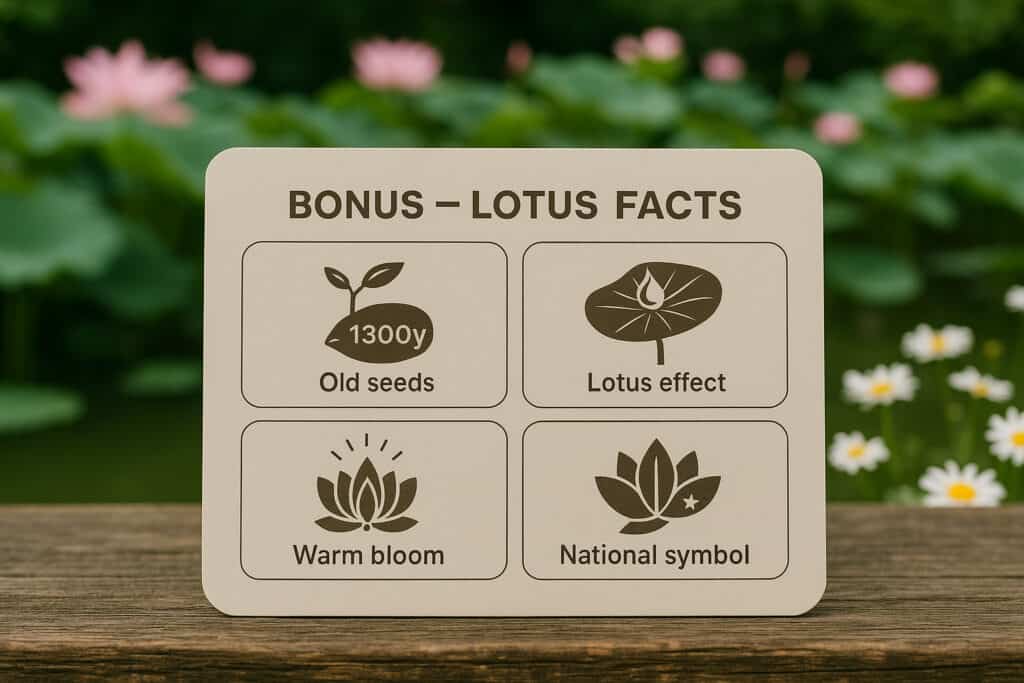
- Seeds that outlive empires: Scientists germinated sacred lotus seeds ~1,300 years old—the oldest directly dated seeds to sprout. A tiny date palm beat the record later, but the lotus remains legendary for seed longevity.
- Self-cleaning “lotus effect”: Lotus leaves are ultra-water-repellent. Droplets roll off and carry dirt away, inspiring modern self-cleaning coatings and materials. A minimalist line tattoo can echo that “nothing sticks” idea.
- A warm flower: Lotus blossoms can hold around 30–36 °C while blooming—yes, they generate heat—which helps pollination. A design showing a subtle glow or halo can hint at this hidden fire.
- National symbol: The lotus is India’s national flower and a major cultural emblem in Vietnam; it’s also on Macau’s flag. If your story links to those places, a small flag star, script, or date can tie it in.
Final word: nailing the significance of lotus flower tattoo
The significance of lotus flower tattoo rests on a clean, powerful idea: rise above the mud and bloom anyway. If that’s your message, you won’t go wrong. Then, refine it—choose a stage (bud/half-open/bloom), a color that matches your mood, and a placement you’ll love every day. Your lotus can be faith-filled, totally secular, or simply a quiet badge of survival. Either way, it’s your story—petal by petal.
Interested in exploring similar posts? Visit the Cultural Rituals & Society hub for more!