
TL;DR: the significance of a hummingbird tattoo lies in resilience, joy, love, and freedom—often chosen as a reminder to keep going, savour small moments, and honour someone dear. Colours, flowers, pose (hovering vs. perched), and placement gently shift the meaning, but the core stays the same: light spirit, strong heart.
Hummingbird signifiance: A brief history
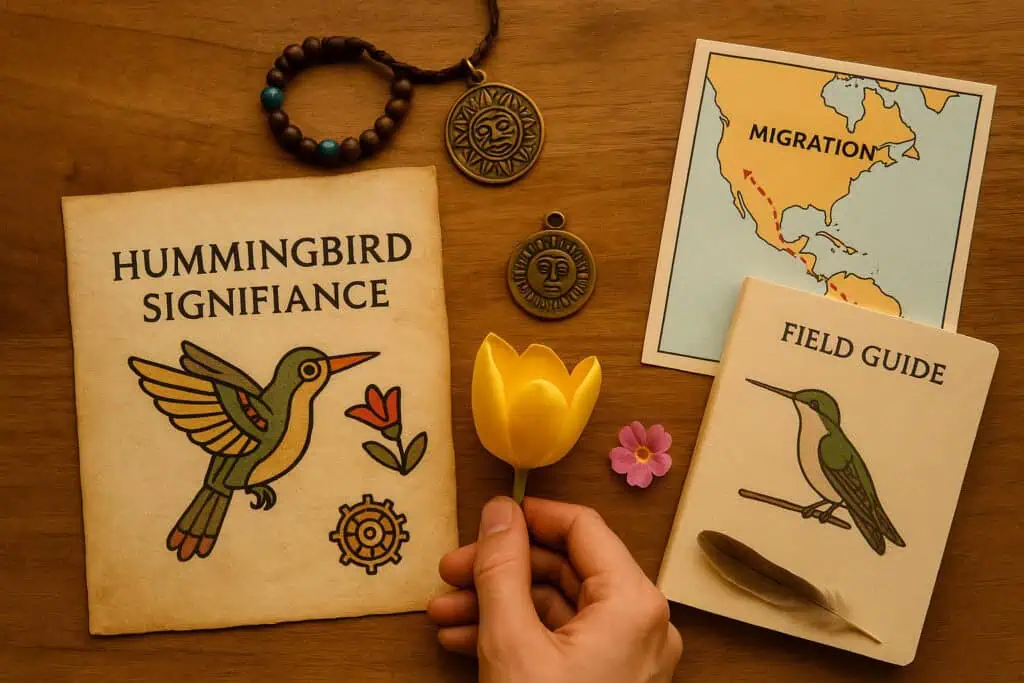
Across Mesoamerica, the hummingbird shows up in powerful ways. In Aztec belief, Huitzilopochtli—the sun and war deity—was closely linked with the hummingbird, and fallen warriors were said to return as hummingbirds, showing how fiercely the bird was revered.
In many Indigenous North American traditions, hummingbirds are seen positively—messengers, bringers of beauty and harmony—though meanings vary by nation and community.
Beyond myth, real-life traits add layers that people later read into tattoos: hummingbirds hover, fly backward, and maneuver with unusual agility—facts that help explain why people connect them with adaptability and quick recovery.
Their migrations are astonishing for such tiny birds, from nonstop Gulf of Mexico crossings of roughly 500 miles for ruby-throats to marathon journeys of ~3,900 miles for rufous hummingbirds—feats that naturally feed symbols of endurance.
What is the significance of a hummingbird tattoo?
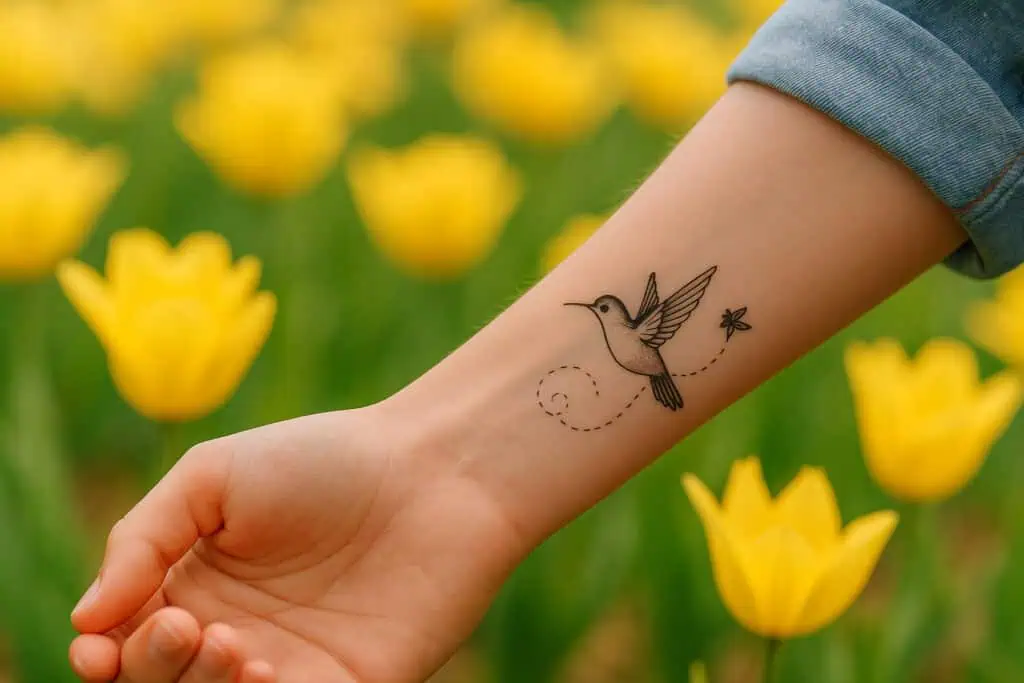
At heart, a hummingbird tattoo says “small body, giant spirit.” People choose it to carry four steady themes:
Resilience and determination
Because hummingbirds can hover, reverse, and push through long migrations, many wear the tattoo as a quiet promise to keep moving—even when life demands a sudden change of direction.
Joy, presence, and lightness
The bird’s quick visits from bloom to bloom make it a symbol of finding sweetness in the moment—light but not shallow, playful but not careless. Modern explainers often group it with happiness and positivity.
Love, memory, and “messenger” energy
In several Indigenous contexts, hummingbirds can be cast as messengers or healers; that’s why some people use the design to honour a loved one or to mark emotional recovery. (Meanings differ by community; avoid one-size-fits-all claims.)
Freedom and self-expression
Tattoo studios and body-art guides often frame the hummingbird as freedom in motion—independent, quick, and unwilling to be caged. If you feel called to chart your own path, this is a natural fit.
Hummingbird tattoo: how design choice influences significance
Pose & motion
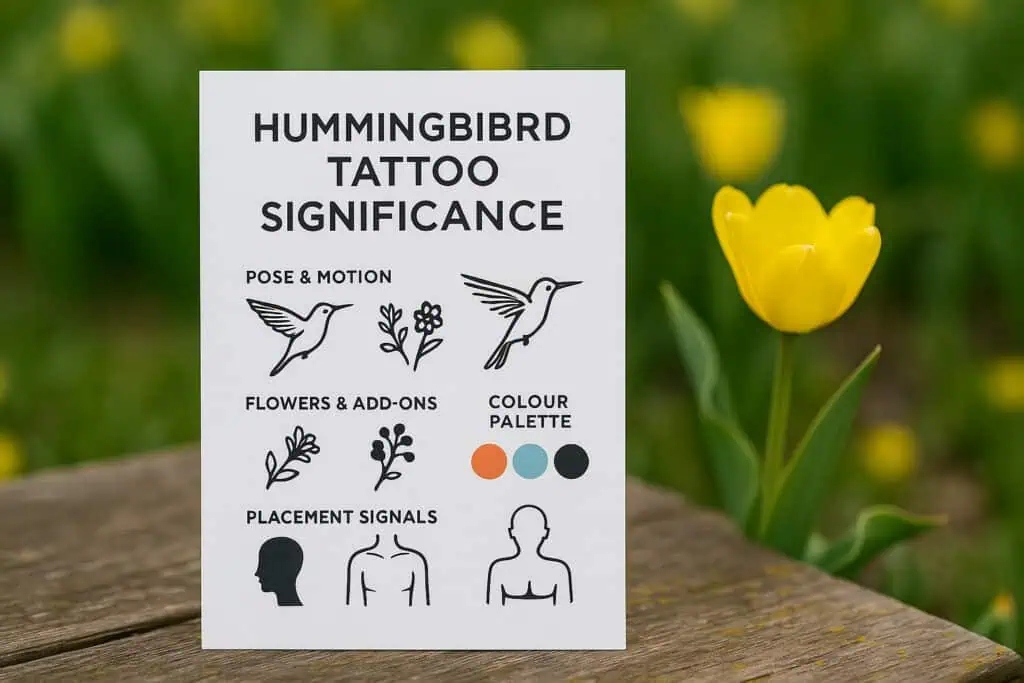
- Hovering leans into focus, balance, and “holding steady.”
- In flight amplifies freedom and momentum.
- Perched can suggest rest after struggle or quiet remembrance.
These readings draw on what hummingbirds uniquely do in the air.
Flowers & add-ons
Pairing with nectar flowers (e.g., trumpet honeysuckle, beebalm, cardinal flower) nods to the bird’s real ecology and can add your own meanings (love for roses, renewal for cherry blossoms, etc.).
Colour palette
- Vivid watercolour = joy/celebration.
- Blackwork/linework = strength, focus, or memorial tone.
Either way, the subject stays light and energetic.
Placement signals
Wrist or forearm = daily reminder; shoulder/collarbone = bigger “statement in motion”; behind the ear = discreet charm; chest = close to the heart. Tattoo resources consistently list these as popular spots for this motif.
FAQs about the significance of hummingbird tattoo
- Is a hummingbird tattoo a symbol of good luck?
Sometimes—especially in Pacific Northwest Indigenous art markets you’ll see “luck,” “joy,” and “healing” associated with the hummingbird. Treat this as community-specific and interpret with respect.
- Is the meaning spiritual or just personal?
Both. Some connect it to spiritual messenger themes or to Aztec associations; others wear it purely as a personal marker of resilience or joy. Meanings can coexist.
- Does the pose change the significance of hummingbird tattoo?
Yes—hovering or flying backward can underline adaptability and mindfulness, while a forward-darting pose reads as ambition and freedom. That logic follows from how the bird actually flies.
- Is a hummingbird tattoo “too feminine,” or can men wear it?
It’s unisex. Linework, geometric builds, or monochrome styles make it minimalist and sharp; bright watercolour makes it playful. The symbol itself is neutral.
- Which flowers best pair with the bird, and do they change the meaning?
Nectar-rich, tubular flowers like honeysuckle or beebalm fit naturally and let you stack meanings (e.g., love, renewal). Choose blooms that say what you want to say.
- What are the most common placements? (and why they work)
Wrist/forearm for daily visibility, shoulder/collarbone for motion in larger pieces, and behind the ear for a subtle “secret.” These are repeatedly recommended by tattoo guides.
Bonus: fascinating facts about hummingbirds (how they can inspire your tattoo design)
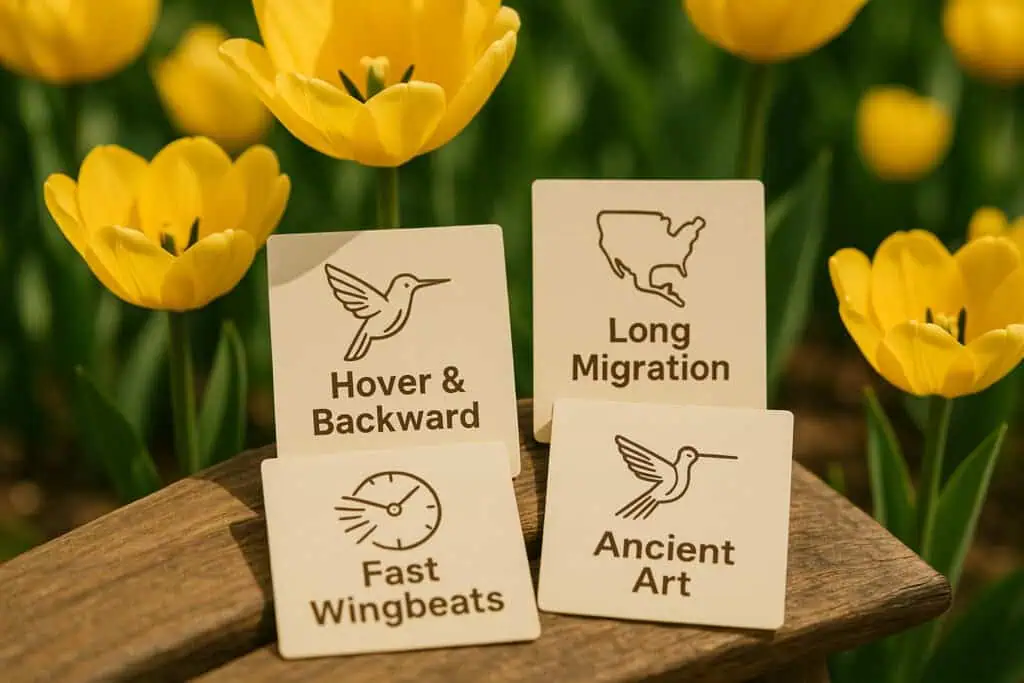
- Fact 1: Hummingbirds are the only birds that truly hover and can fly backward, thanks to unique wing mechanics—an elegant metaphor for “finding a way” when others can’t.
- Fact 2: Tiny but epic: rufous hummingbirds can travel roughly 3,900 miles on migration—huge for their size—while ruby-throats may cross the Gulf in an 18–22 hour, ~500-mile push.
- Fact 3: Some species beat their wings at mind-bending rates (hundreds to thousands of beats per minute across species), which is why “humming” is more than a name—it’s physics.
- Fact 4: The hummingbird appears in ancient art too—the Nazca Lines include a vast hummingbird geoglyph—so the motif connects modern tattoos to long creative traditions.
Final word: the significance of hummingbird tattoo, in one line
It says: move lightly, live bravely, love fully—a small bird with big meaning that you can tailor through pose, palette, flowers, and placement.
Interested in exploring similar posts? Visit the Cultural Rituals & Society hub for more!