
TL;DR: The significance of a semicolon tattoo lies in its powerful message: your story isn’t over. Many people use it to show hope, solidarity around mental health, suicide-prevention, recovery from addiction, or support for someone they love. The semicolon says, “pause, then continue.”
The semicolon tattoo: a short history
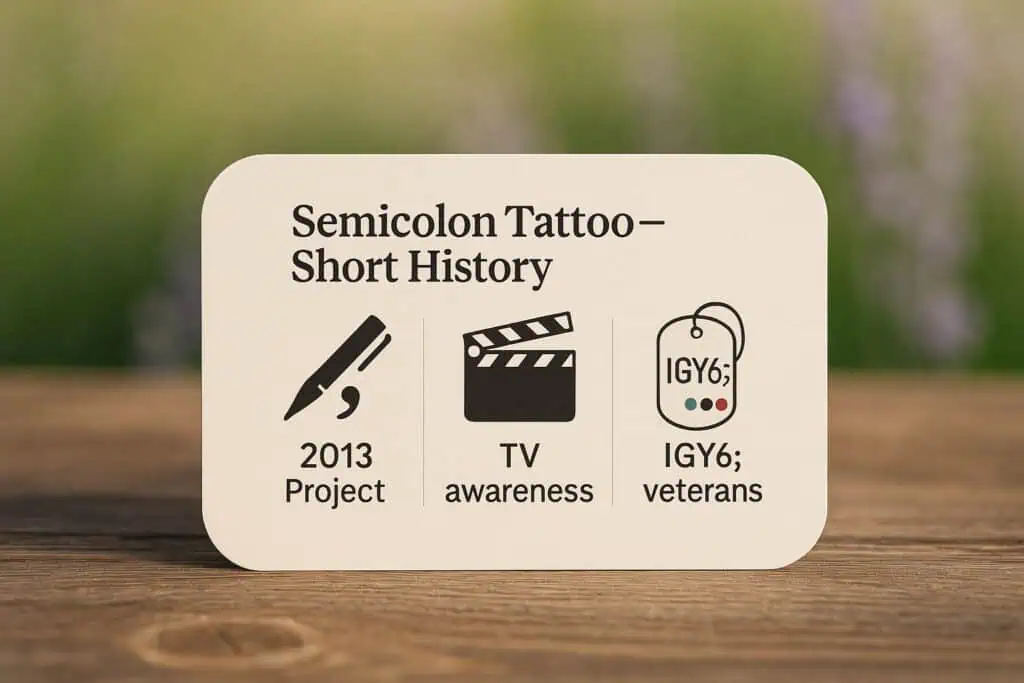
In 2013, mental-health advocate Amy Bleuel launched Project Semicolon, which encouraged people to draw or tattoo a semicolon as a sign of hope and support. The idea spread quickly through social media and news, and the symbol became a quiet, personal way to speak about mental health without many words.
As the symbol grew, public figures and TV shows helped more people notice it. For example, cast members connected to 13 Reasons Why chose semicolon tattoos to show support for mental-health awareness, which moved the symbol further into mainstream culture.
Along the way, some groups adapted the punctuation to their own causes. In veteran communities, “IGY6;” (“I’ve got your six”) often appears with a semicolon and colours like teal (PTSD awareness), black, and red to express support, remembrance, and resilience.
What is the significance of a semicolon tattoo? The answer
What the semicolon tattoo stands for
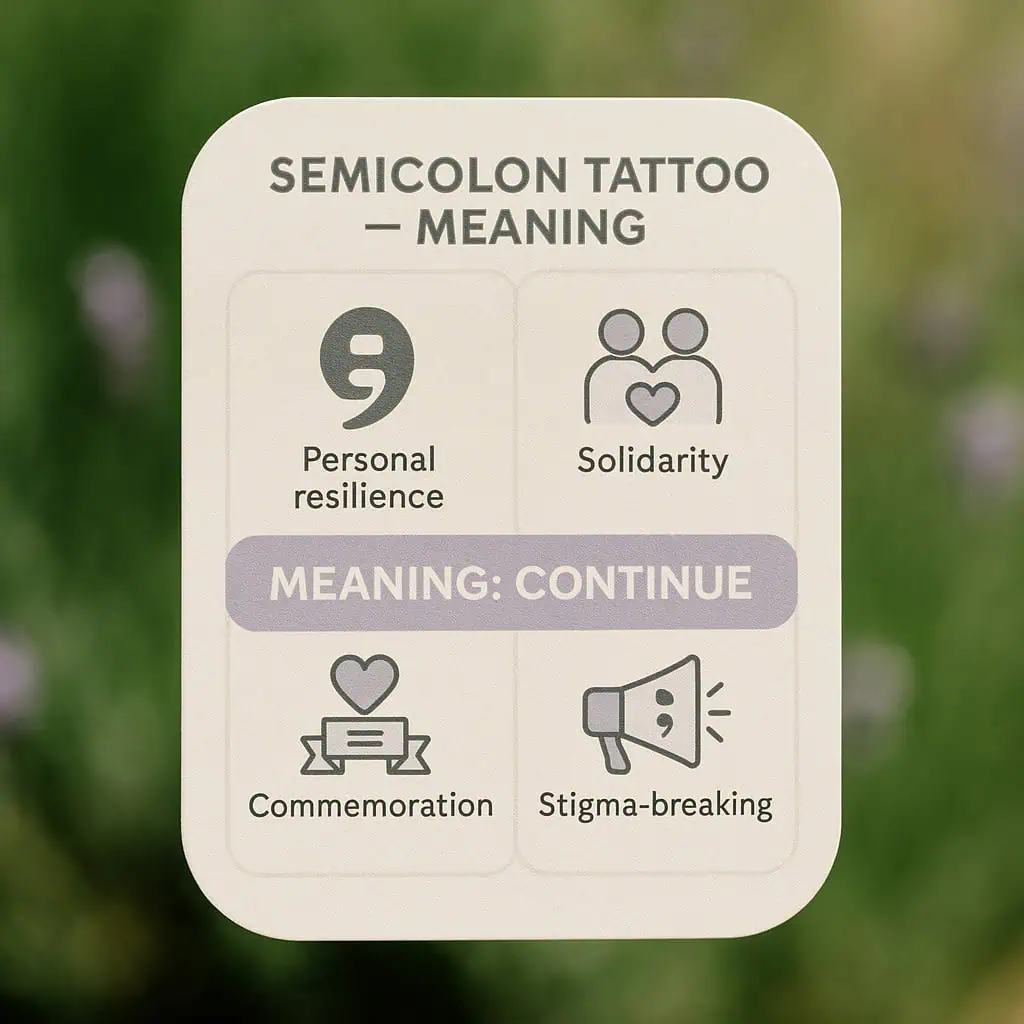
At heart, the significance of a semicolon tattoo is this: when a writer could end a sentence but chooses not to, they use a semicolon. Likewise, the wearer chooses to continue. Therefore, the mark stands for carrying on—through depression, anxiety, trauma, addiction, self-harm urges, grief, or other hard seasons—and for standing with others who are going through them. Many also wear it to honour someone they lost.
Below are all the layers of the significance many people attribute to a semicolon tattoo.
- Personal resilience: a reminder to pause, breathe, and choose the next step.
- Solidarity: a quiet signal that says, “I see you,” without forcing a conversation.
- Commemoration: a way to honour a loved one or a turning point.
- Stigma-breaking: a public, yet gentle, way to normalise mental-health talk.
How design, placement, and style choices may affect the meaning of the semicolon tattoo
While any punctuation can be stylised, the semicolon is usually kept simple to keep the focus on meaning. Popular placements (wrist, forearm, finger, or behind the ear) make it easy to see in moments when you need a reminder. If you prefer privacy, ribs, ankle, or the back of the neck work well, too. Some people add flowers, hearts, musical notes, or words like “breathe,” “hope,” or a date.
Colour rarely changes the significance of a semicolon tattoo, but certain communities do use colours with extra meaning—teal for PTSD awareness, for example, within IGY6; designs. If colours don’t speak to you, plain black is just as meaningful.
FAQs about the significance of a semicolon tattoo
Does a semicolon tattoo only mean “survived a suicide attempt”?
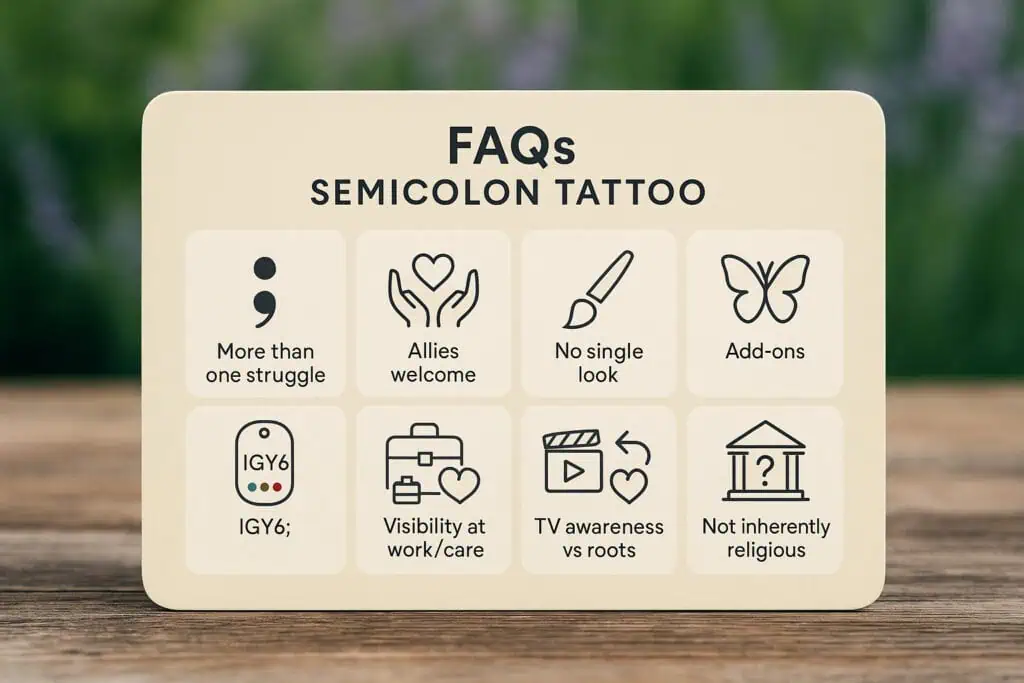
No. It can reflect survival of many struggles, ongoing recovery, or support for someone else. The shared core is “my story isn’t over.”
Is it disrespectful to get one if I haven’t struggled myself?
Not if you wear it with care. Many allies use it to support loved ones and to open kinder conversations. The movement’s roots emphasise hope and community, not gate-keeping.
Is there a “right” way the symbol must look?
No. While many choose a minimal “;”, you can make it yours—small and subtle, or part of a larger design. The significance of a semicolon tattoo stays the same: continue.
Are there add-ons (like butterflies) that change the message?
Yes, add-ons can shade the meaning. A butterfly often signals transformation and new beginnings, matching the idea of continuing the story. Hearts, infinity signs, or flowers carry their own extra notes of care or growth.
What’s IGY6; and how is it related?
“IGY6;” means “I’ve got your back.” In veteran and first-responder circles, it often appears with a semicolon and colours (teal/black/red). It’s a cousin symbol with a shared message of support and survival.
Could a visible semicolon tattoo affect work or care?
Sometimes. While many workplaces are accepting, a visible mental-health symbol can invite questions—or bias. Therefore, consider industry norms and your comfort with disclosure before choosing a highly visible spot.
Did TV and celebrities make the symbol trendy?
They helped more people notice it, but the meaning came first from community and advocacy work. The show 13 Reasons Why, for example, drew attention to the mark in 2017.
Is the semicolon tattoo a religious symbol?
Not inherently. The movement is broad and welcoming. That said, some faith communities have embraced it as a sign of hope that aligns with their beliefs. If you want a faith-specific design (like a semicolon cross), talk with your artist.
Bonus section: little-known facts about the semicolon tattoo
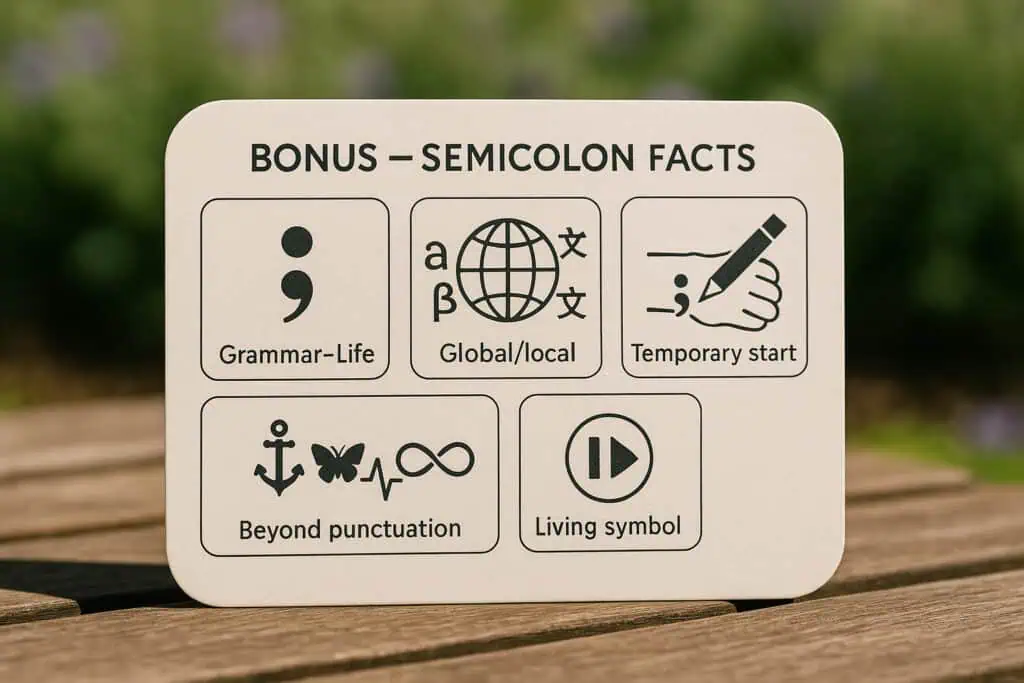
- Grammar meets life: in writing, a semicolon links two complete thoughts that belong together. Likewise, the tattoo links a painful chapter to the next one, without pretending the first never happened.
- Global symbol, local stories: the mark shows up in many languages because punctuation travels well; this helps people share support across cultures with something small and readable.
- Temporary beginnings: some people start by drawing a semicolon with a pen during tough weeks before deciding on a tattoo later. This keeps the meaning, even without ink.
- Beyond punctuation: a few designs blend the semicolon with a heartbeat line, butterfly, anchor, or infinity sign to express calm, change, grounding, or persistence—without changing the significance of a semicolon tattoo.
- A living symbol: as conversations about mental health evolve, the semicolon endures because it says something universal: pause, don’t stop.
Final word
The significance of a semicolon tattoo is simple and brave: you paused, then you carried on. Whether you wear it for yourself or for someone you love, it stands for hope, recovery, and a choice to continue. If you decide to get one, keep it personal, keep it respectful, and let it remind you—there is more to come.
Interested in exploring similar posts? Visit the Cultural Rituals & Society hub for more!
P.S. If you’re struggling right now, please do not despair; you deserve support. Here are some links that can help you:
The United States:
988 Suicide & Crisis Lifeline
Dial 988 (24/7, free, confidential)
Website: https://988lifeline.org/
They offer support for anyone in distress — emotional crisis, suicidal thoughts, anxiety, grief, or trauma — via phone, chat, or text.
For international readers
Find a Helpline
Website: https://findahelpline.com
This is the best global directory currently available. It’s run by Mental Health Innovations and Befrienders Worldwide. It lets you instantly search by country, language, and type of help (e.g., depression, trauma, LGBT support, youth helplines, etc.)
Small and simple but inspiring, and carrying a very important message. Thank you for the article!