
One-Paragraph Summary of the Article
TL;DR: Yawning is a quick state-change reset that boosts alertness and likely helps cool the brain. It’s socially contagious, and watery eyes happen because a big yawn squeezes tear glands and increases surface evaporation.
Yawning is one of those everyday reflexes that sneaks up on you the moment you get sleepy, bored, or even when you watch someone else yawn across the room. In simple terms, It is an involuntary pattern of a deep inhale, a brief pause, and a long exhale, usually with a big stretch through the jaw, face, and throat.
Most researchers see yawning as a state-change reset: your nervous system briefly nudges alertness, your jaw and facial muscles stretch, and there’s likely a small contribution to brain temperature regulation. Put differently, when you yawn, what it means—most of the time—is that your body is transitioning from one level of arousal to another, not that you’re running out of oxygen.
What Is a Yawn, Exactly?

A yawn is a hard-wired reflex. You breathe in deeply, hold for a heartbeat, then let the air drift out as the mouth opens wide and the eyes often close or narrow. That big movement recruits the muscles around the cheeks, eyes, and throat, which is why the action feels like a full-face stretch. Functionally, yawns tend to cluster at moments of transition: from sleepy to alert, from idle to engaged, or when your environment is warm, dim, or repetitive. The act seems to provide a brief boost to alertness, and many scientists think it also helps stabilize brain temperature so performance doesn’t sag as you switch states. In everyday life, when you yawn it almost always signals a harmless reset rather than a problem.
Why Do We Yawn When Tired (or Bored)?
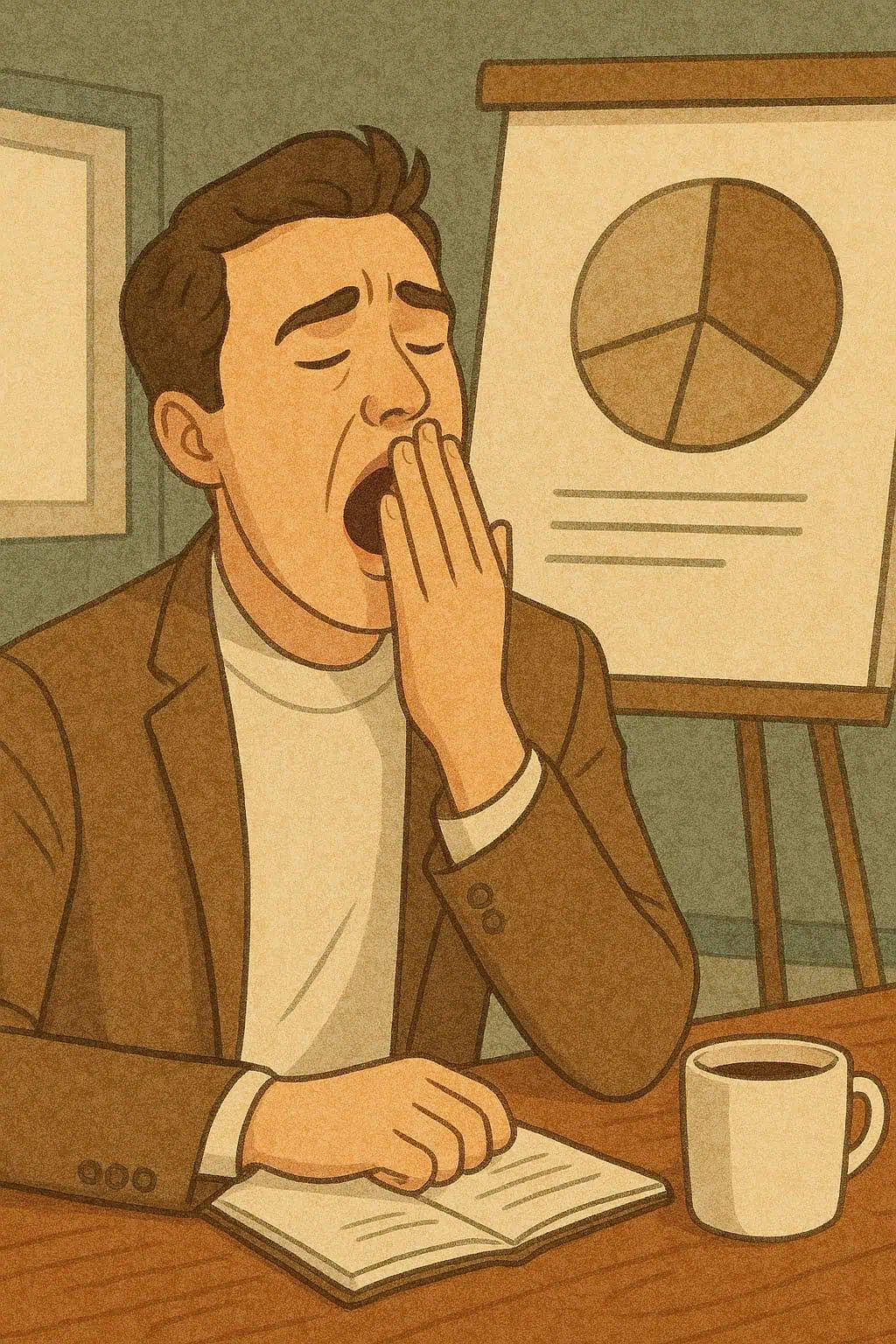
Tiredness increases something called sleep pressure. As that pressure builds—especially late at night or after a short night of sleep—you’ll notice more yawns. Low stimulation has a similar effect. Long meetings, dim lighting, a warm room, and a monotonous voice can nudge the brain toward an under-aroused state. A yawn in these settings is your system tapping the brakes and then the accelerator: you stretch, breathe, and momentarily raise arousal to refocus. Practical changes like standing up, sipping cool water, stepping into brighter light, or taking a short walk usually reduce yawning, but nothing beats getting adequate sleep.
Is Yawning Really Contagious—and Why?
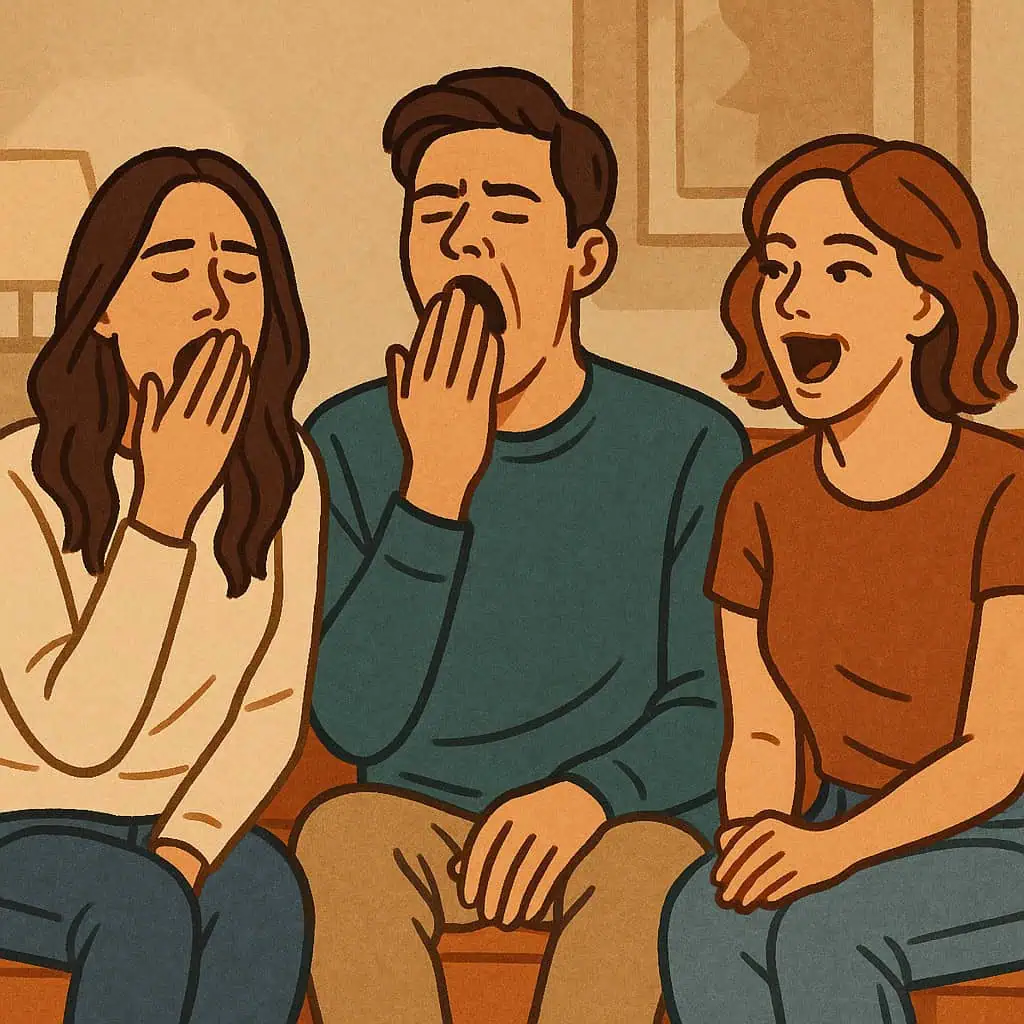
Yes—yawns are famously contagious. Seeing, hearing about, or even reading the word “yawn” can make you do it. The best explanation is social mirroring. Humans are wired to reflect the states of people around us, especially those we know well. This mirroring—often linked to empathy—helps groups sync their behavior. Contagious yawning shows up in other social species, too. It is not a sign of rudeness or disrespect; it’s a social reflex that says more about how our brains stay in tune with one another than about our interest level in the moment.
Why Do My Eyes Water When I Yawn?
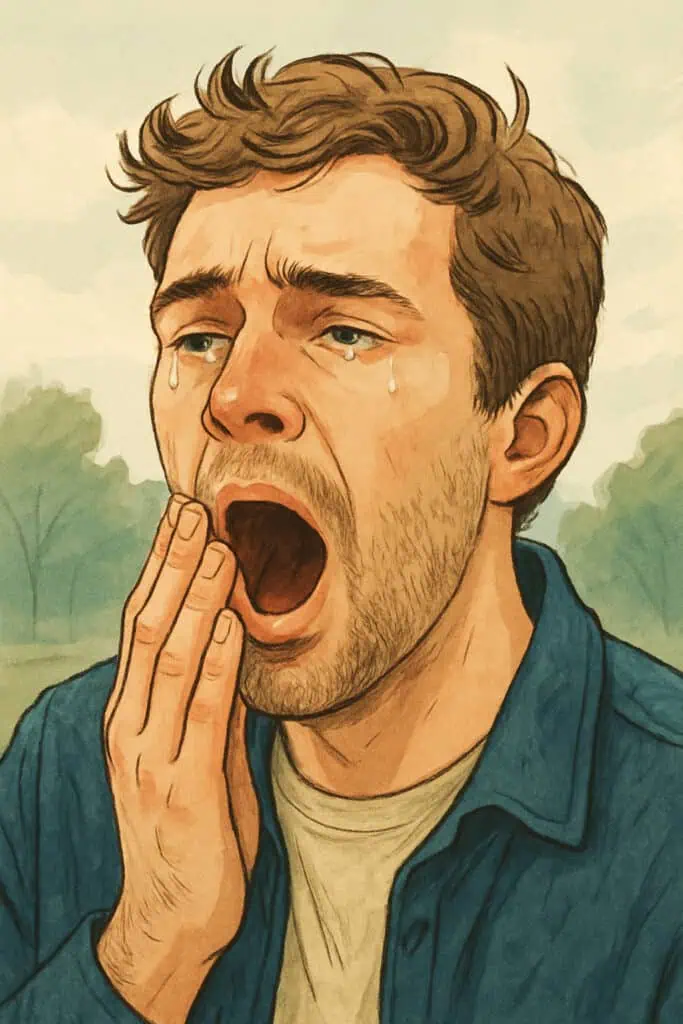
If your eyes well up during a big yawn, that’s normal. The motion of yawning contracts muscles in the eyelids and upper cheeks, which briefly compresses the lacrimal (tear) glands and can push a small amount of fluid onto the eye’s surface. At the same time, opening the eyes wide exposes them to air, which speeds evaporation and encourages more tearing. The result looks like you’re tearing up or even crying when you yawn. Unless you also have pain, redness, or persistent tearing at other times, this watery-eyes-with-a-yawn pattern is simply biomechanics at work.
Bonus Section: Why Do Animals Yawn?
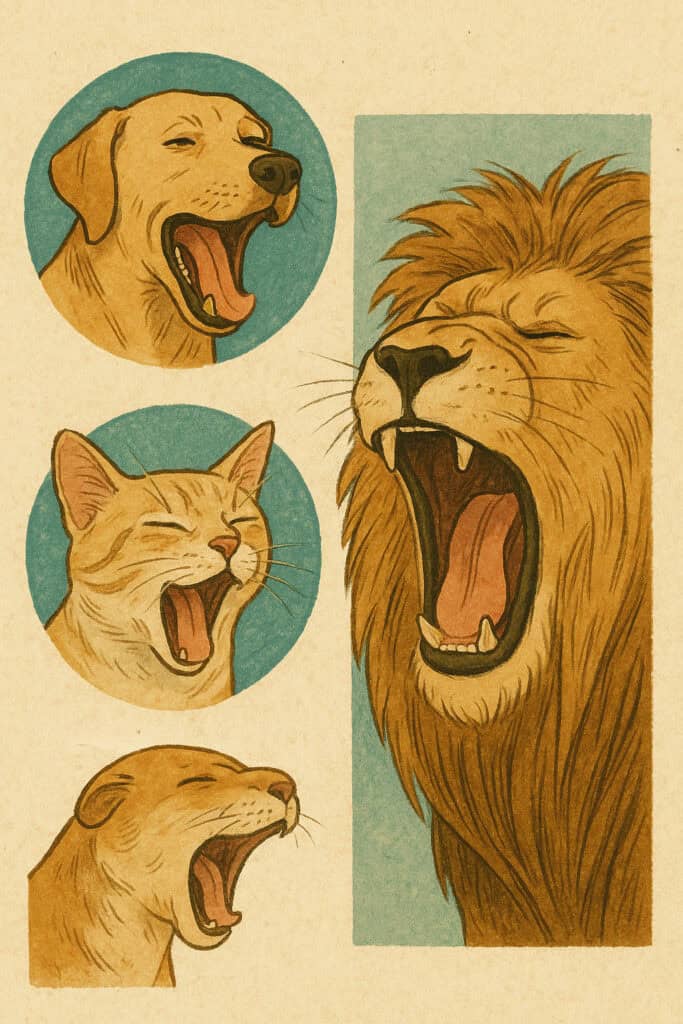
People love to compare their own yawns with their pets’ and with wildlife, and for good reason: mouth-gaping behaviors are everywhere in the animal world, though they don’t always mean the same thing humans mean by “yawn.”
Why Does a Dog Yawn (So Much)?
Dogs yawn when they’re sleepy, but they also use yawns as a calming signal. In mildly stressful or tense situations—meeting new dogs, waiting to be leashed, heading to the vet—a dog may yawn to defuse social tension or settle itself. You’ll also see anticipatory yawns before walks, play, or training. Context tells you whether your dog is tired, excited, or a touch anxious.
Why Do Cats Yawn?
Cats commonly yawn during transitions from rest to wakefulness and during full-body stretches. The movement can help equalize pressure around the ears and jaw after napping. For most cats, It is just part of the stretch-and-reset routine.
Do Fish Yawn?
Fish frequently perform wide mouth gapes that assist gill ventilation or help clear debris. It looks like a yawn, but it’s not always the same reflex humans have. In aquariums and the wild, this behavior is generally ordinary housekeeping for a fish.
Do Birds (and Chickens) Yawn?
Birds show yawn-like gapes that can aid cooling or help adjust the crop and throat after feeding. Chickens do it, too, especially after eating or when settling. As with other species, the behavior is usually normal and tied to routine transitions.
Why Do Snakes “Yawn”?
Snakes often open wide after feeding to realign the jaw and soft tissues. You’ll also see big gapes during thermoregulation or state changes. In the hours after a meal, it’s expected and not a sign of distress.
Do Bearded Dragons Yawn?
In bearded dragons, mouth gaping is strongly linked to heat regulation and sometimes appears after sleep. If the enclosure temperature and lighting are appropriate, occasional gapes are part of normal behavior.
Do Turtles Yawn?
Turtles gape for breathing adjustments, cooling, or transitions in activity. In most cases, it’s a regular part of how they manage their internal state.
Do Frogs Yawn?
Frogs open wide when stretching or swallowing prey, which can resemble a yawn. It’s brief and typically part of feeding or repositioning rather than a sign of fatigue.
Pelican, Hippo, Lion, and Guinea Pig Yawns
Pelicans produce dramatic gapes that help cool the head and realign the pouch. Hippos use huge gapes as social displays and communication rather than simple tiredness. Lions commonly yawn around rest–wake transitions and as a social signal within the pride. Guinea pigs often yawn during comfortable stretches and in familiar social settings. In each case, context and species help decode the meaning.
Frequently Asked Questions (and some myth busters)
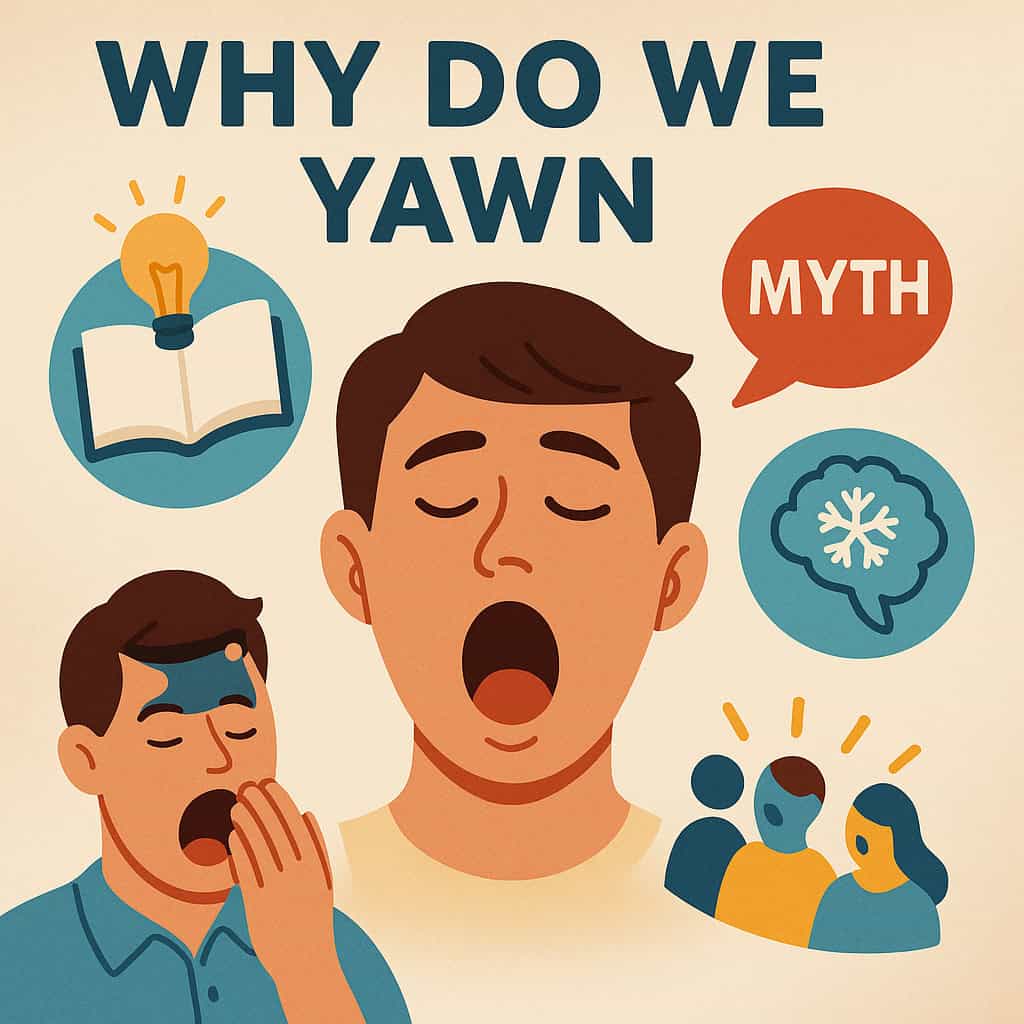
When you yawn, what does that mean?
It usually signals a harmless state-change reset. Your body is switching gears, not ”failing at oxygen delivery”.
Why do we yawn when other people yawn?
Yawns are contagious because humans mirror each other’s states, especially in families and close relationships. That social mirroring helps groups stay in sync and explains why a single yawn can ripple through a room.
Is yawning a sign of anxiety?
It can be. Anxiety raises arousal and often makes people feel warm or wired and tired at once. In that context, a yawn can act as a brief self-soothing and cooling response. You’ll see it before speeches, performances, difficult conversations, or exams—moments when your system is revving but still needs a reset. The key is understanding that an “anxiety yawn” is your nervous system looking for balance, not a ”flaw” in your willpower.
Yawning happens because we need more oxygen.
Myth. Changes in oxygen and carbon dioxide levels don’t consistently map to yawning frequency. A better fit is that yawning accompanies state changes and probably helps with brain temperature regulation.
Yawning means you’re bored with the person in front of you.
Another myth. Yawns are socially contagious and largely automatic, they often reflect the setting and your physiology more than your opinion of the conversation.
Interested in exploring similar posts? Visit The Science of Everyday Life hub for more!